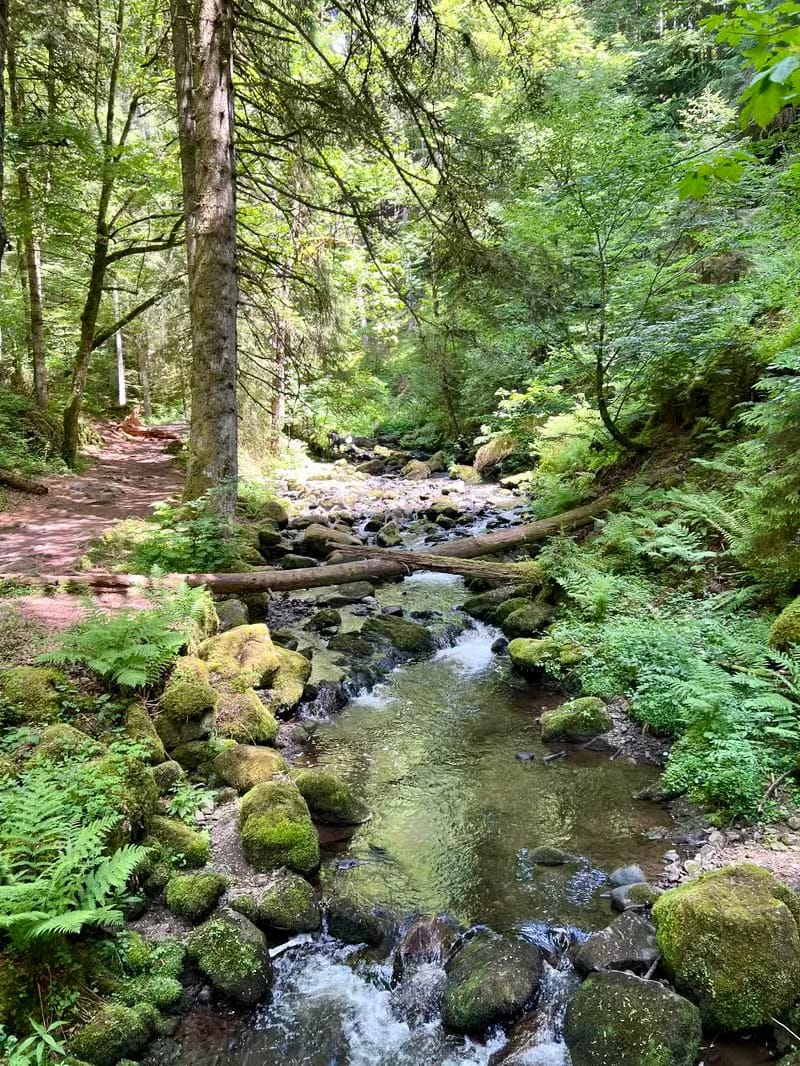
Viking drove us into the picturesque mountain range and fabled land of cuckoo clocks in Germany’s Baden-Württemberg region. Why is it known as the Black forest? It’s a 100-mile stretch of giant Pine, Fir and Spruce trees so dense the sun can’t reach the forest floor. It’s dark!
While I was visualizing the tales of Little Red Riding Hood and Hansel and Gretel, there were actually no creepy witches or big, bad wolves on this outing.
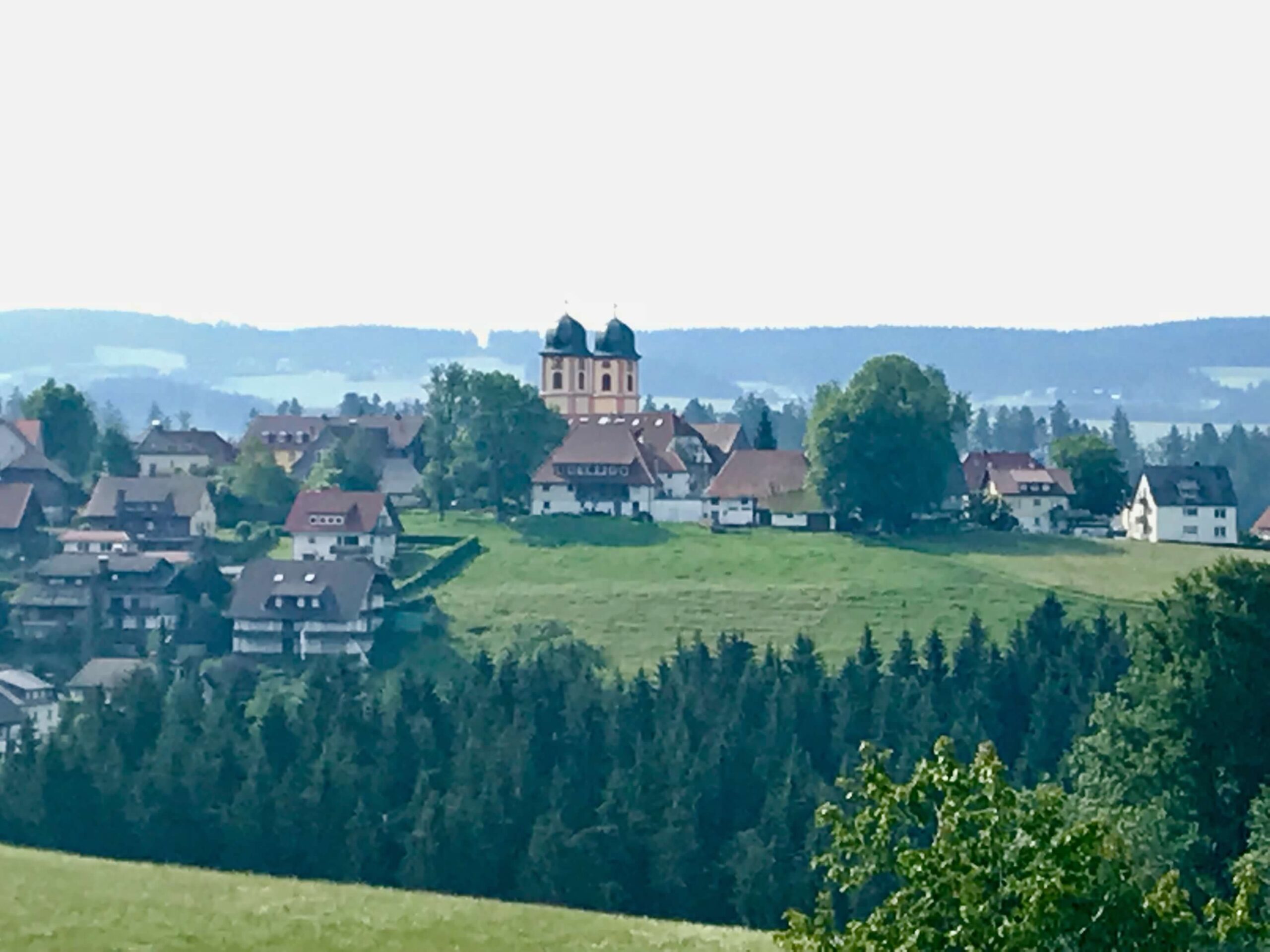
This pretty region is filled with historical vineyards, half-timbered houses, spa resorts, hiking trails, nature reserves, and storks!
Our journey took us through scenic valleys and the quaint wine-producing villages of Ihringen, Gottenheim, Botzinger, and Freiburg.
Not only did we stop here-and-there for photos, our group was also on an unofficial stork stakeout! In the Black Forest, storks are welcomed as good luck symbols. They claim storks bring prosperity, fertility, and protection from fires.
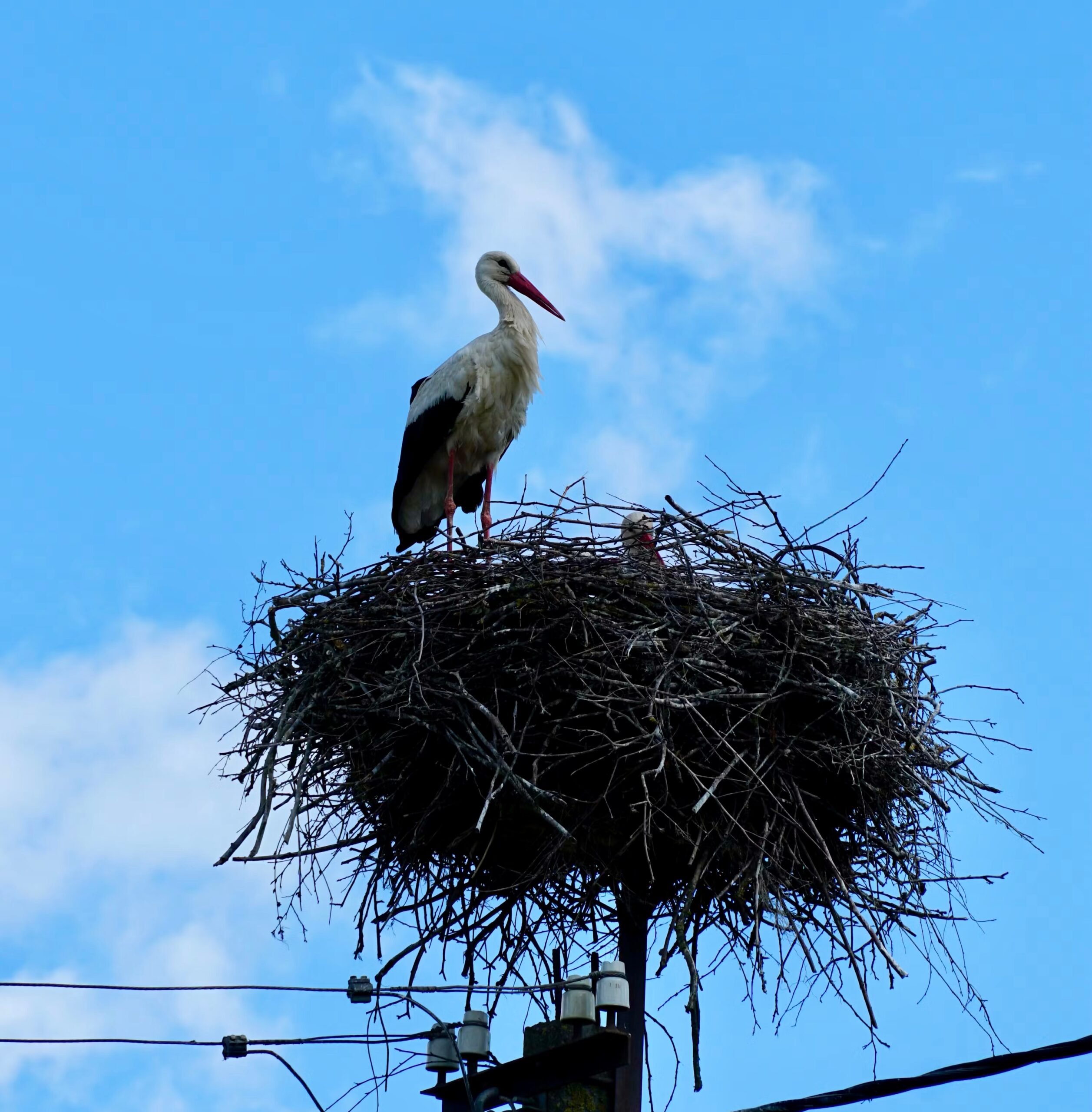
Locals often build platforms or “stork wheels” on rooftops to safely accommodate storks. Massive stork nests (some 6 feet wide and 9 feet deep) can be spotted on homes, businesses and churches.
TIP: For your own stork safari, check out the famous live stork webcam in this region: https://www.skylinewebcams.com/en/webcam/deutschland/baden-wurttemberg/kirchzarten/storks-nest.html
For a culture immersion, Viking took us to Hofgut Sternen: the Black Forest Village in Breitnau, Germany. http://www.hofgut-sternen.de
The estate includes the historic Hofgut Sternen Resort and Hotel, a Glass Manufactory, a giant Cuckoo Clock store, a historical watermill and bakery, a cafe, and the Green Energy Plant (also available to tour). Visitors can also trail hike or simply walk to the Ravenna Viaduct stone railway bridge and the St. Oswald Chapel.
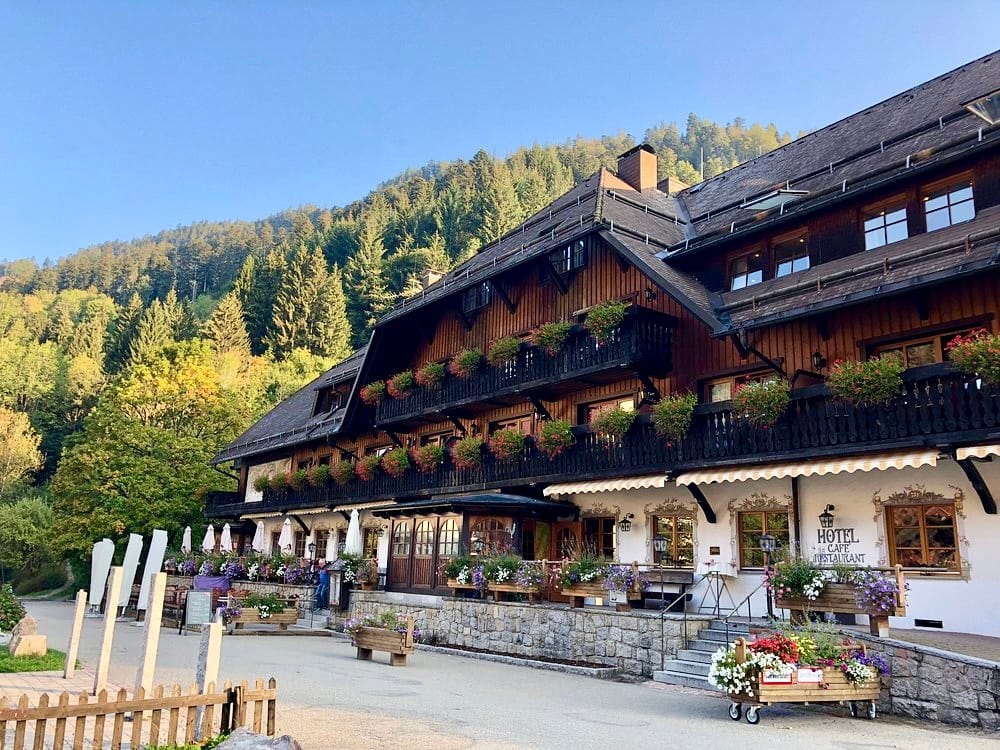
Hofgut Sternen Resort and Hotel
Besides traditional Black Forest-style guest rooms, the 500-year-old hotel has a breakfast area and two dining options – called SchwarzwaldStube and FondueStube. It’s also an award-winning self-sufficient energy wonder. The Hofgut Sternen of today began in the 1400s when an “Inn below the Ascent” was built as a royal rest stop and a tollhouse.
It became a natural stopping place in medieval times for travelers passing through the treacherous and deep Hell’s Valley (Höllental) trade route. Innkeepers in the 1700s also collected tolls and taxes to maintain the valley trail and steep Alte Steige (old ascent).
Johann Wolfgang von Goethe, a German author, was inspired to write at the Inn, and Napoleon III was a guest. Marie Antoinette stopped here in 1770 (with 52 carriages) on the way to Paris for her wedding to marry King Louis XVI.
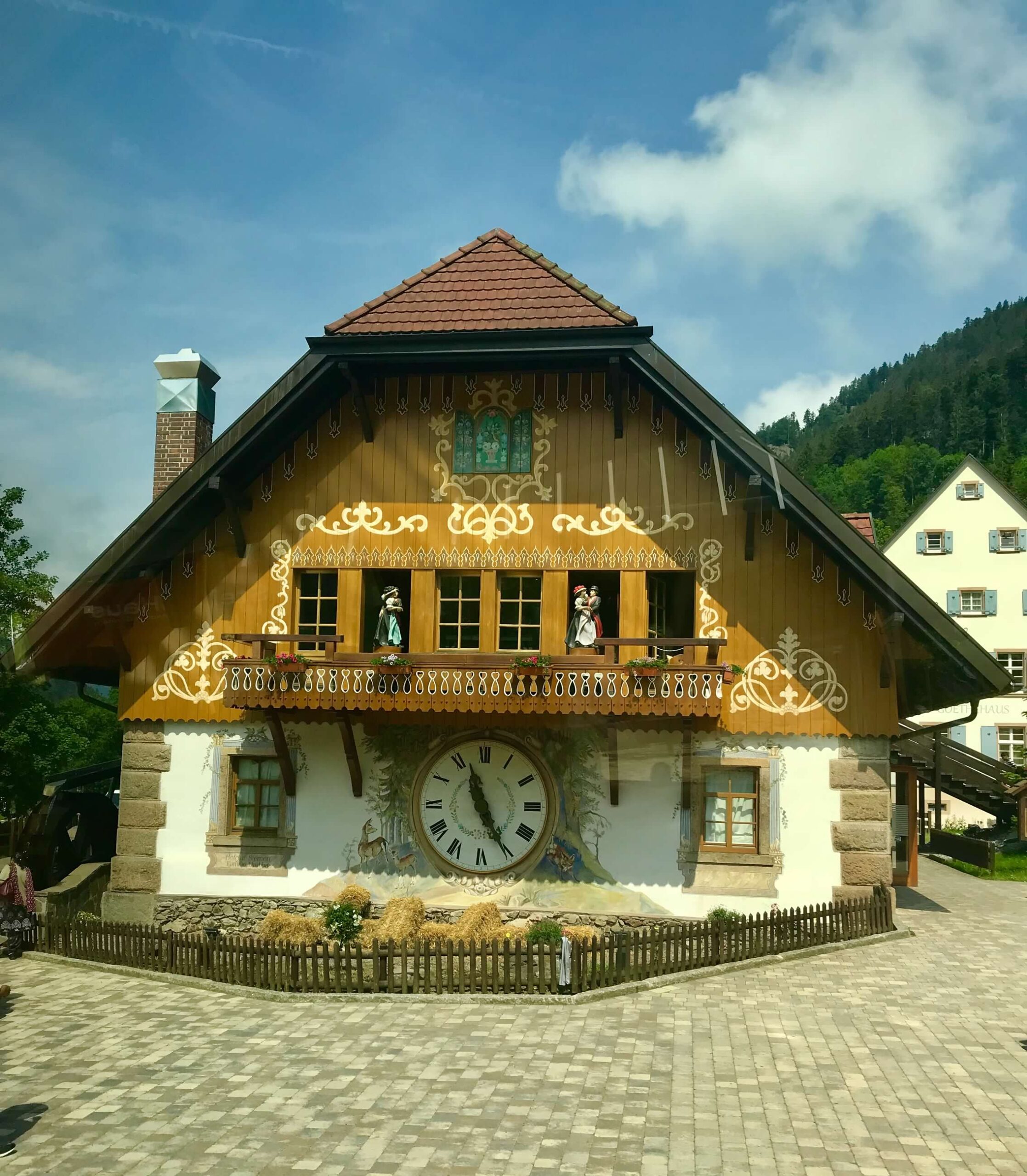
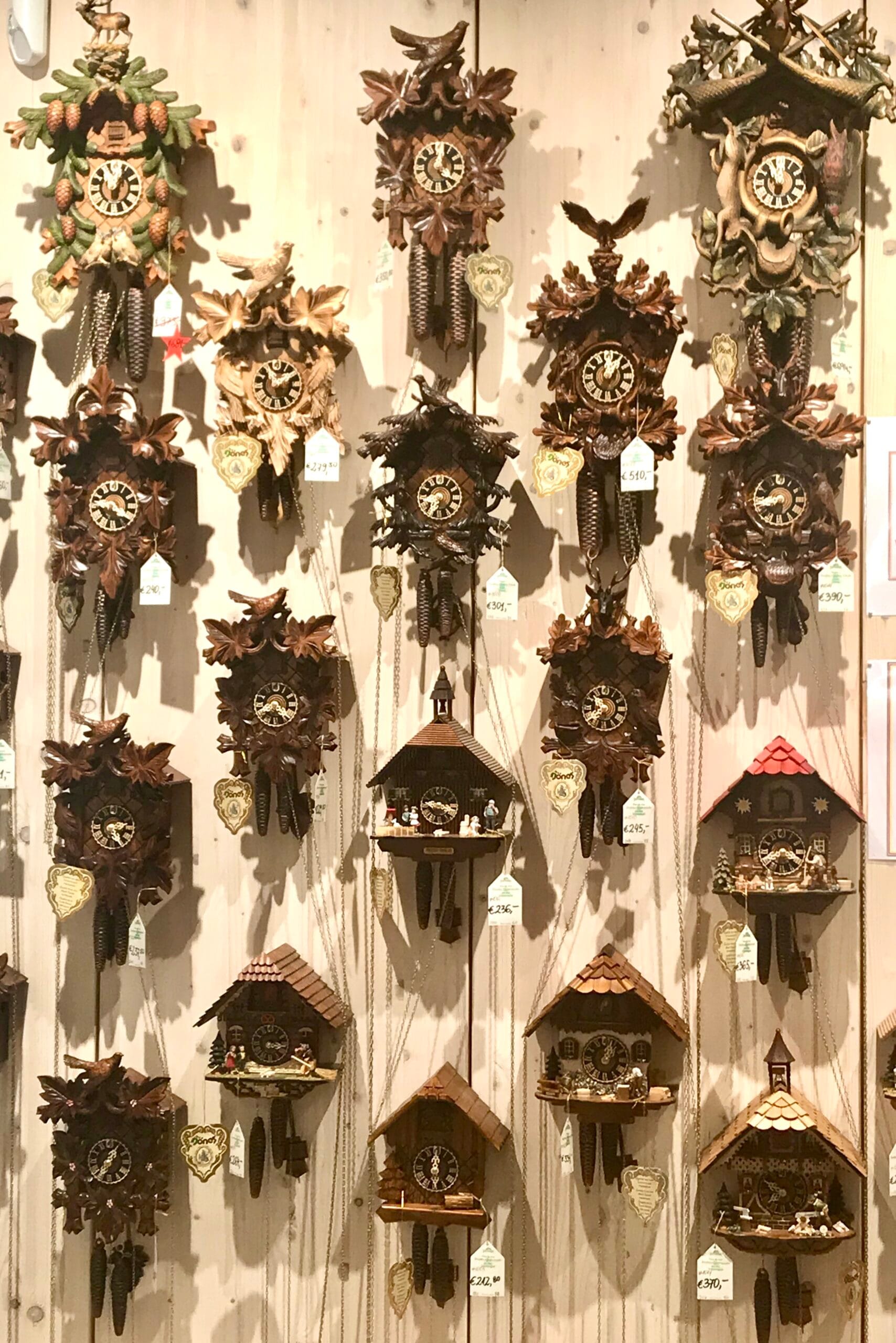
We opted for the cuckoo clock demonstration — which just happened to be inside a giant Cuckoo Clock Shop.
In the 1600s, Black Forest farmers began carving and building cuckoo clocks from lumber scraps to supplement their income during long, snowbound winters. Woodcarvers and clockmakers made wooden whistles and repurposed organ bellows to create the classic timepieces and famous “coo-coo” sound.
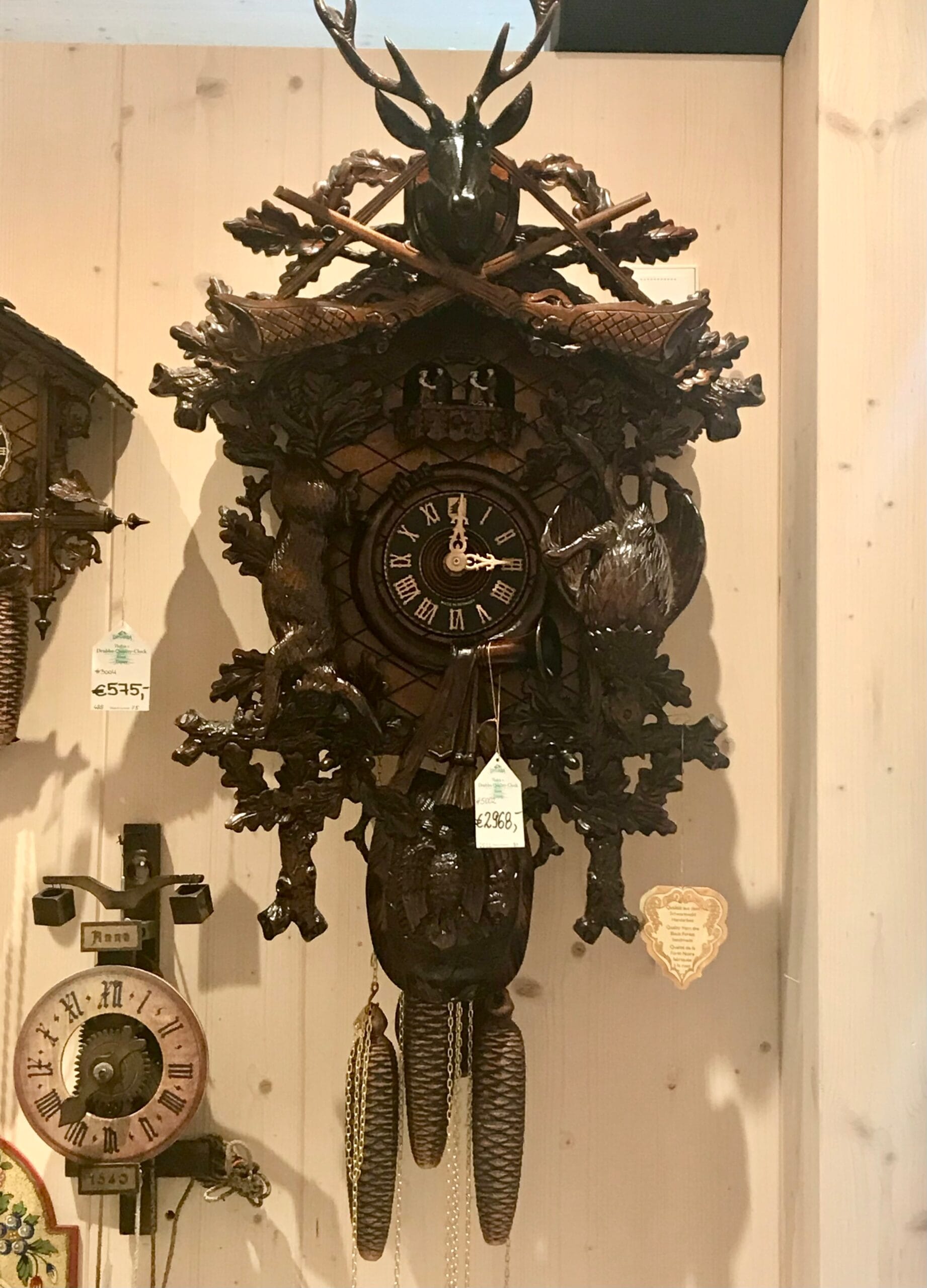
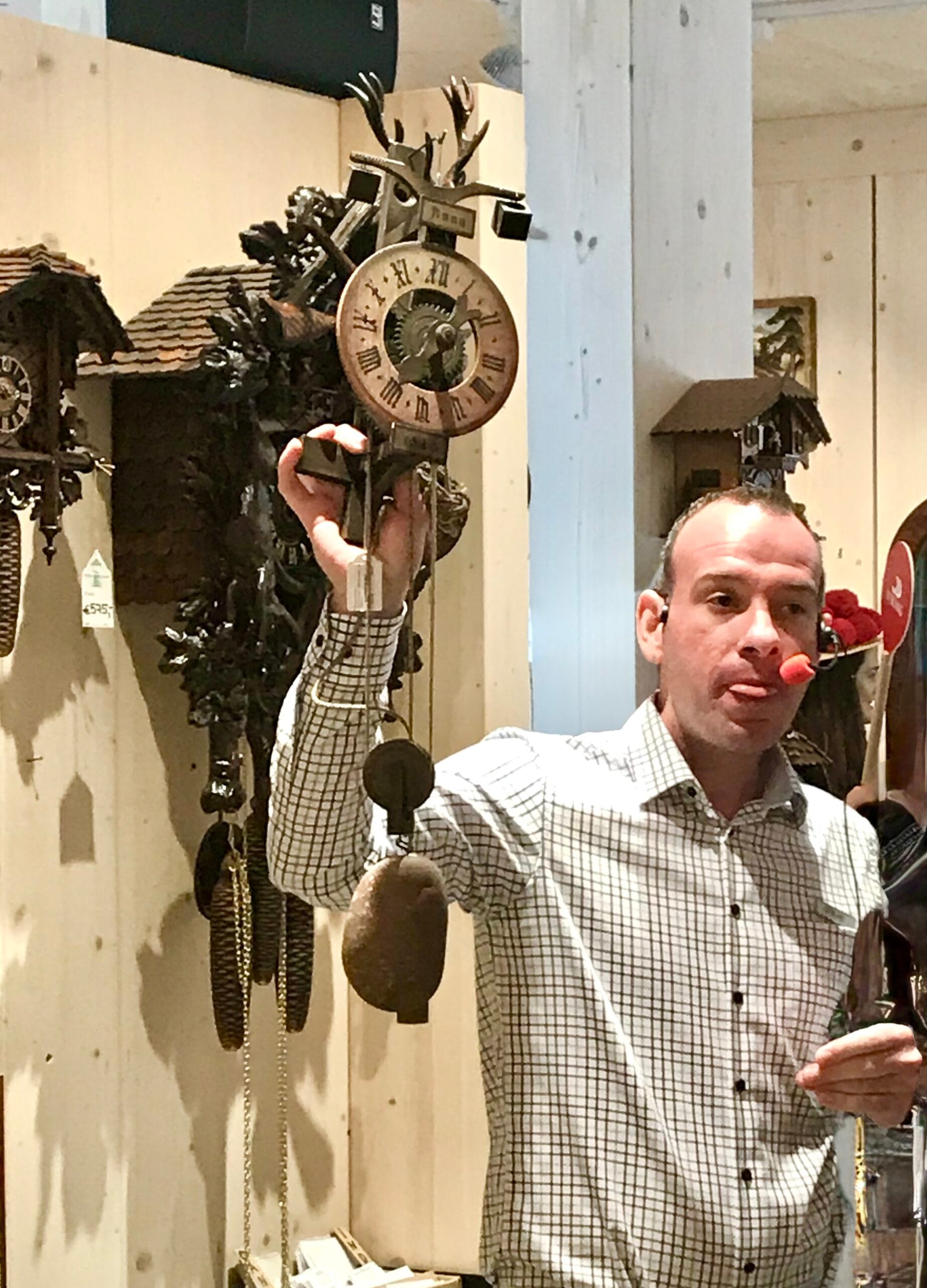
We learned the inner workings of the iconic clock and the strict division of labor process –from master woodcarvers to carpenters and highly trained clockmakers.
Then the cuckoo countdown arrived: It’s impossible to be serious when you’re standing with a crowd of adults eagerly waiting for a tiny wooden bird to pop out and do its thing.
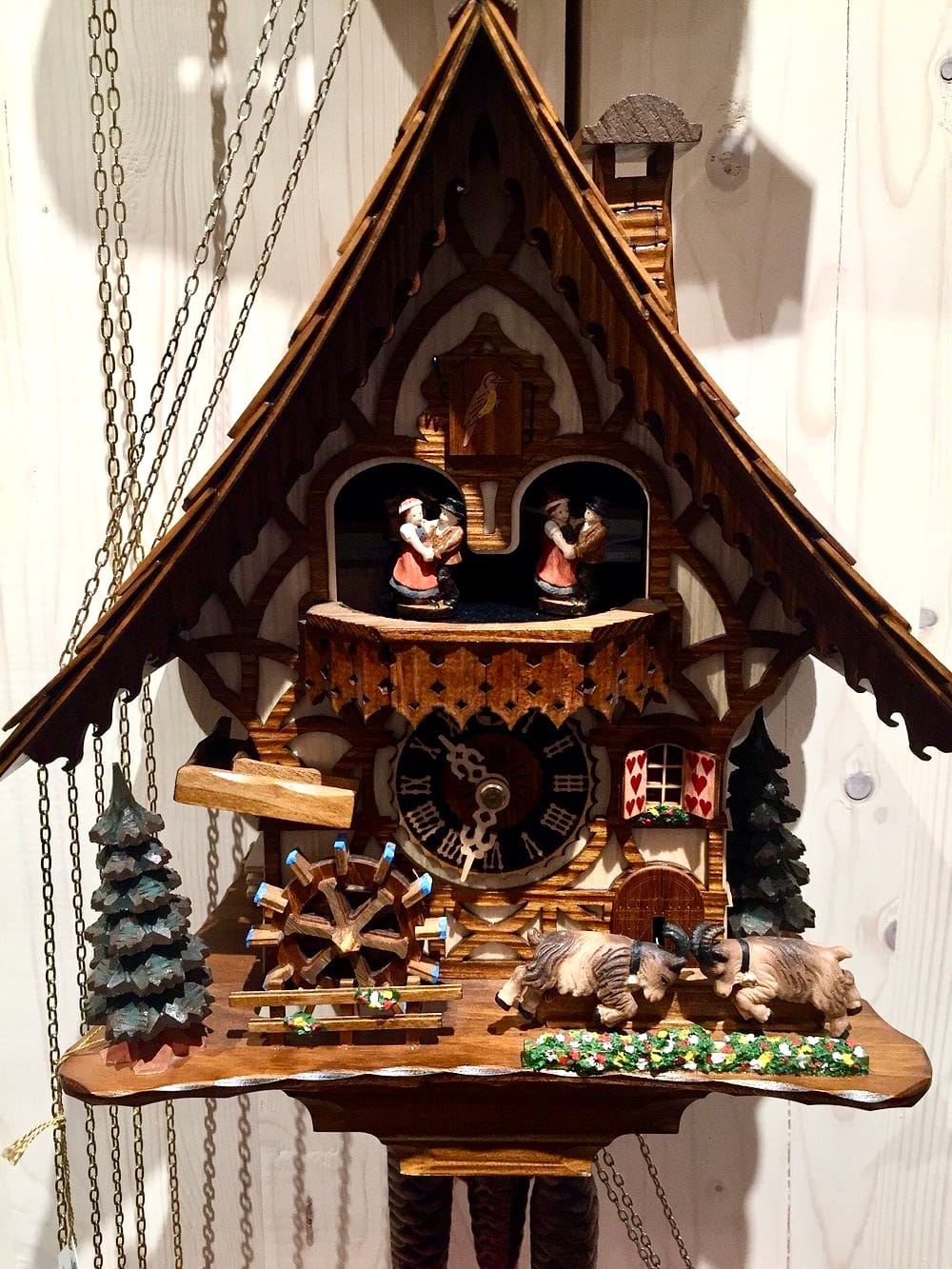
Intricate carvings – all with a story.
A cuckoo clock is deemed authentic when all components (the case, bellows, mechanical movement and decor) are hand-carved and handmade exclusively in Germany’s Black Forest.
And, of course, you get an opportunity to shop!
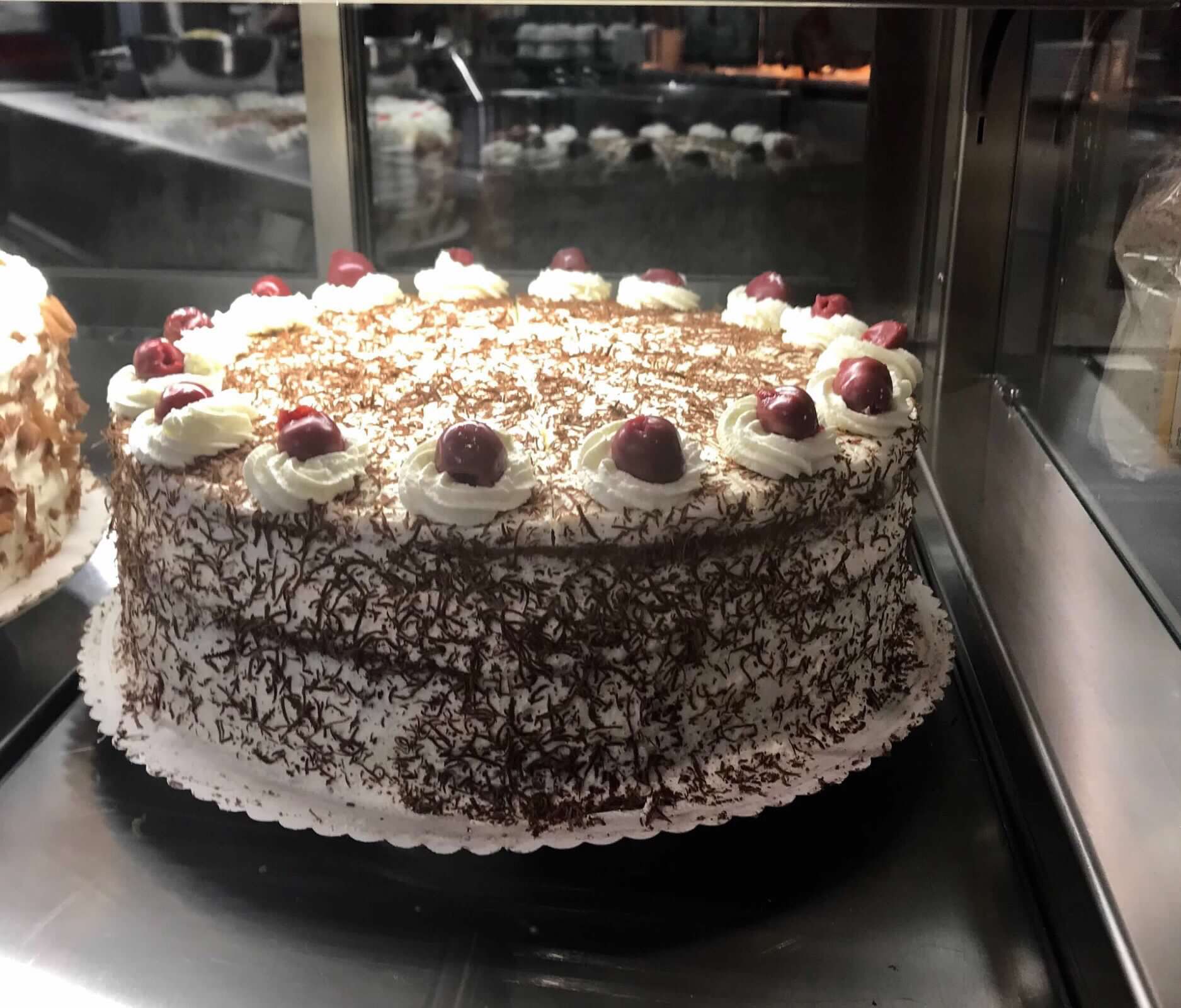
Demonstration spotlight: The Black Forest Cake
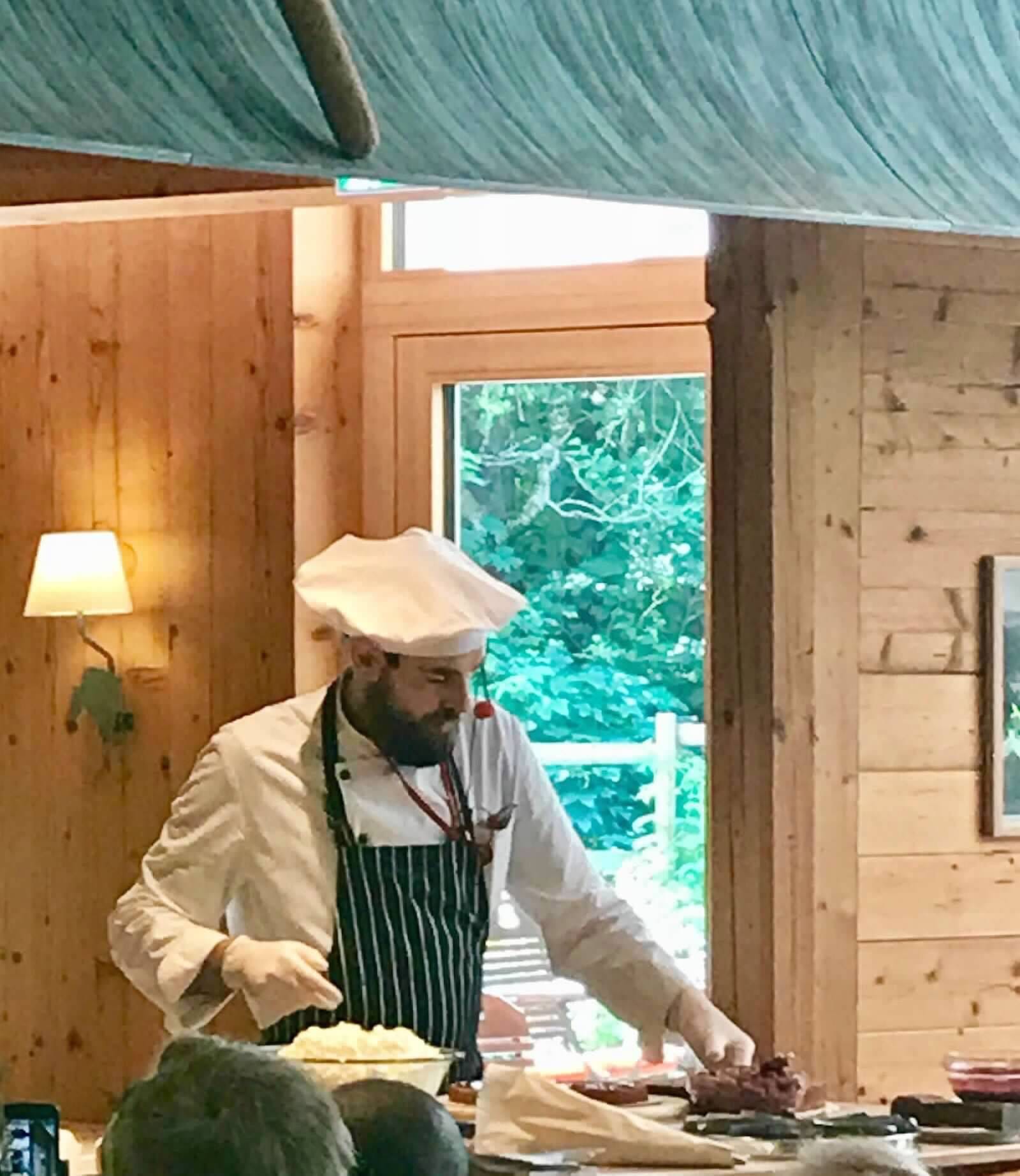
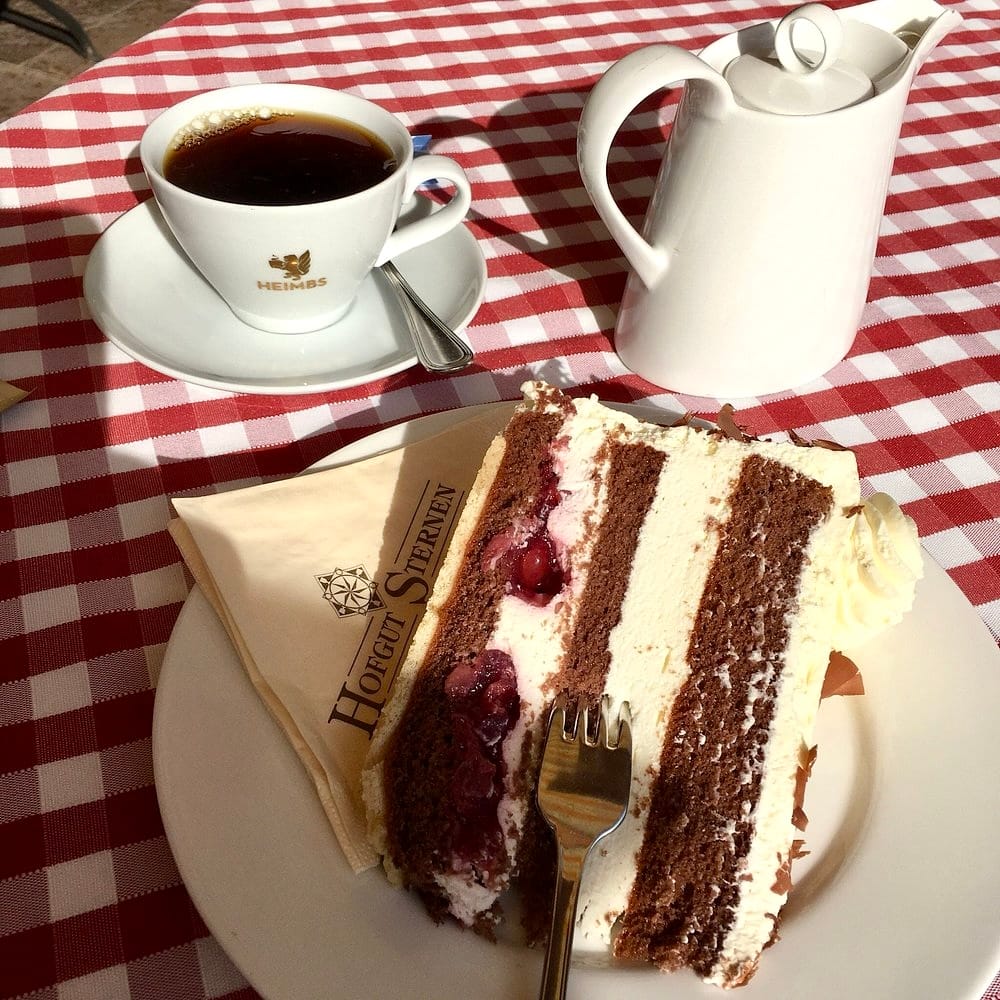
A Hofgut Sternen pastry chef walked us through the recipe and secrets for baking and assembling an authentic Schwarzwälder Kirchtorte. This decadent Black Forest Cherry Cake has layers of cherry-soaked chocolate sponge with kirsch-infused whipped cream, chocolate shavings, and local cherries.
I considered taking notes but was distracted by the cake. It was delicious! Let me know if you’d like the recipe!
Viking offers a complimentary (included) excursion at each port of call, and the Hofgut Sternen visit came with options. We chose cake and cuckoo clock demonstrations over glass blowing. Then we found the viaduct and took a quick stroll in the forest.
TIP: If walking is a challenge, skip the hike and enjoy the property during your free time!
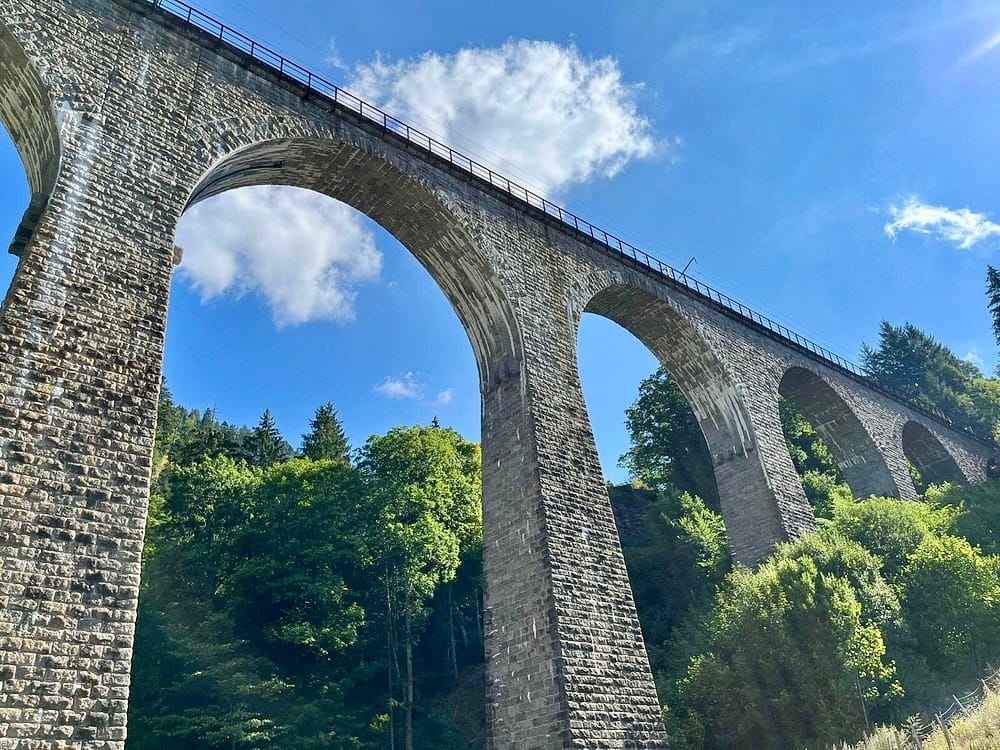
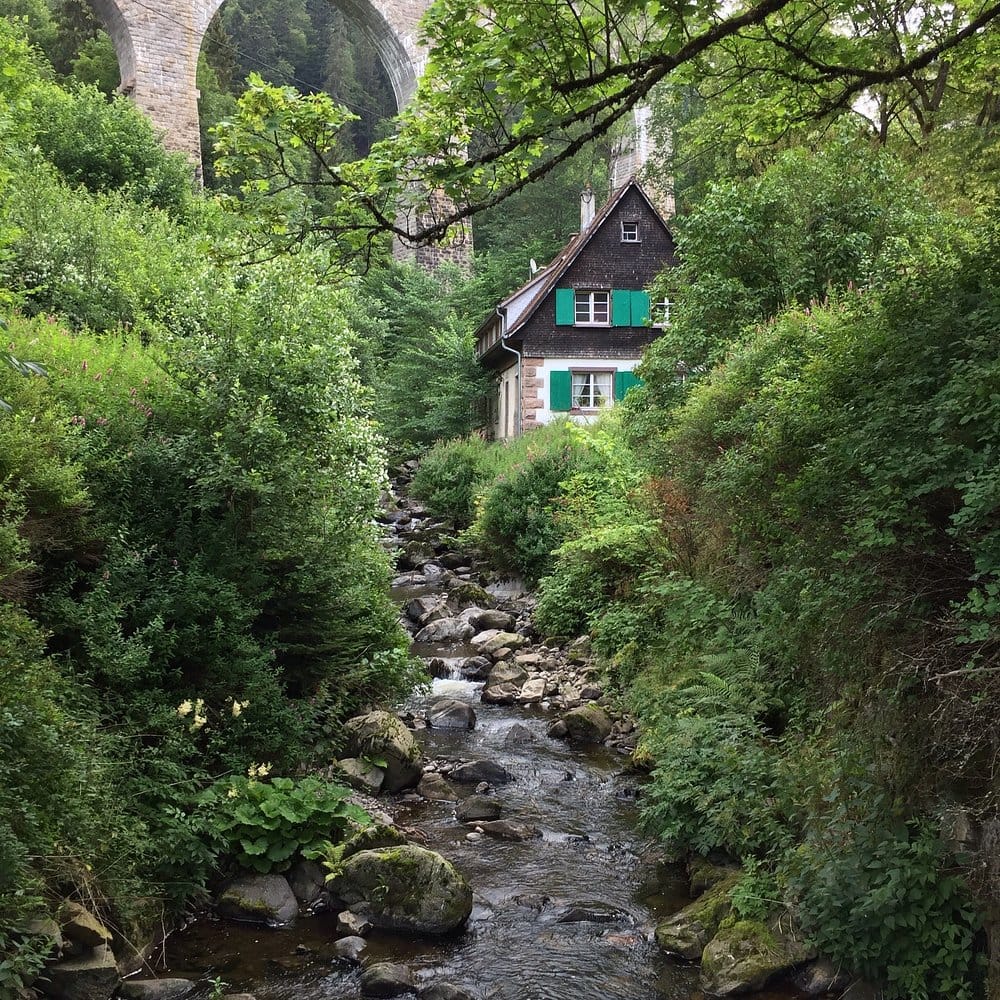
A short walk led us to the railway bridge and woods.
The Ravenna Viaduct railway bridge crosses the gorge high above Hofgut Sternen. The first steel bridge was built in 1885, but heavier and faster locomotives called for new construction in 1926-27. In April 1945, the bridge was blown up by retreating German military forces during World War II.
French occupying forces oversaw the bridge rebuild in 1947-48 using German prisoners of war. The new bridge is 735-feet long and 118-feet high, and the viaduct has nine impressive stone and granite arches.
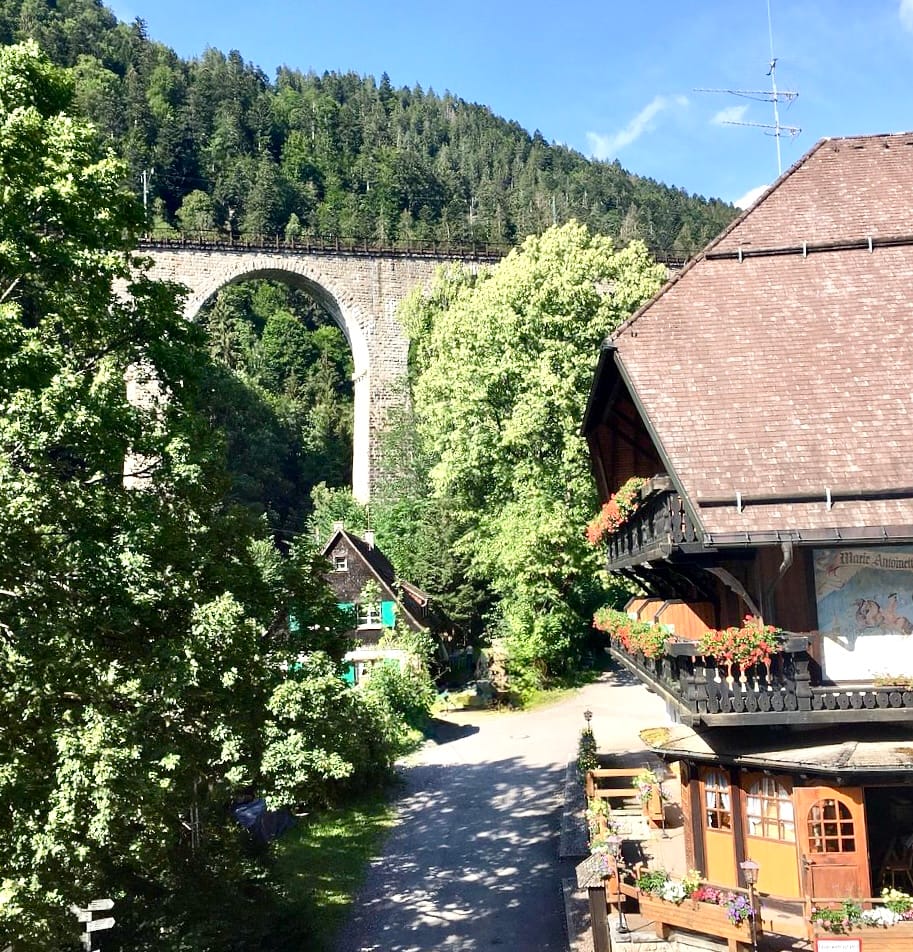
TIP: If you don’t want to walk to the viaduct, just take a peek around the corner of the hotel.
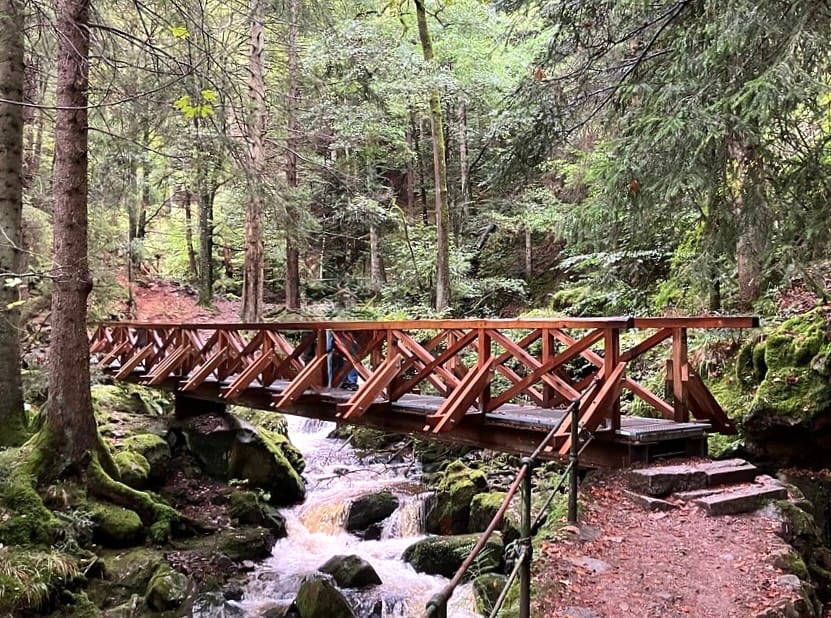
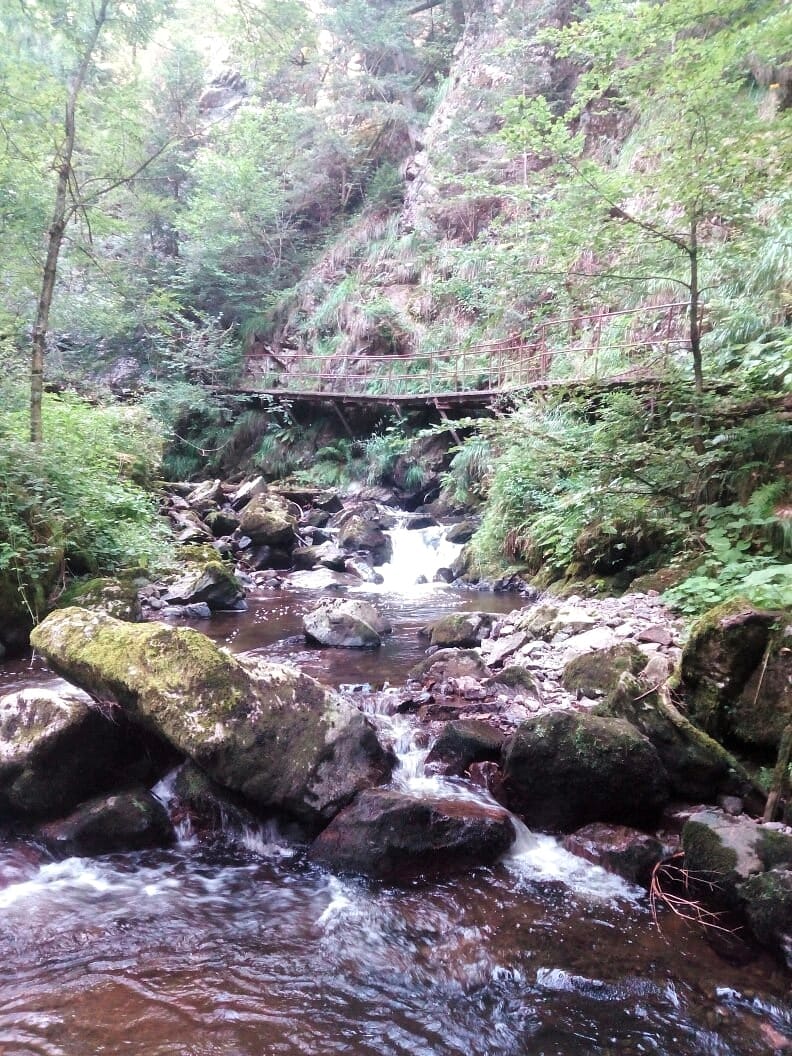
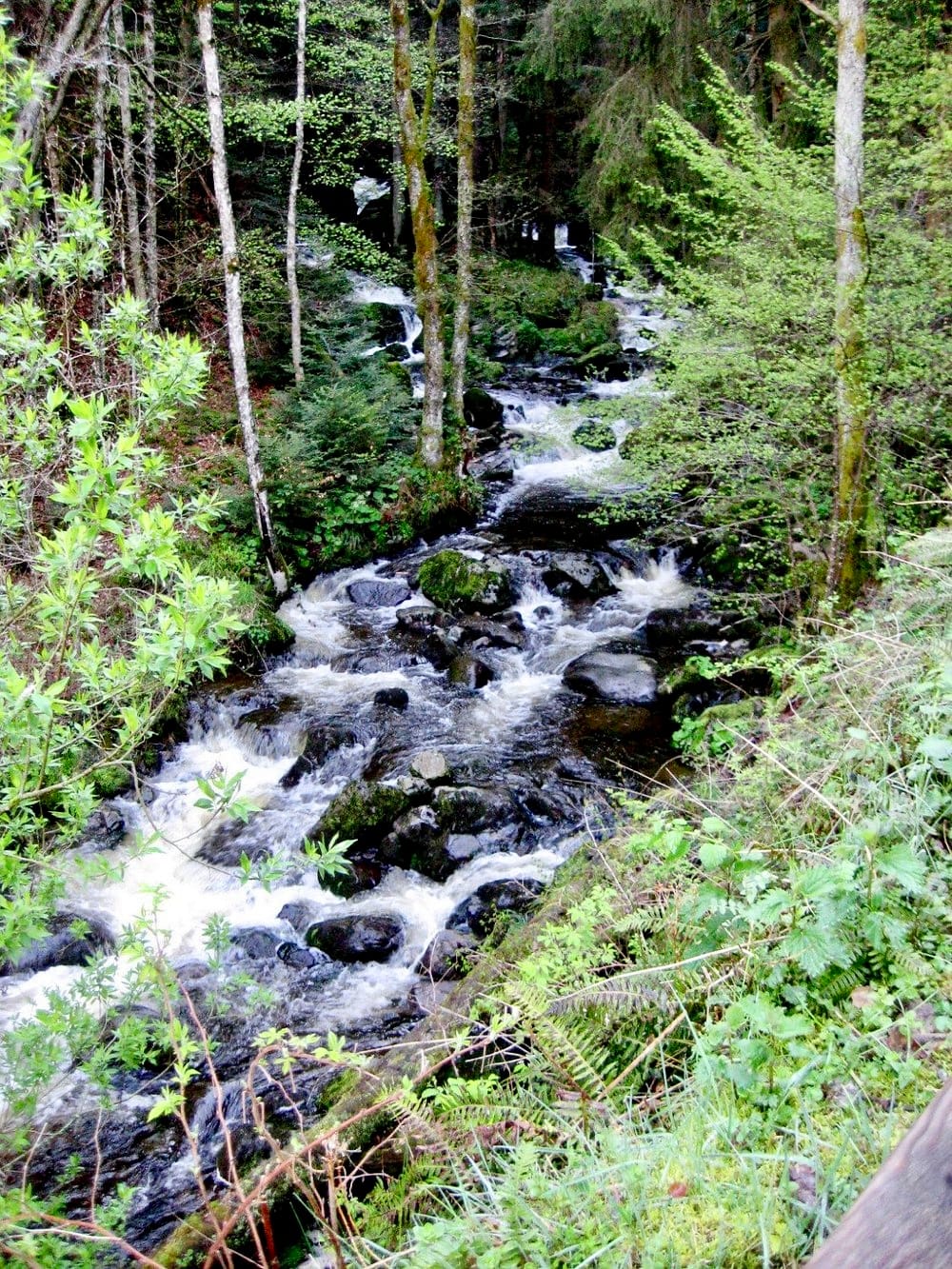
Hiking? Follow the yellow diamond signposts to explore the Black Forest Highlands heritage trail (or at least part of the 4.3-mile trail if you have time limits). It runs through the Löffeltal, or Spoon, Valley and the Ravenna Gorge, and you can access it behind the Hofgut Sternen estate. It’s beautiful!
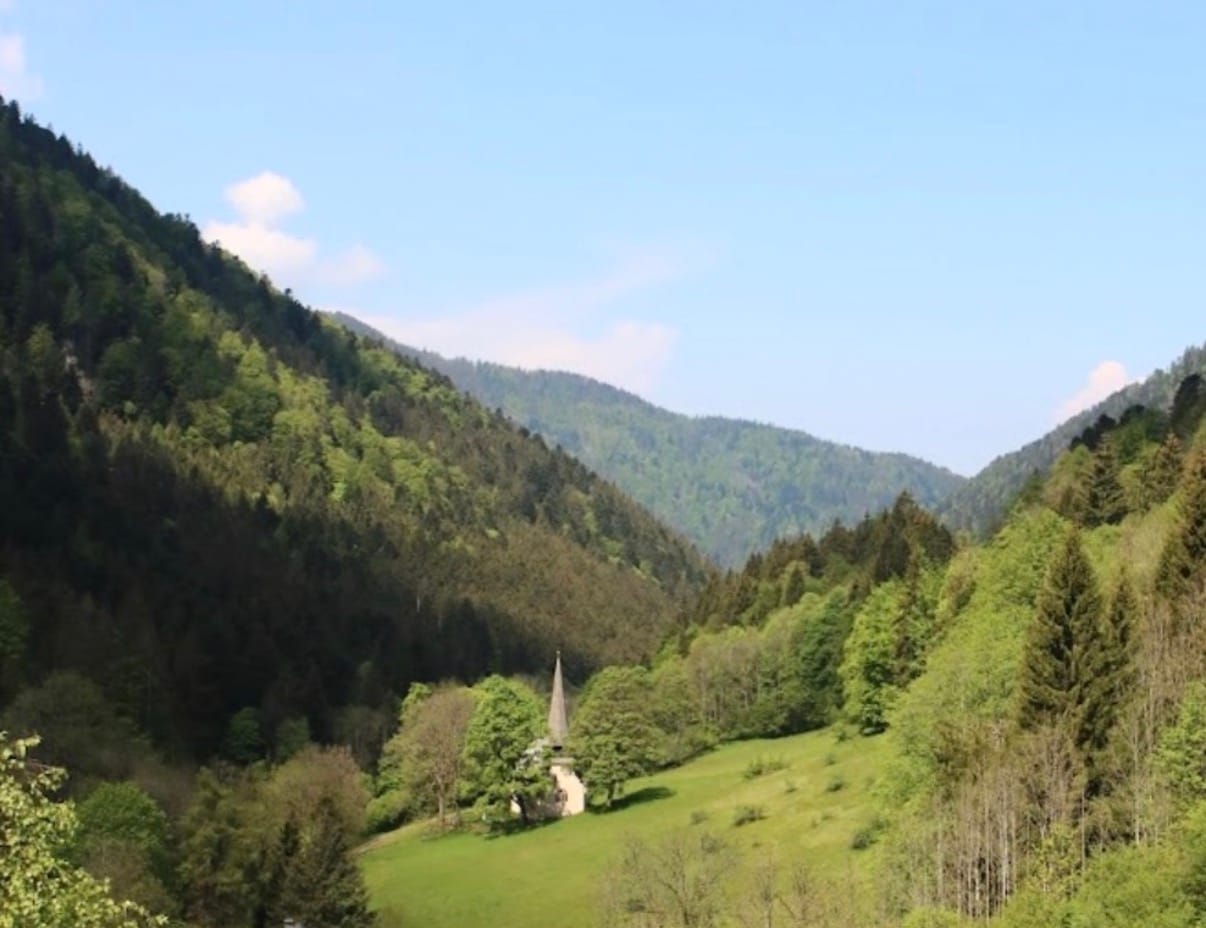
St. Oswald’s Chapel (below) is the oldest surviving parish church in the Black Forest valley, built in 1148. It’s dedicated to St. Oswald of Northumbria — an Anglo-Saxon 7th century king who was the patron saint of crusaders in the Middle Ages.
TIP: It’s about a 5-minute walk from Hofgut Sternen. If you’d like to go inside the chapel, just talk to the hotel front desk.
While the Black Forest is a retreat for many today, it began as a Celtic community in the 6th century BC named Abnoba Mons (after Abnoba, the Celtic goddess of rivers and forests).
The Romans took over in the first century AD, but they didn’t really settle in the daunting forest. They constructed military posts and roads around the frontier perimeter, and they re-named the land Silva Nigra (or Black Forest).
Germanic Alemanni tribes pushed out the Romans around 260 AD and colonized the Black Forest. They became farmers, foresters, miners, and glassblowers who remained isolated in the deep forest until the 19th century. Two great Houses of kings and emperors ruled during that time: the Höhenstaufen and the Höhenzollern family dynasties.
Locals gained a reputation for their quality cuckoo clocks, cured Black Forest hams, fruit Kirsch brandy, and the Black Forest gateau (cake). This region also served as the real-life inspiration for Grimm’s Fairy Tales – a classic collection of folk tales including Cinderella, Hansel and Gretel and Snow White.
A symbol of the region I knew nothing about is the Black Forest costume and Bollenhut (or Bollen hat). It originated from the Black Forest villages of Gutach, Kirnbach, and Reichenbach in the 1700s.
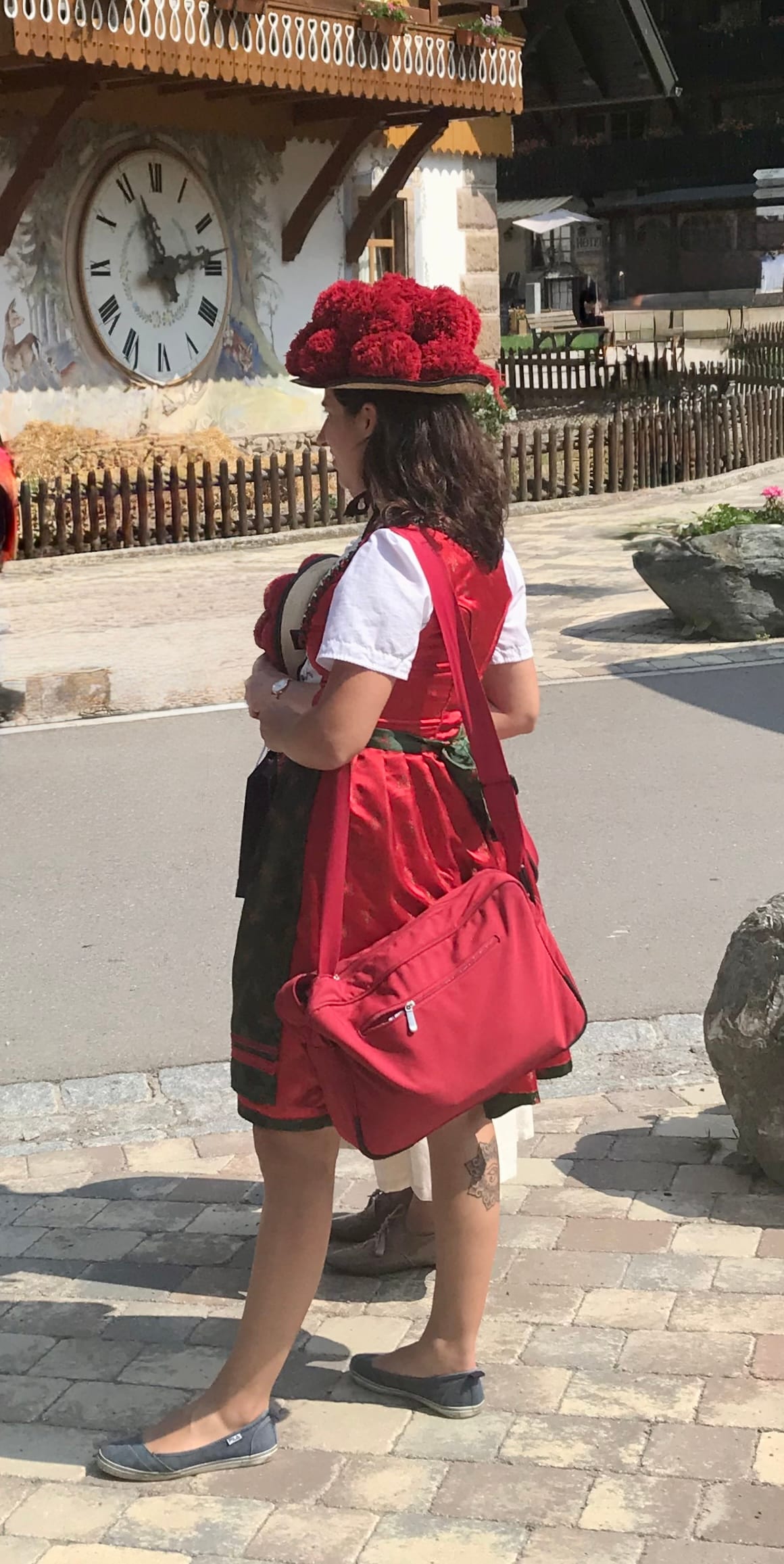
The 14 red pompoms (called Bollen) and the white brim of the hat are known to have inspired the iconic Black Forest Cake. Bollenhuts are still worn for heritage festivals and holidays (and by tour guides).
Unmarried women and young girls wear the red cherry Bollen hat with their traditional costume. Married women wear hats trimmed with black pompoms. §
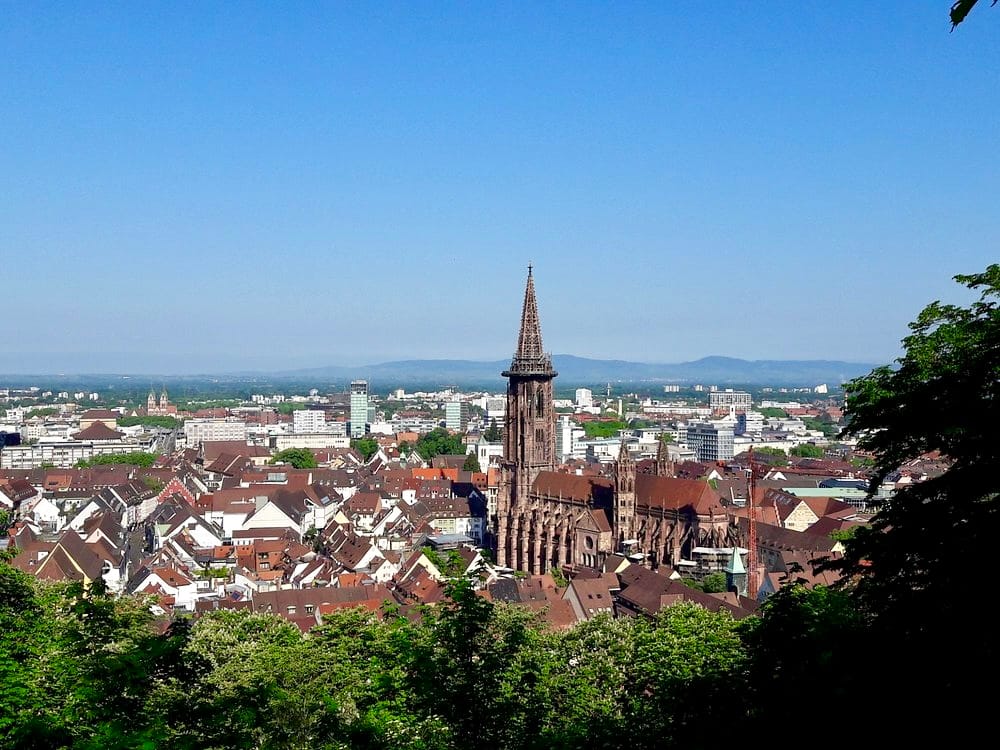
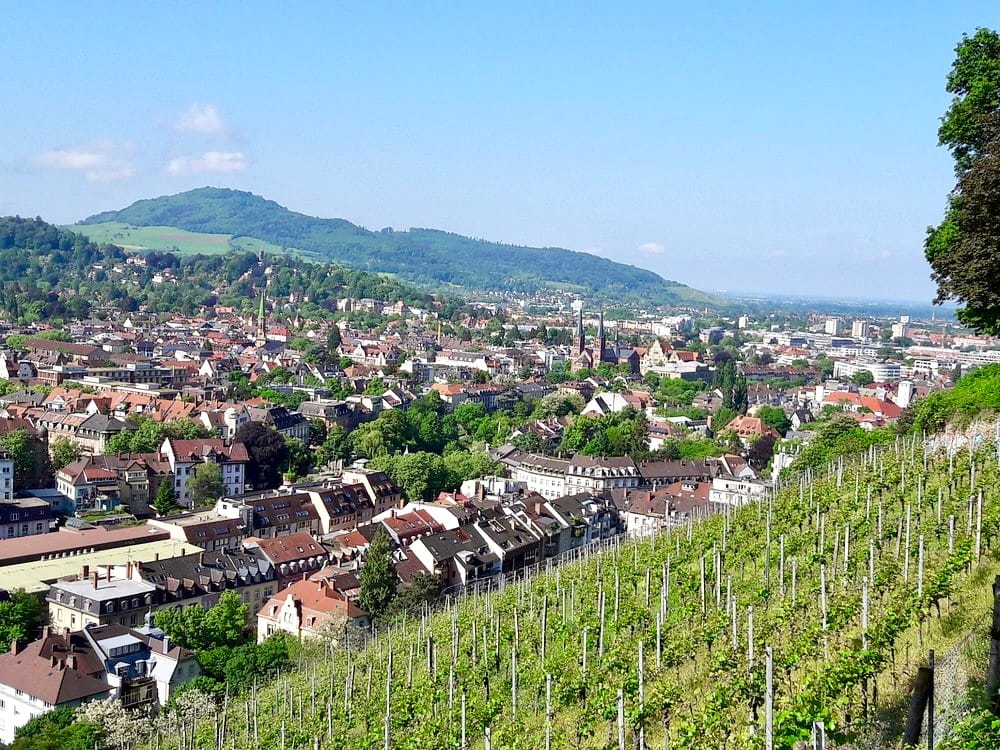
We ended our morning with a drive through Freiburg. The popular university town is known for its vineyards, Gothic cathedral, old town, market square, and the streams winding through the city.
We’ve been on seven ocean cruises, and we just returned from our second Viking river cruise (on the Danube). Ocean and river cruises offer two distinctly different travel experiences–each with its own pace, atmosphere, and style of exploration and entertainment. They may each involve ships and take place on the water, but the similarities mostly end there. Below are some comparisons regarding these two different styles of travel:
Several Similarities: Ocean and river cruises visit multiple destinations and specialize in scenic travel. Both have comfortable staterooms, upscale onboard cuisine/dining choices, and personalized housekeeping. Each are also floating resorts that move from destination-to-destination, so passengers only unpack once.
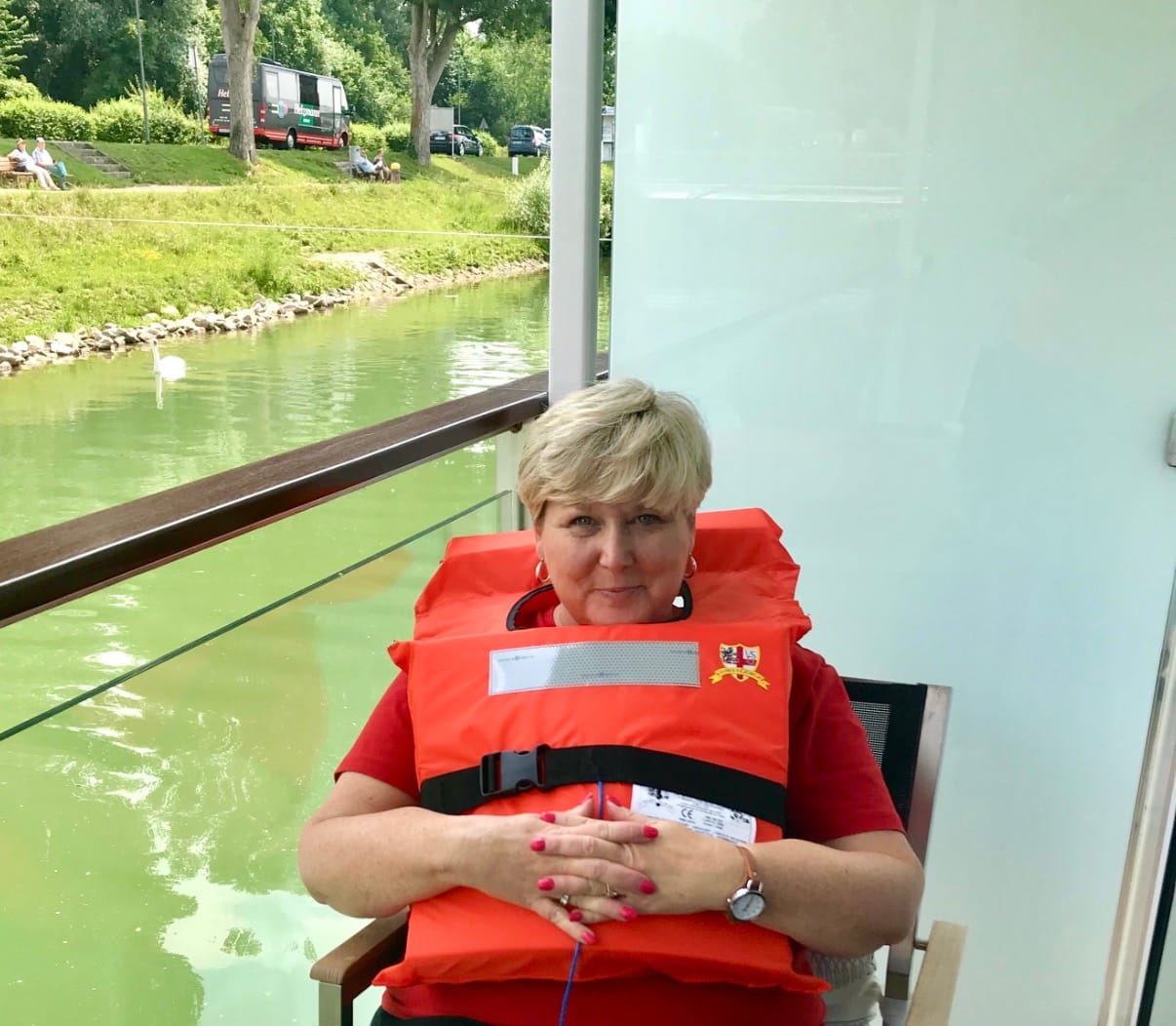
Both have lifeboat drills too!
Several differences:
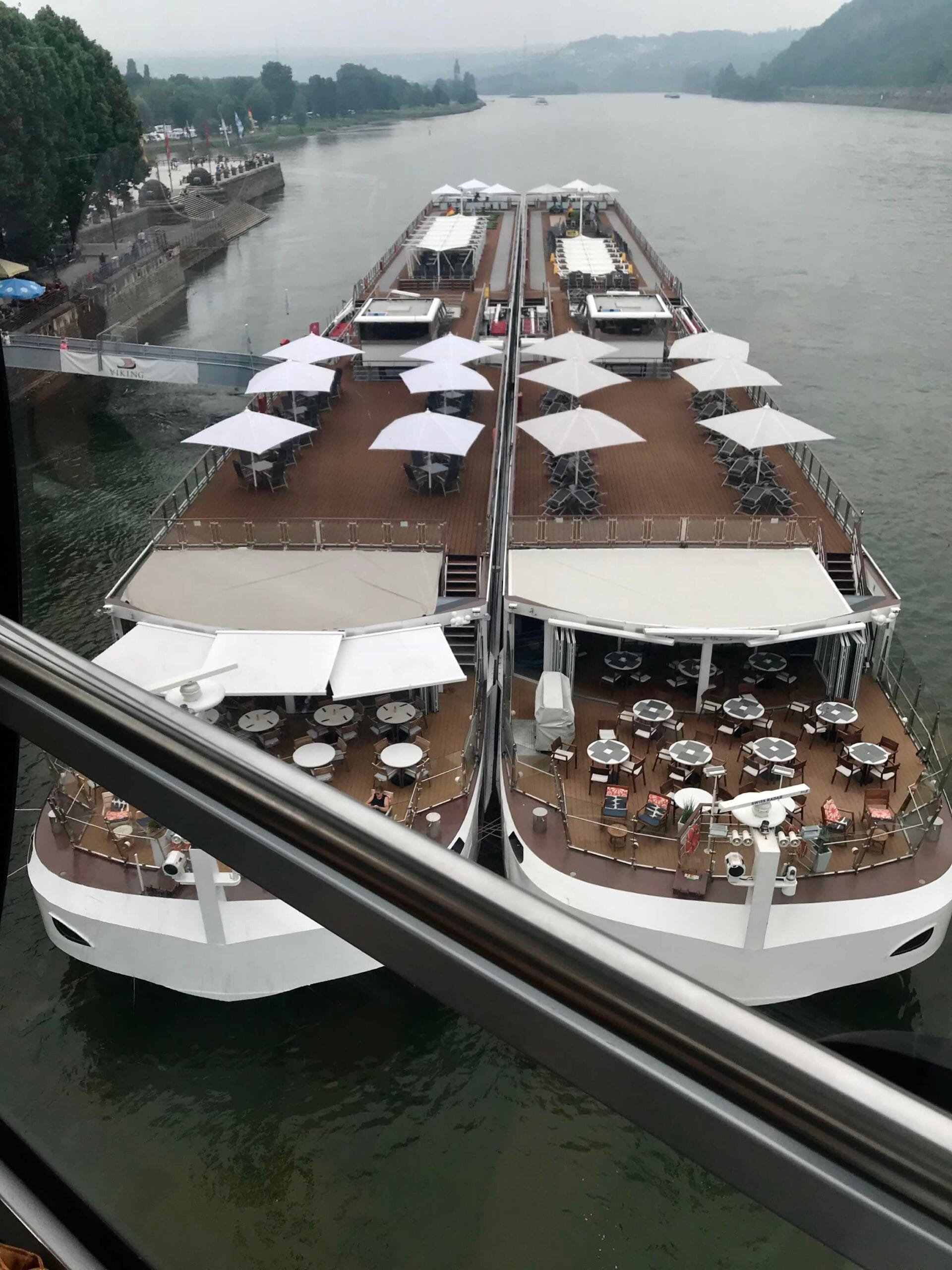
– (Ship size and capacity). Most river cruises have smaller, intimate ships and are limited to 100-to-200 passengers (or less). A majority of ocean cruise ships are massive floating cities and average about 3,000 passengers (or way more).
– (Meals) Ocean cruises offer multiple, expansive, and specialty restaurant options for meals/dinner at flexible times. There’s even a midnight buffet! Most river cruises have one or two dining options, no room service, a set meal time (aligned with daily excursions), and all meals are open seating. River cruises have no traditional formal nights with tuxedos and ballgowns. They suggest comfortable “smart casual” clothing for dinner.
– (Alcohol and Soft Drinks) – River cruises offer complimentary local wines, beer, plus soft drinks during lunch and dinner. Most ocean cruises require add-on beverage packages for alcohol and/or soft drinks.
– (Down Time) Ocean cruise passengers typically have one or more relaxing day “at sea.” Except for occasional morning or afternoon scenic sailing, river cruise passengers visit a different port of call each day (and sometimes twice a day).
Ocean or River – Which is your favorite?
More comparisons to come next time. . .
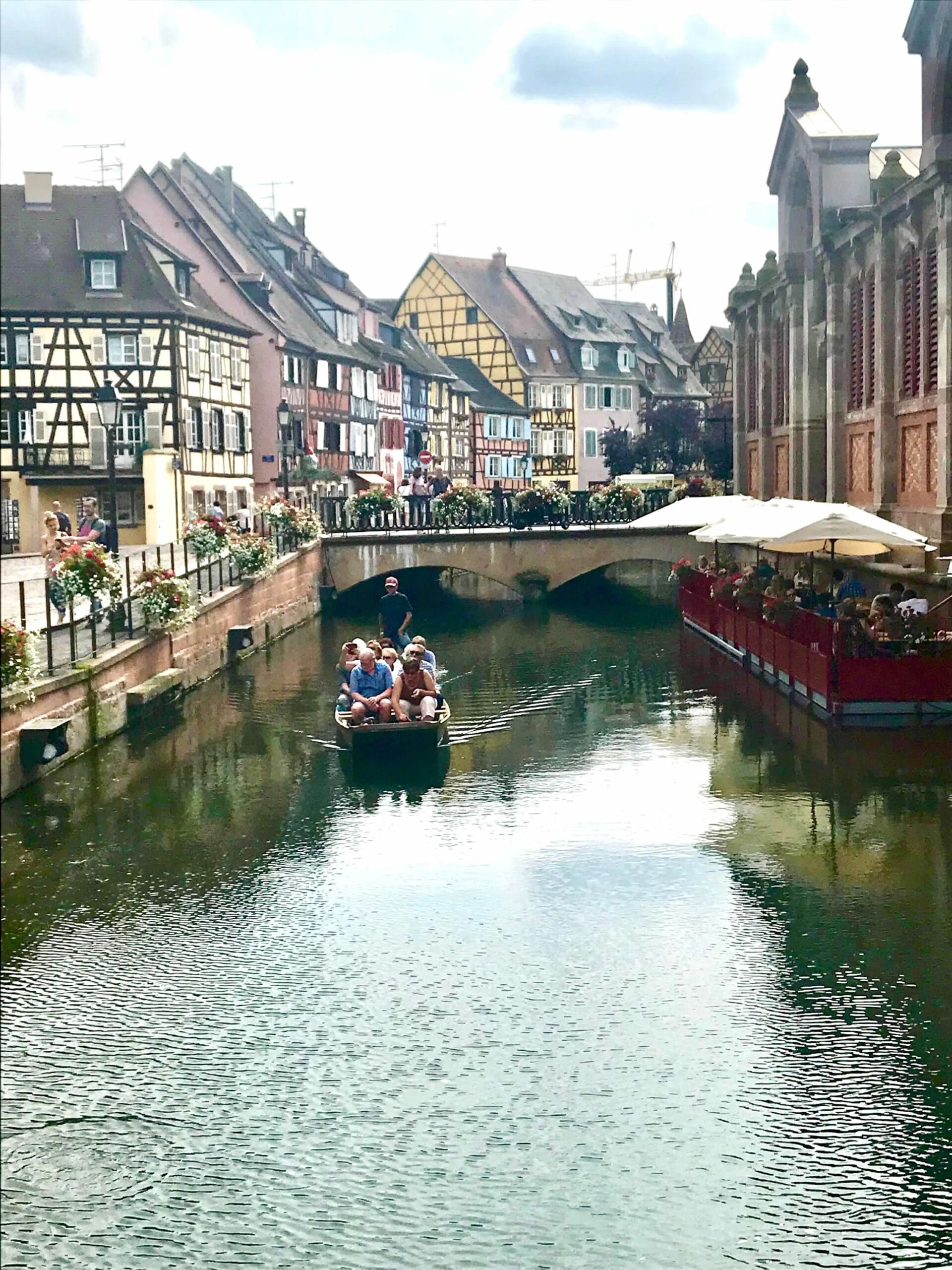
We’ll travel to adorable Colmar, France located on the Alsace Wine Route near the German border. Colmar’s nickname is “Little Venice” after its pretty canals, half-timbered houses and a well-preserved medieval Old Town. Stay tuned!
Until then, keep exploring!
Check out my Basel, Switzerland Rhine River travel blog series: Click here ⇒ Basel, Switzerland: 10 Must See Gems/Rhine River Cruise
For my Greece and Italy series and all other travel blogs, visit my blog site: https://traveltipsbytami.com
Tami Kooch – [email protected]
My preference is river cruising due to the limited number of guests and the time you get with the staff. The Black Forest was great even with the cuckoo clock shop that can be a little overwhelming when all the clocks are striking at the same time.
Those clocks will make you cuckoo!
I need to go just for the cake!! Love this vlog and can’t wait to visit here someday. Thanks!
Yes, I want you to see all of Germany!
Loved this one and knew no details of the Black Forest (but I do know Black Forest cake!!!!)❤️
Thanks Patty! It was beautiful. Some people on our tour had never been in a forest or the mountains. Since we live in the foothills of the Smokies, they started calling us the “Tennessee Hillbillies.” And the cake was wonderful!
I enjoy your vivid description and photos of the sites you share! I feel like I am living each of your excursions. Thank you for sharing not only the description of the sites, but also sharing some of the historical significance of the places.
Thanks Jeanne! This is fun for me!