Our two weeks in Greece was like stepping into a postcard–where each corner had a story, and every view begged us to stay a little longer. It’s a country where natural beauty, rich history, and unique culture come together in breathtaking harmony.
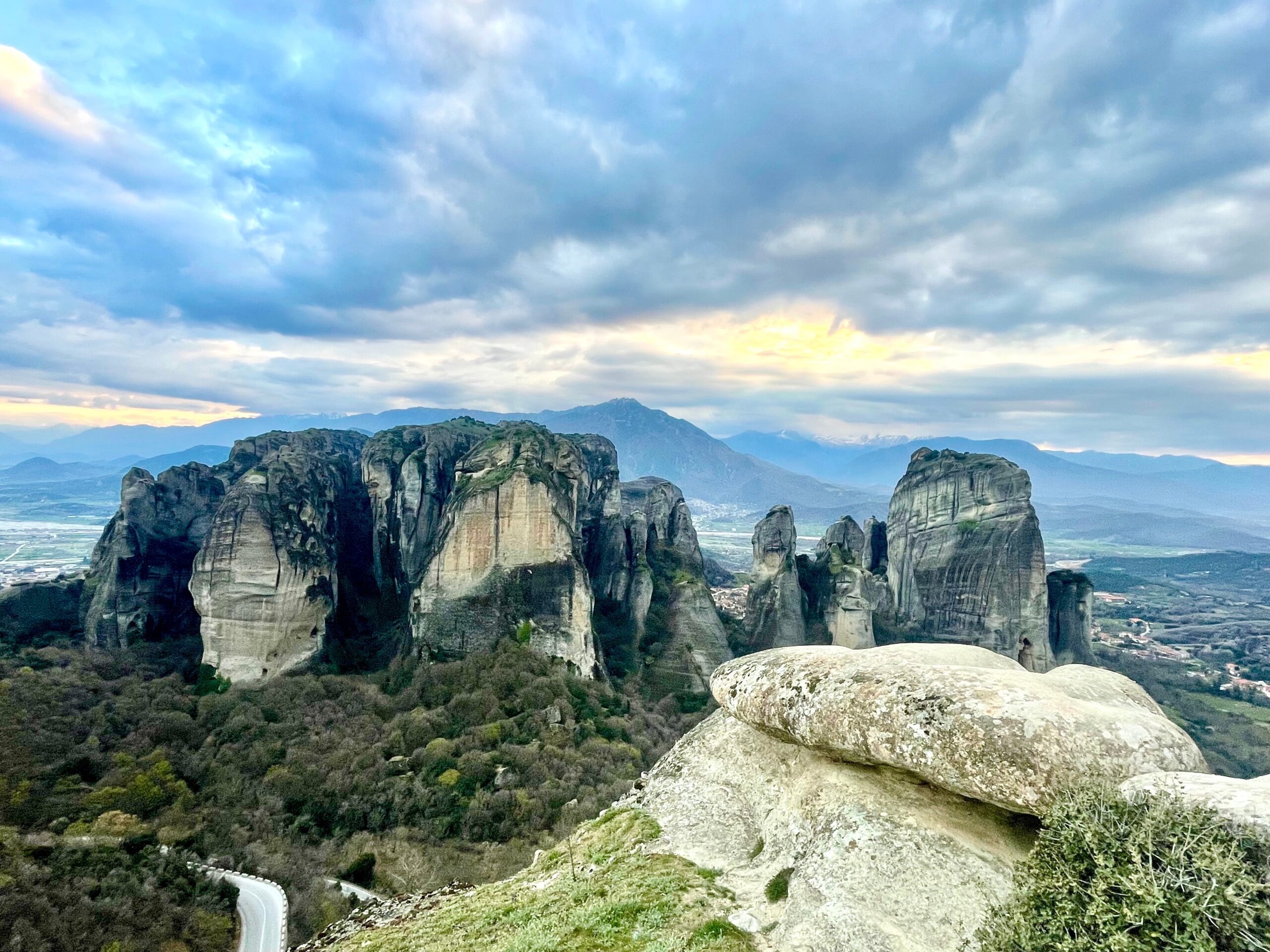
Mighty rock formations in Meteora
What began as a vacation with an established guided tour company (who canceled the tour a few months out because the bus wasn’t full) evolved into one of our favorite trips ever! With flights to Athens and Santorini already booked, we pivoted and decided to travel independently.
This travel blog will feature our path through Greece (and why we took this particular route), plus share some do’s and don’ts about traveling on your own. And since my husband and I were celebrating our 35th anniversary, it was only fitting we began to call it “Our Big Fat Greek Wedding Anniversary Trip.”
After island-hopping to Santorini, we met up with family and explored Athens. From there, we rented a car and traveled almost 1700 miles around Greece’s gorgeous mainland. We criss-crossed the Peloponnese, explored the birthplace of the Olympic Games, and were awe-inspired by mystical Delphi and Holy Meteora.
Our new itinerary also included Nafplio and the Corinth Canal. And we added Philippi, Thessaloniki, and Corinth to follow the footsteps of the Apostle Paul.
To make a long story short(er), here’s a snippet of each stop we made intermixed with travel tips. And I’ve included the links to my travel blogs and photos for each site.
Decide when everyone in your group can travel.
Although the best months to visit Greece are May, June, September and October, our travel timeline was dictated by work timetables. Late-March, considered the “winter/shoulder season,” was best for us —and we would choose March again. Our goal was to avoid peak season prices, extreme heat, and excessive tourism.
Snow-peaked mountains in March.
Advantages of shoulder season travel: Lower prices for accommodations, flights and entrance fees, plus smaller crowds and pleasant weather for hiking and exploring. Disadvantages: Potential for rain, water may be too cool for swimming, fewer island ferries, and reduced services (some businesses close until peak season).
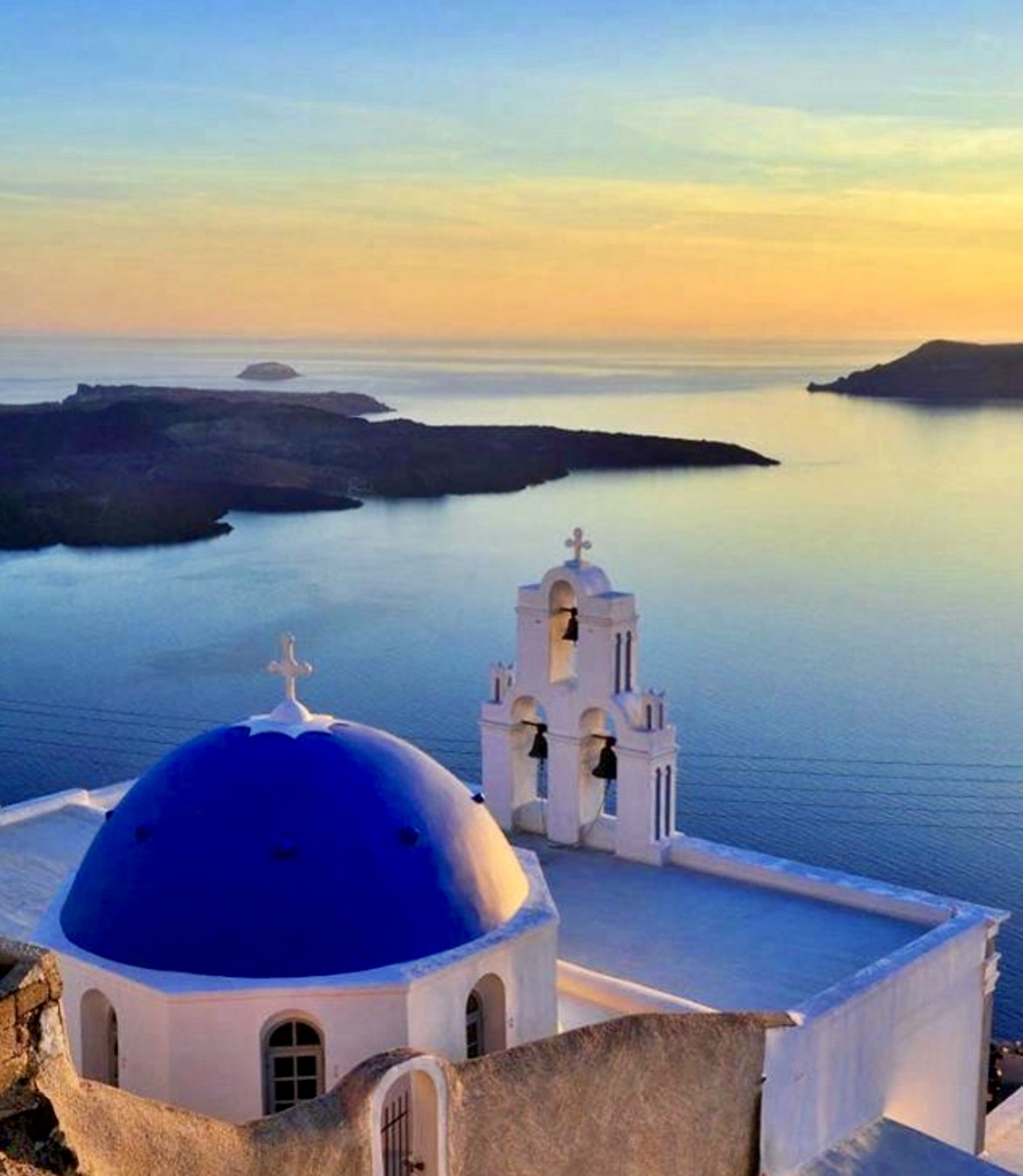
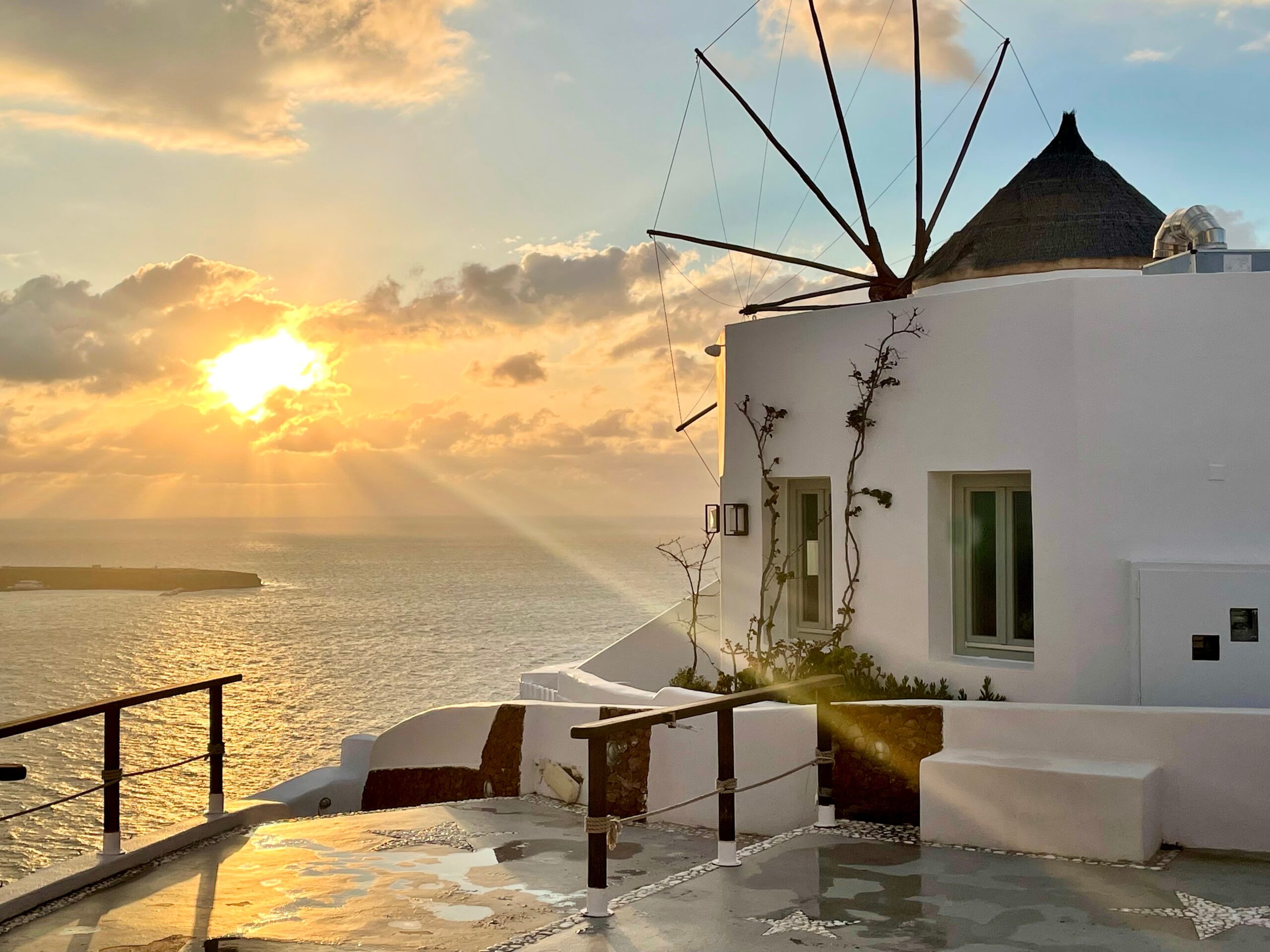
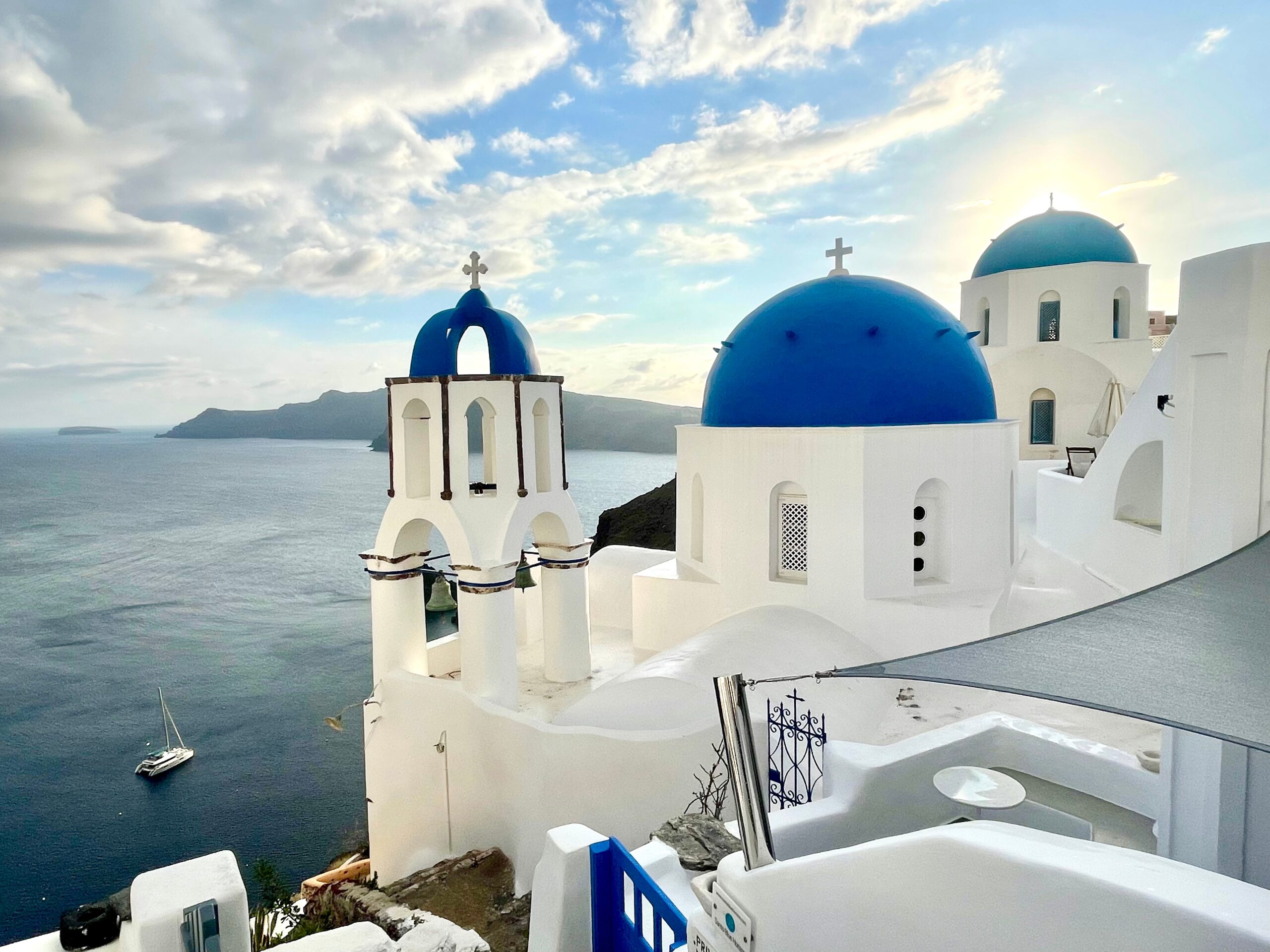
Santorini is the popular shining star of the Aegean Sea. The tiny 15-mile island is actually a collapsed volcano crater. You can expect spectacular sunsets, breathtaking views, blue dome churches, and whitewashed Cycladic cave houses hanging cliffside over the sea.
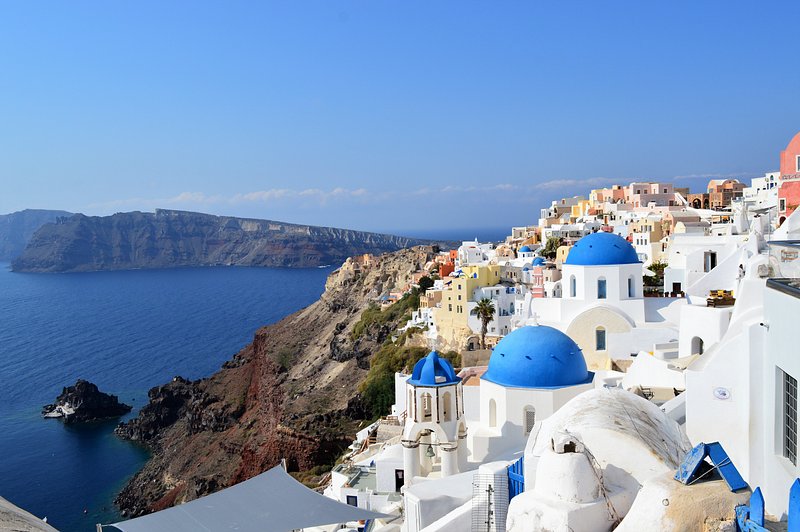
Santorini’s most sought-after villages are Fira (the capital), Firostefani, Imerovigli, and the world-famous, postcard perfect Oia! (shown above)
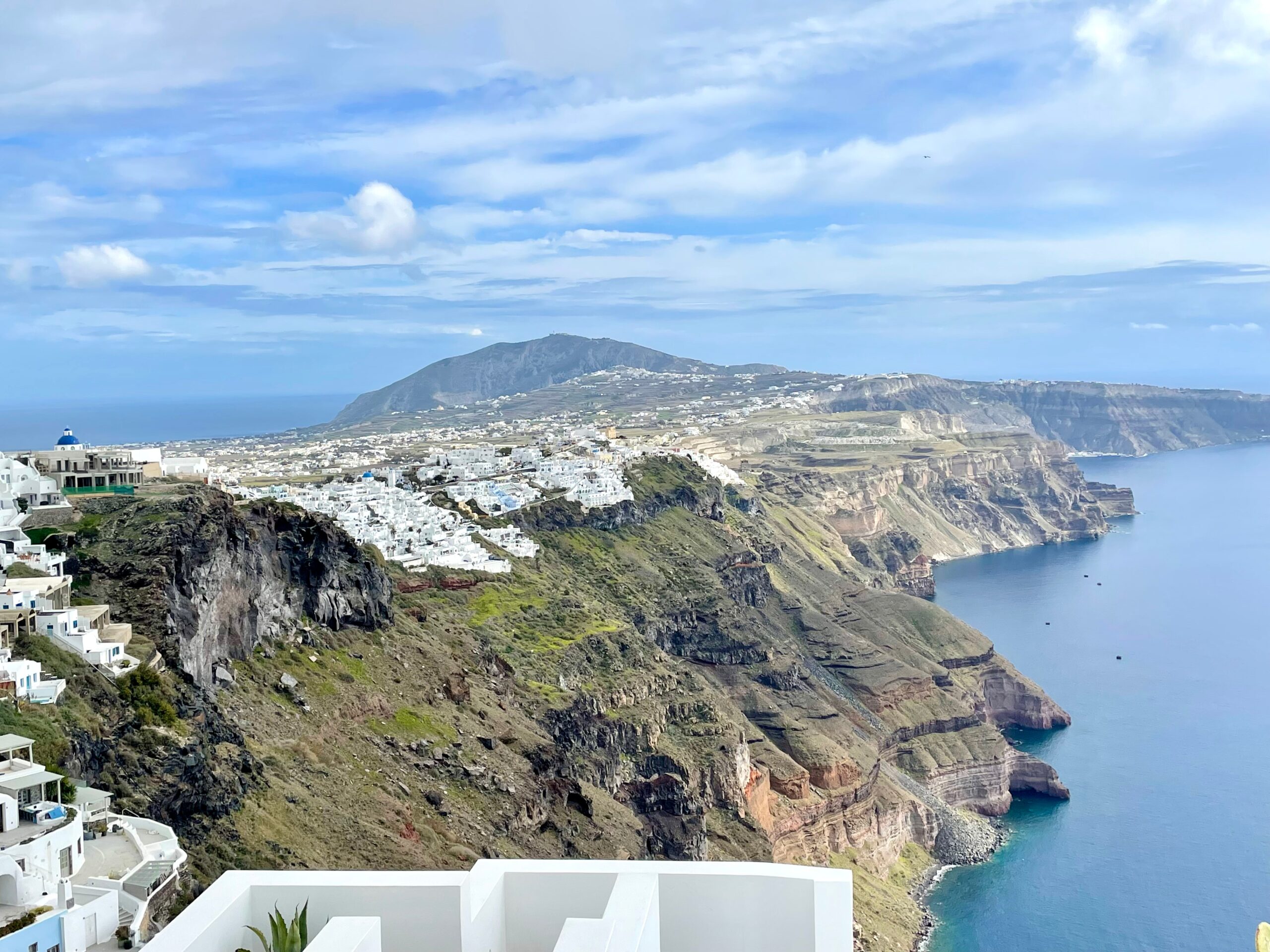
Looking toward Fira from Imerovigli.
We flew from Athens, rented a car, an Airbnb cave-house in Imerovigli, and had four days and three nights to play and explore. Not only did we drive from one end of the island to the other, we hiked a good bit of it too. There were virtually no crowds in March!
Besides getting lost in its unique villages, you can visit several volcanic beaches, climb Skaros Rock, hike the scenic clifftop trail from Fira to Oia, or relax at one of the many charming wineries.
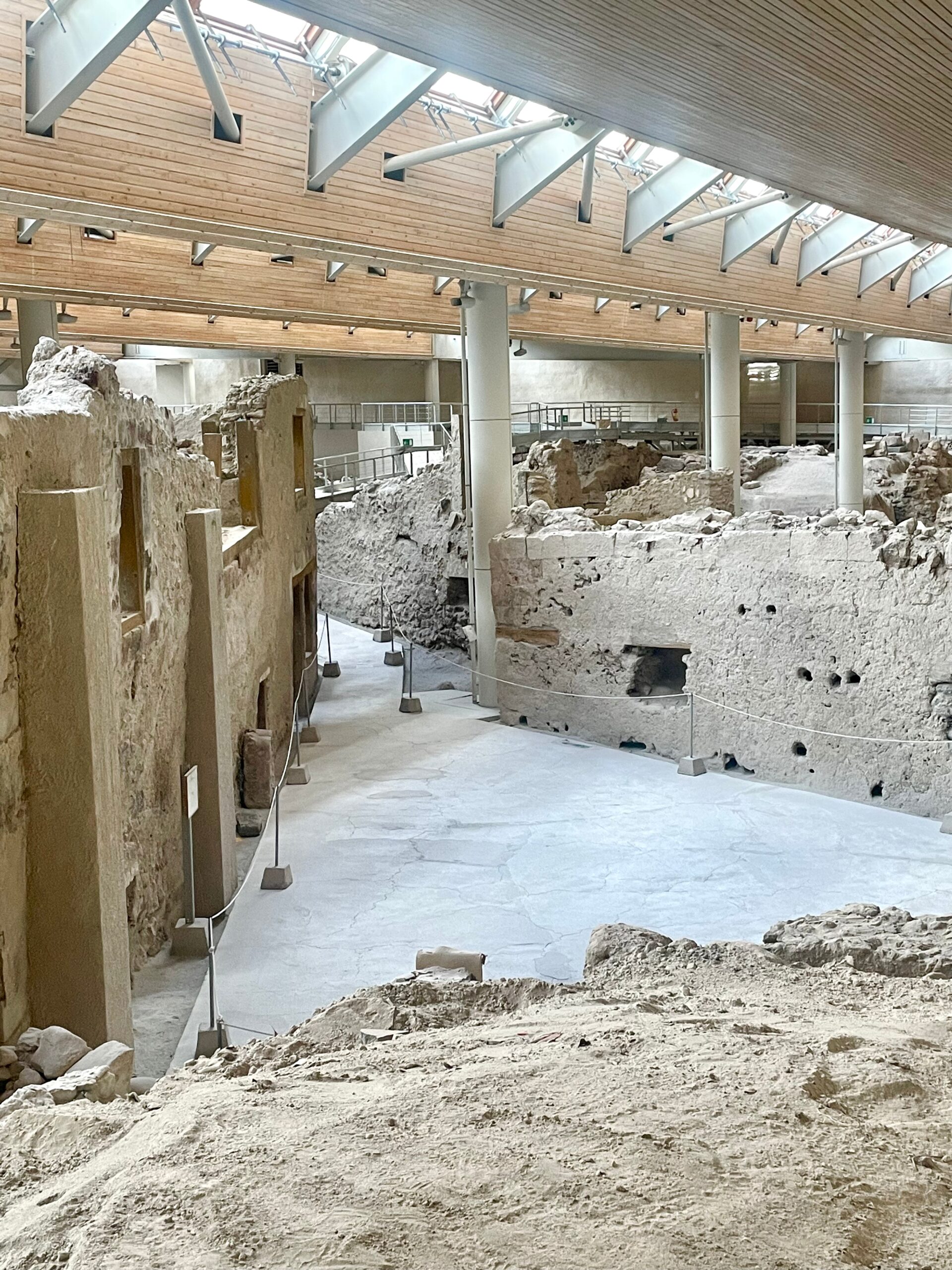
Explore the covered Akrotiri archaeology site: a Minoan civilization buried in time, and ash, from a volcano eruption similar to Pompeii (1630 BC).
For more detailed information, read my two Santorini travel blogs (Click here →): Stunning Santorini, Greece! and Santorini, Greece – Off the Beaten Path.
Before beginning our road trip, we pounded the ancient pavement in Athens. History comes alive in this open-air museum!
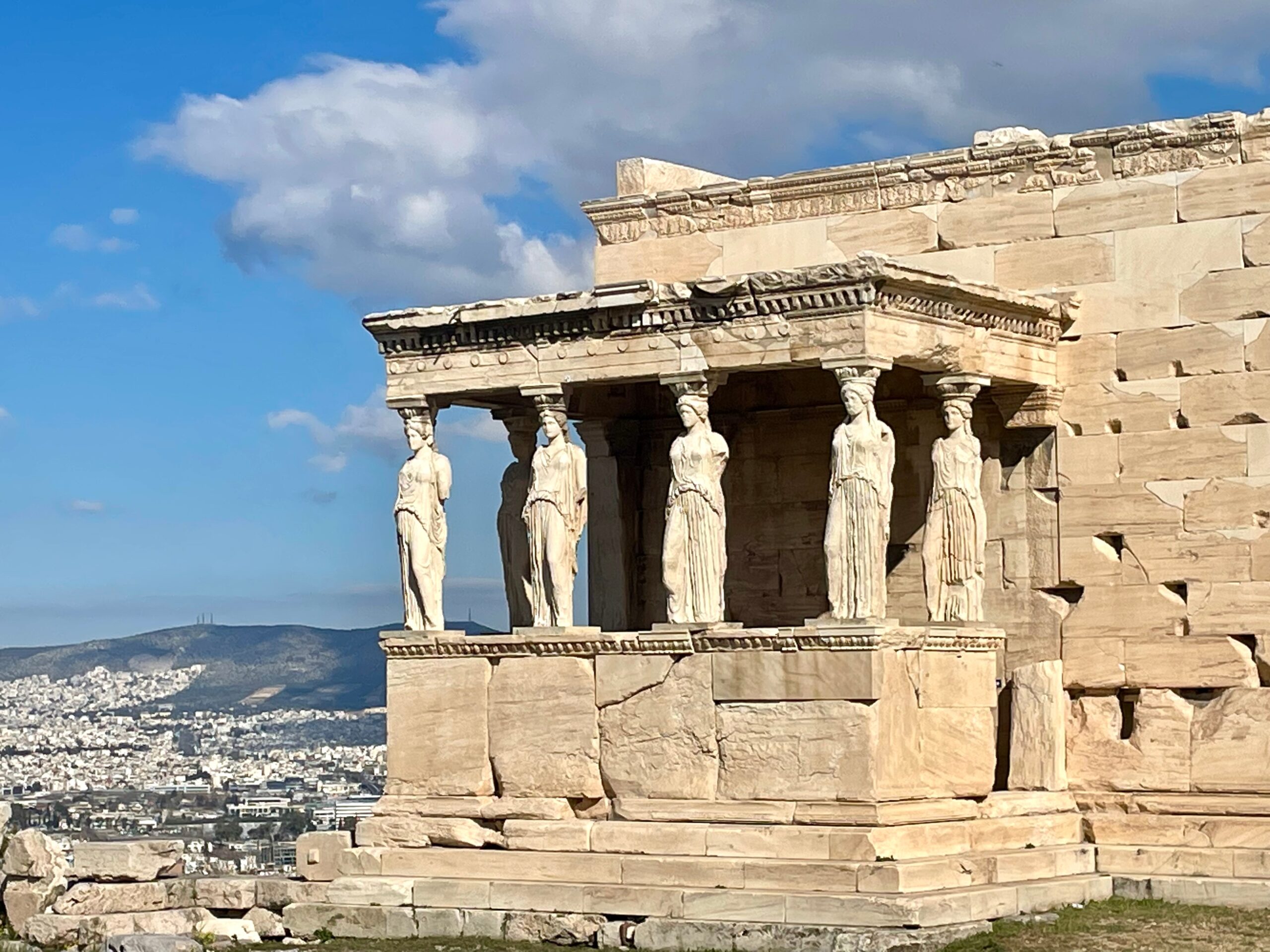
Porch of the Caryatids at the Erechtheion
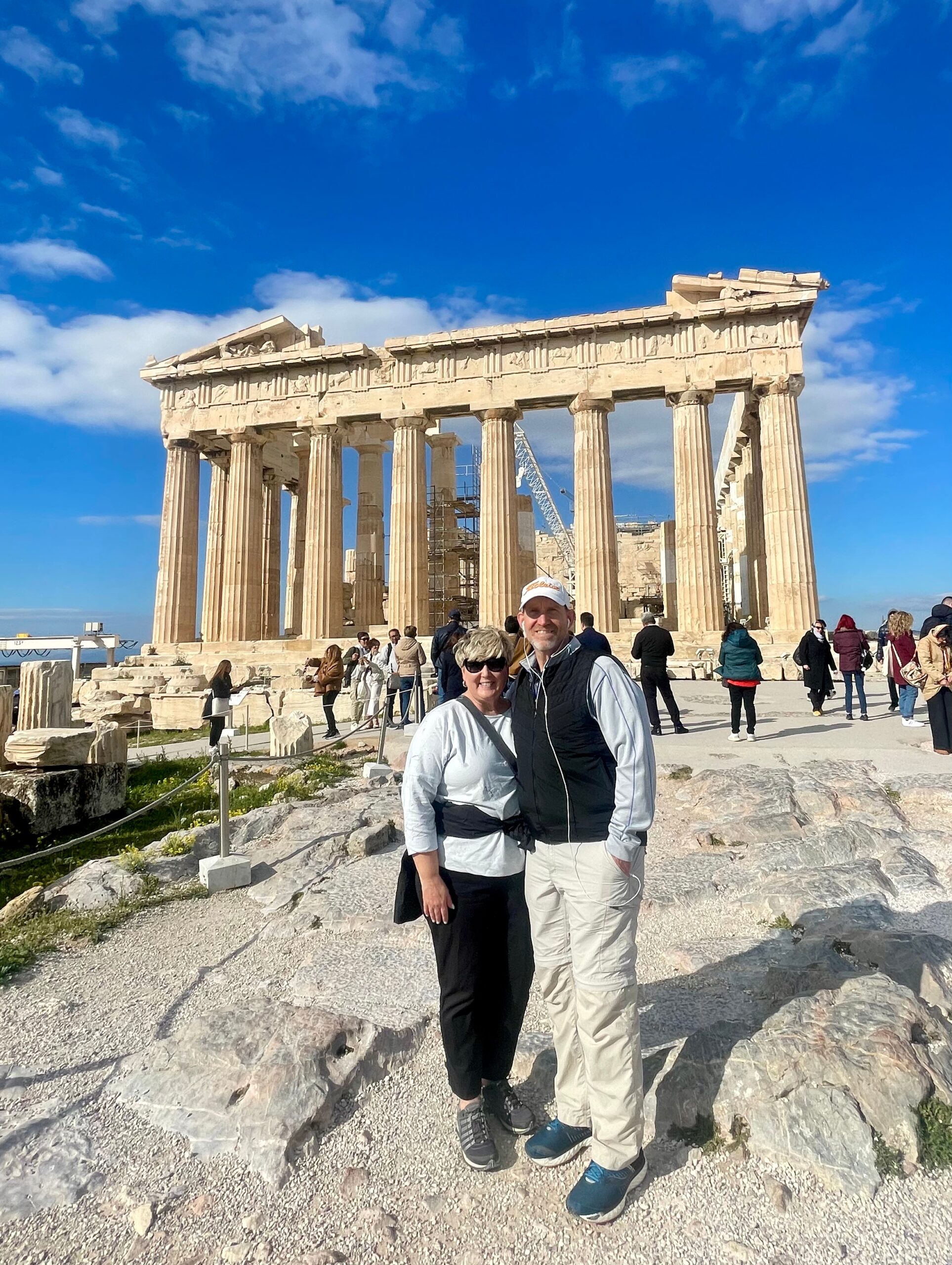
Known as the Cradle of Democracy and Western Philosophy, Athens is home to iconic landmarks like the Parthenon, the Acropolis, and the Ancient Agora. Get to the National Archaeological Museum too; it ranks in the top five museums of the world.
Athens is not stuck in the past! It’s also a cosmopolitan (and very crowded) city with buzzing neighborhoods like Plaka, Monastiraki and Psiri.
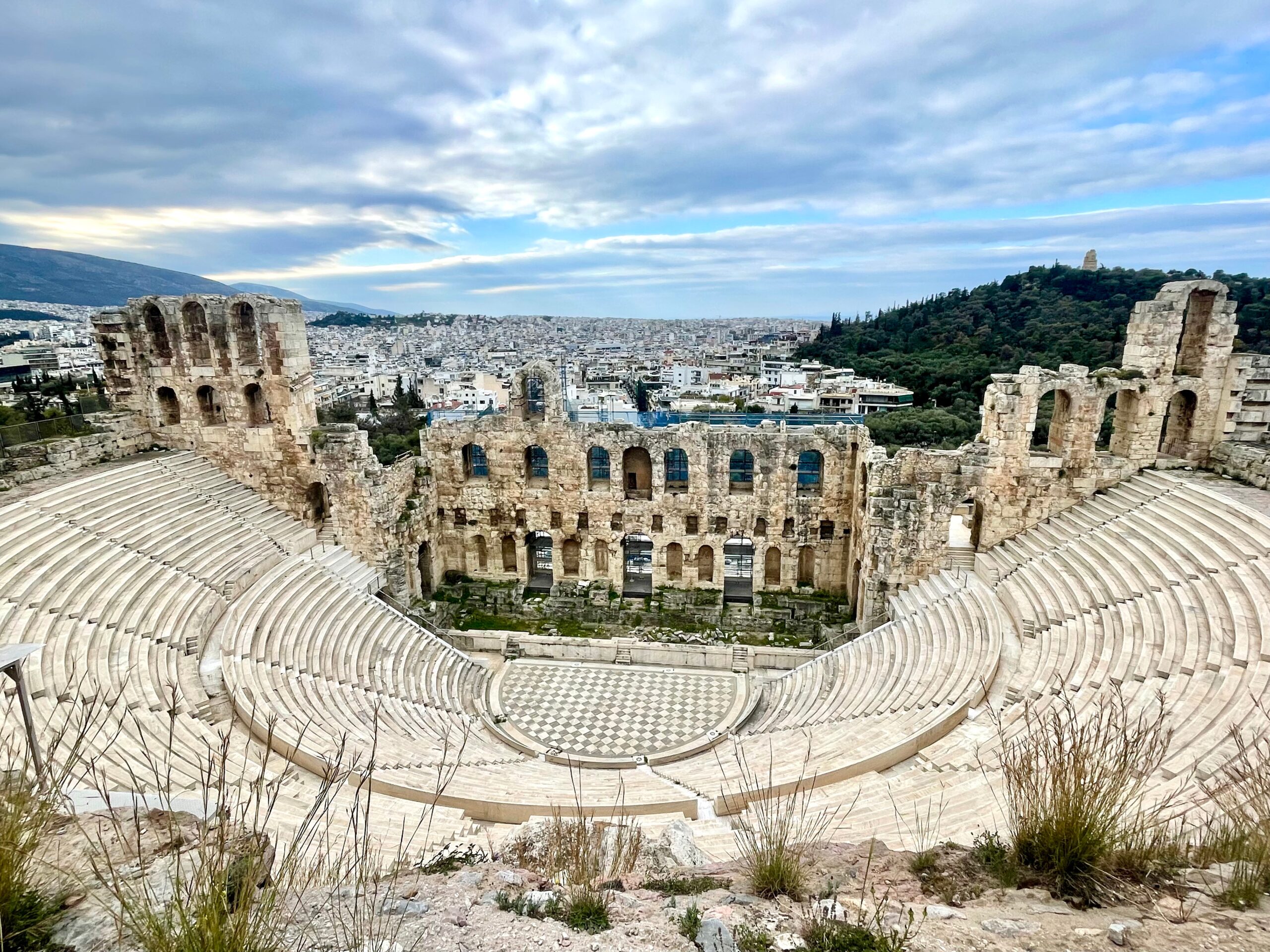
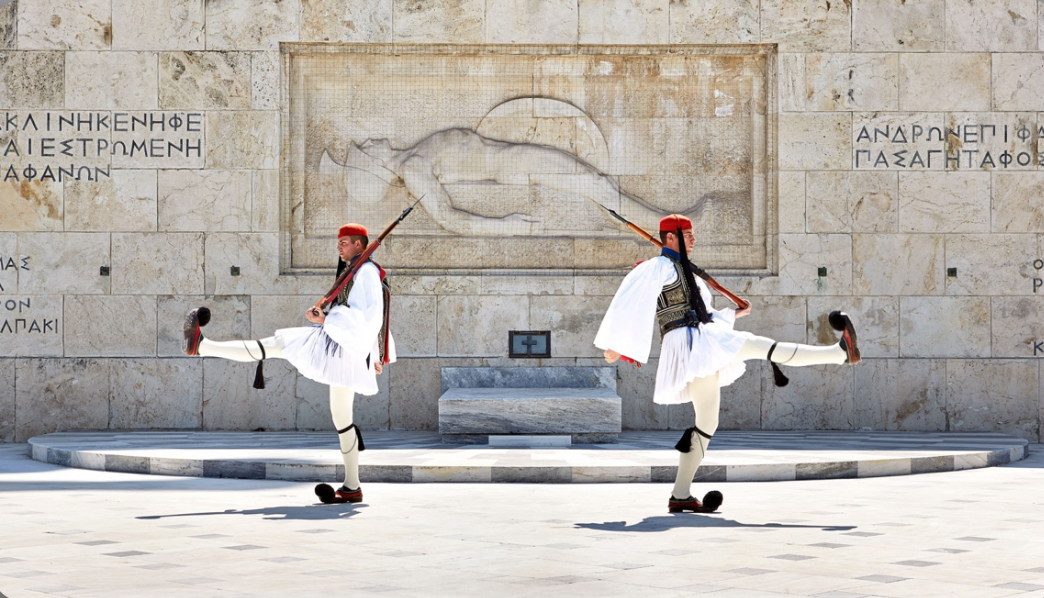
Wandering its streets, you’ll find layers of history everywhere: Greek and Roman ruins, Byzantine churches, neoclassical buildings, lively squares, and a multitude of Olympic stadiums and parks. It’s a big city.
With our new travel itinerary, we had one afternoon and evening, plus one full LONG day in Athens. For Athens tips (especially on a time crunch), read my two blogs: (Click here →): Athens in A Day and Athens, Greece – The Acropolis.
Renting a car and driving in Greece can feel like you’re in a video game. It’s part road trip, part rollercoaster, and part action adventure (where Tetris parking skills will be required to survive). It’s pricey to play the game, so be prepared with LOTS of change for toll roads and tunnels.
Let’s cut to the chase: In Greece, cars are VERY TINY. Both driving and parking can be a challenge. My brother-in-law rented a Range Rover Defender, and I worried it would just be too big. However, the four of us spent so much time in that car, there were zero complaints (especially after I broke my tailbone on Day Two).
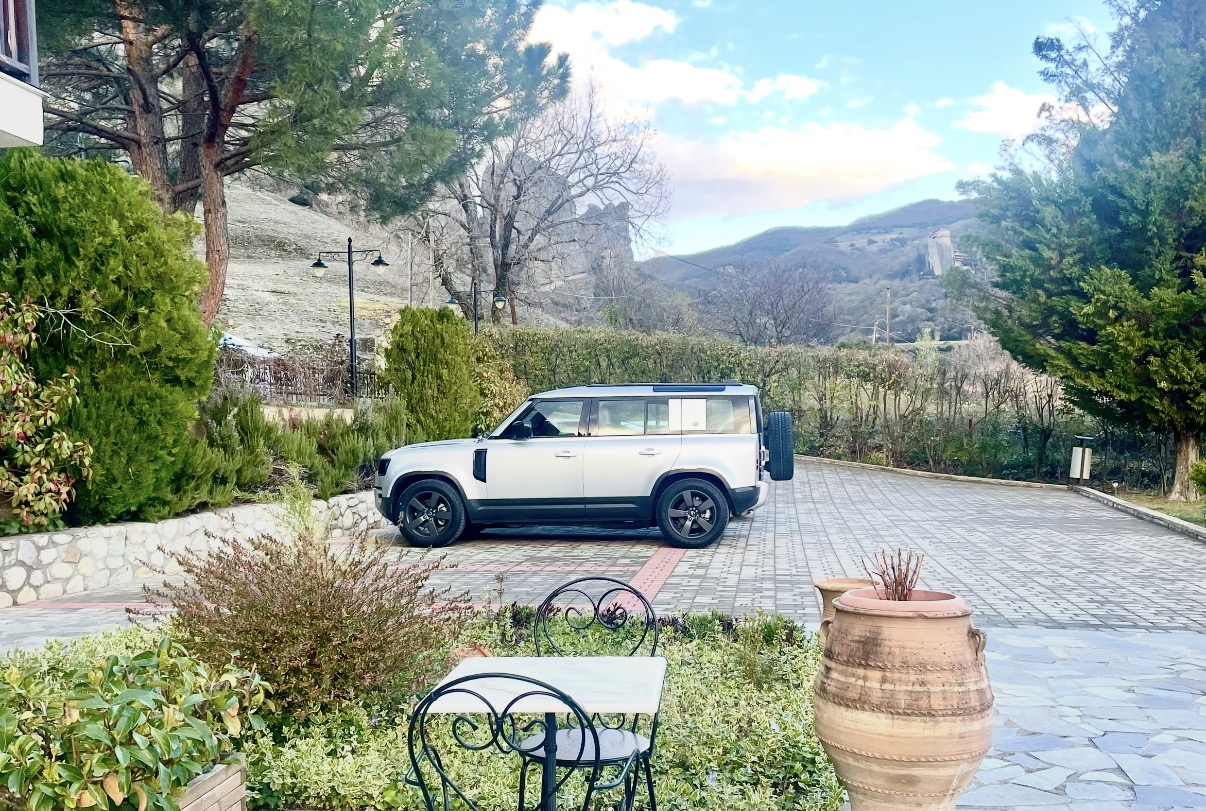
Our chariot!
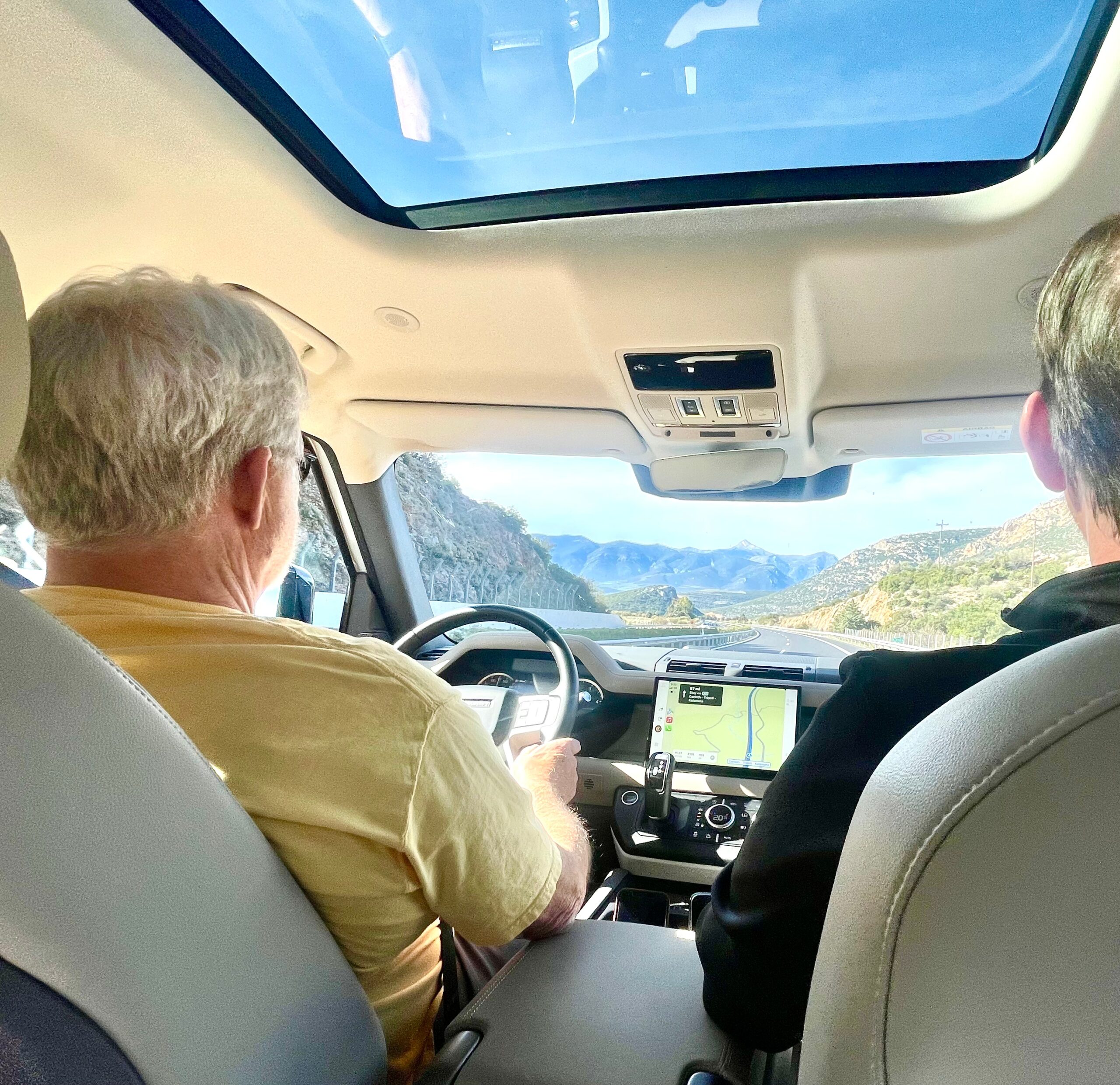
Not only was it comfortable, our luggage and souvenirs fit, and it came with a large GPS screen and directions in English. Only two places gave us challenges: the narrow backstreets of Thessaloniki and parking at our cliff-hanging Delphi hotel.
TIP: Make sure your auto rental has a working GPS with maps and audio in your language!
TIP: For documentation and peace of mind: Photograph and video your entire automobile before you leave the rental lot and again before you turn it in. We read about tourists getting charged, once home, for damages which never occurred.
On our way to Olympia from Athens, we made a pitstop at the Corinth Canal. Until 2004, the only way to drive into the Peloponnese was over the isthmus.
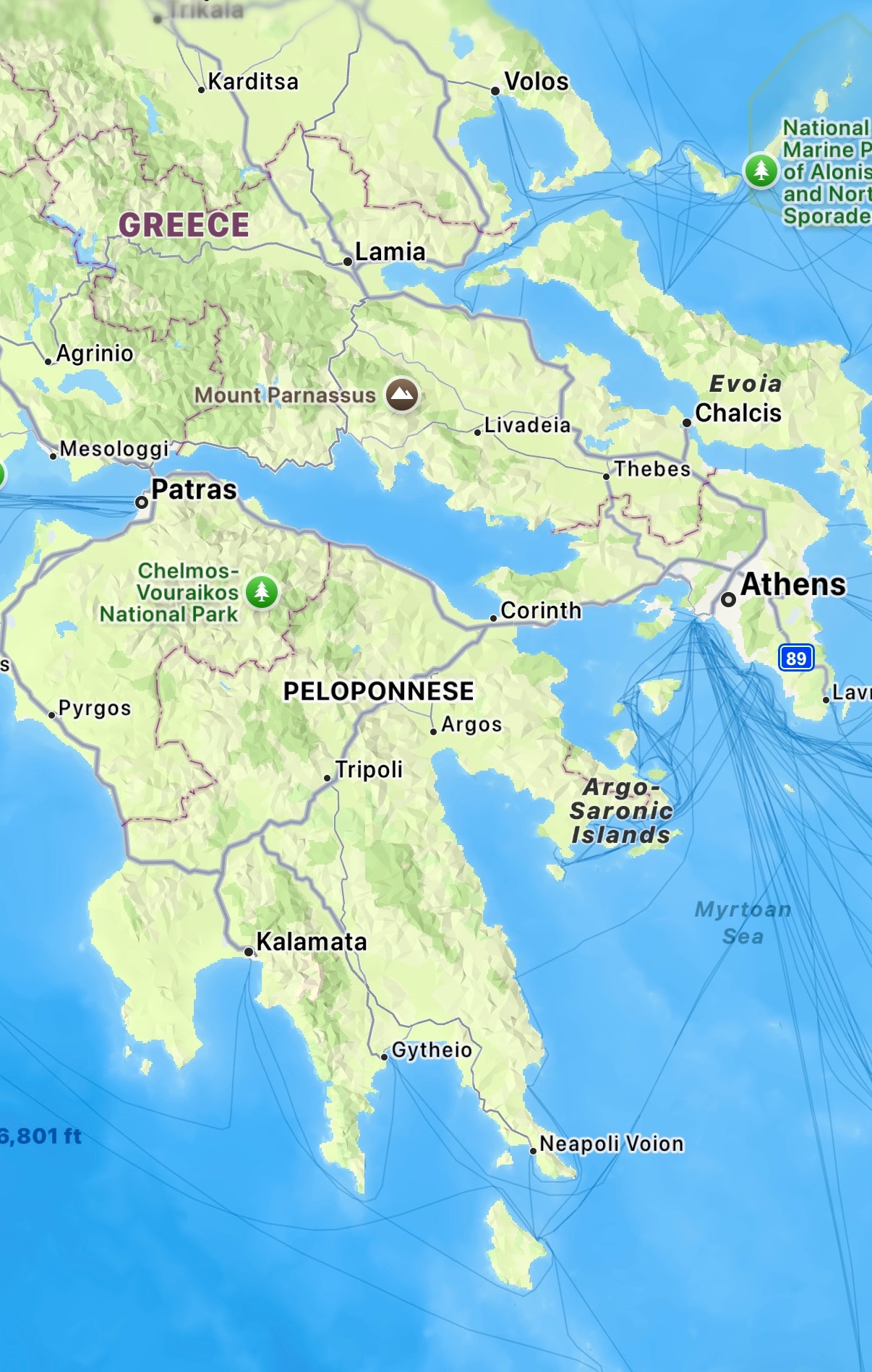
Without the isthmus, the Peloponnese would be an island. It’s a land bridge about four miles wide which links the Agean Sea to the east and Ioanian Sea to the west. Corinth controlled the isthmus and the busy trade route seaports on each side.
Traveling all the way around the Peloponnese was once extremely dangerous and time consuming. Countless rulers (like Julius Caesar and Emperor Nero) dreamed of digging a canal through the isthmus for centuries.
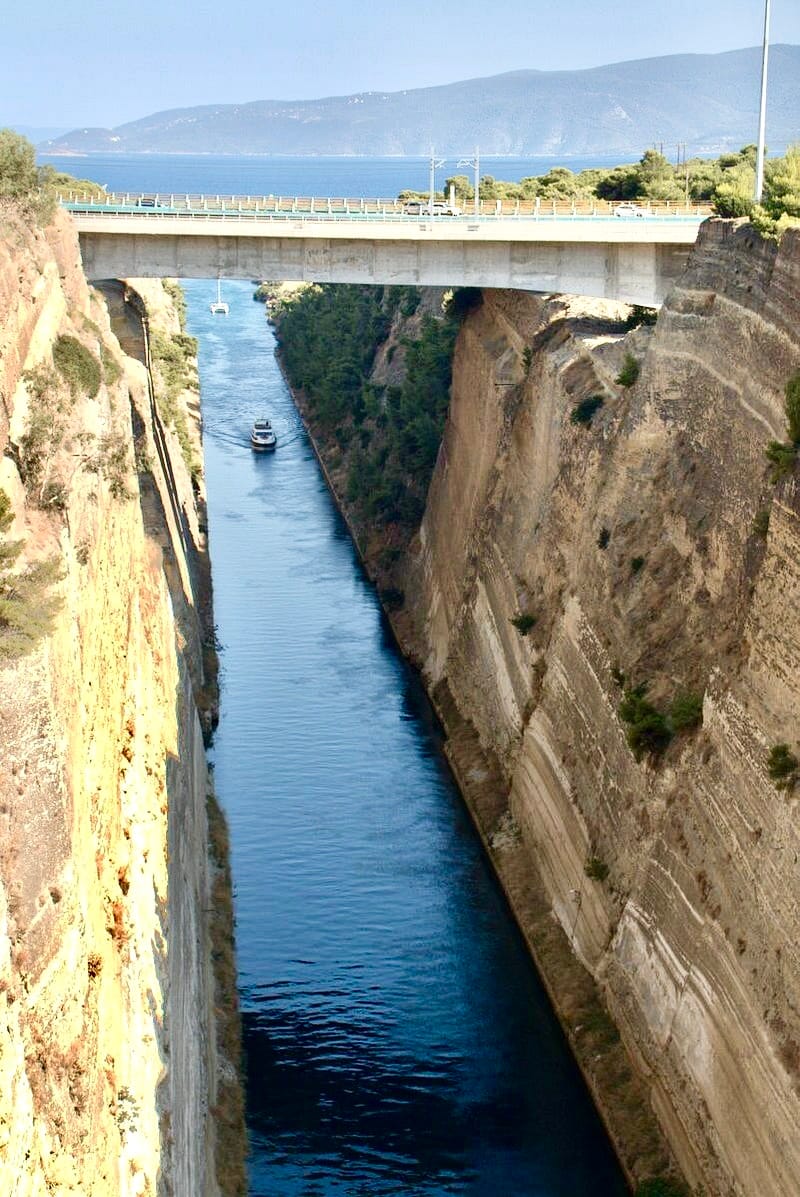
After 2,500 years of failed attempts, the Corinth Canal was finally completed in 1893 by cutting through 285-feet of rock to sea level.
You can read about the canal and how ancient Corinth found a solution to move cargo, and even ships, over the isthmus in my Corinth blog: (Click here →): Echoes of Corinth, Greece – A Great Ancient Superpower
Ancient Olympia is the birthplace of the very first sports competitions and the Olympic Games.
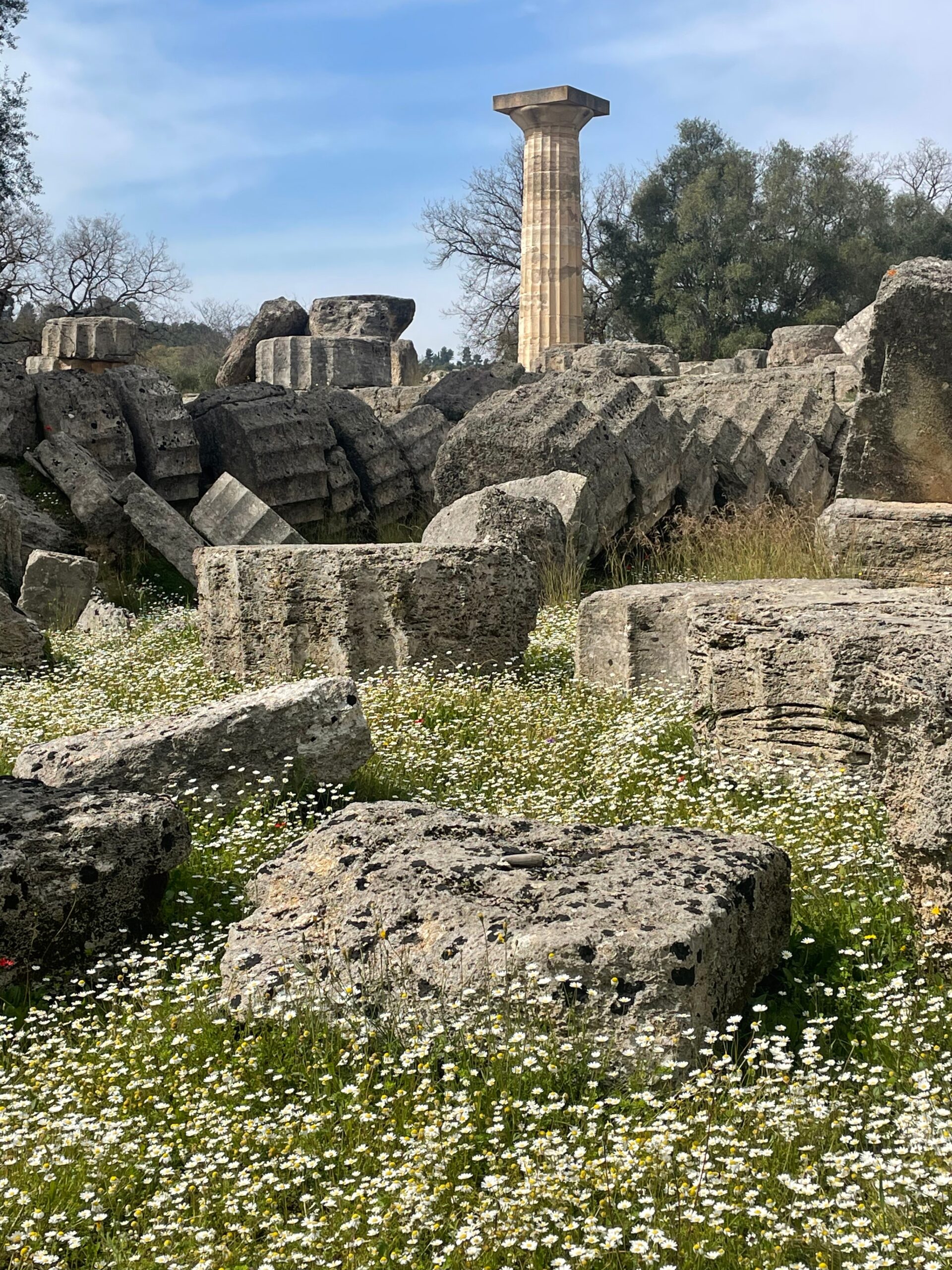
Temple of Zeus ruins
Olympia began as a local religious festival to honor the mythical god Zeus and his wife, Hera. It evolved into the most revered sanctuary and athletic center in Greece for over 1200 years.
Today, more than 200 countries still come together every two years to compete in the modern Olympics.
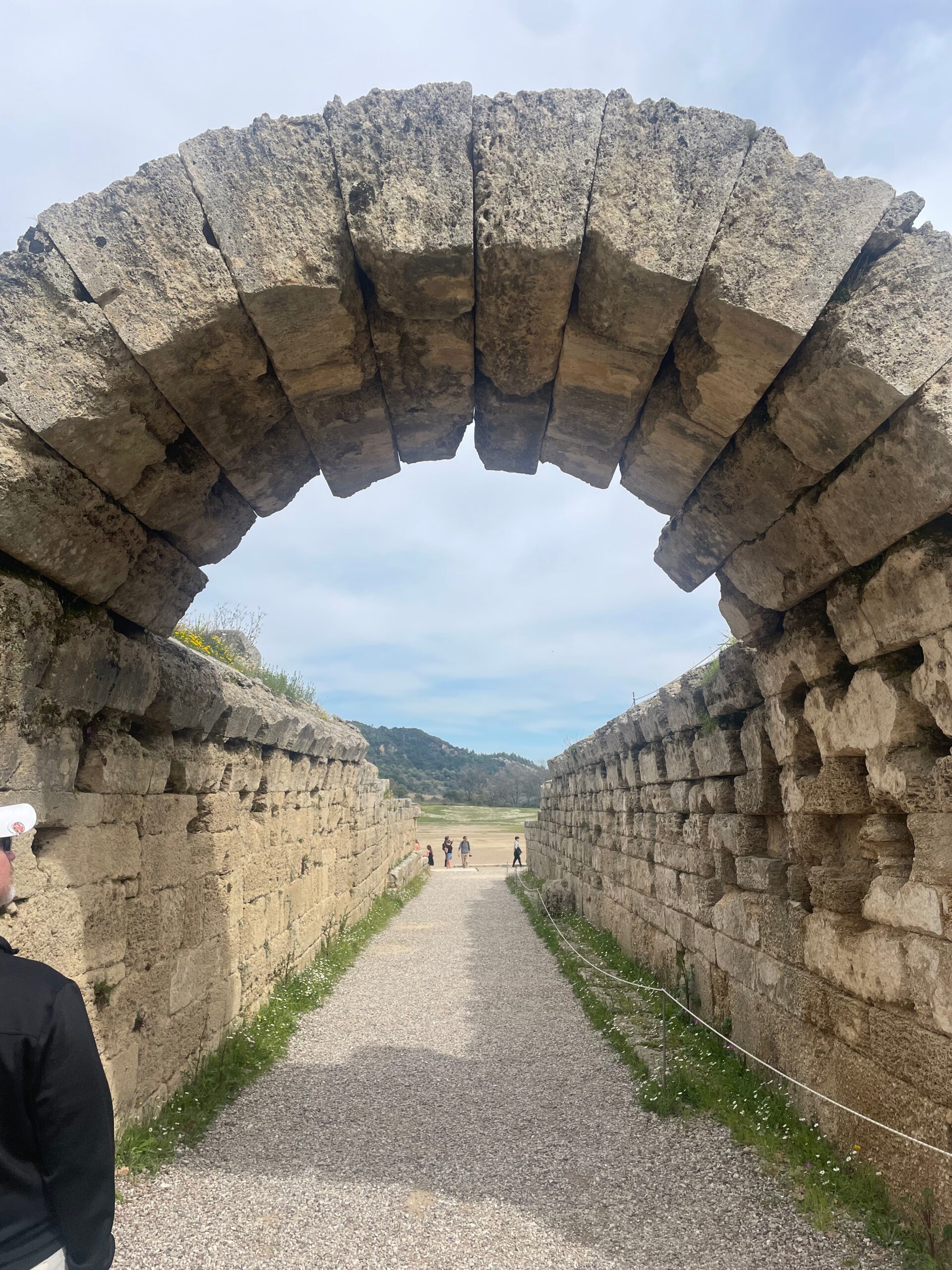
Athletes ran through this stone tunnel to the roar of 45,000 fans. Below: Spectators watched from the grassy banks; there were no bleachers.
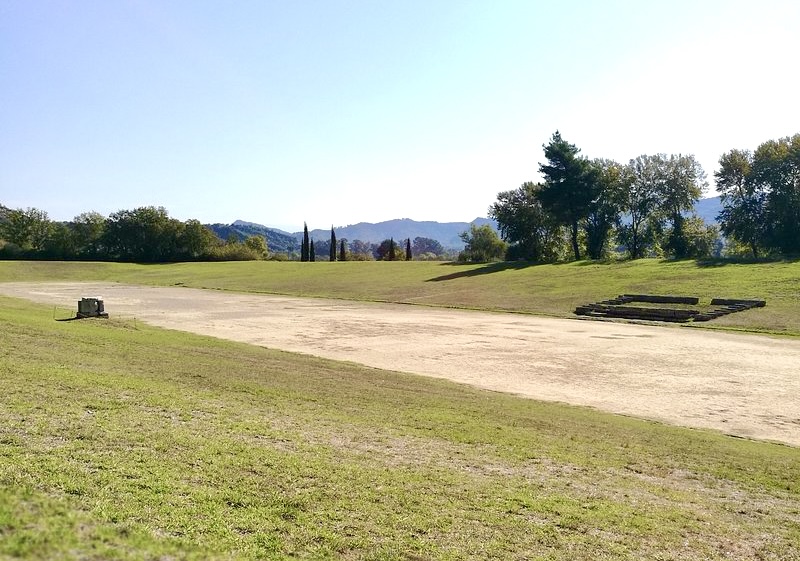
Check out the gymnasium, wrestling school, the world’s first stadium and track, lots of temples, the Winner’s Circle for victors, and the fantastic museum.
Every Olympic torch is still lit at the Temple of Hera altar before it heads to the next country hosting the Olympics.
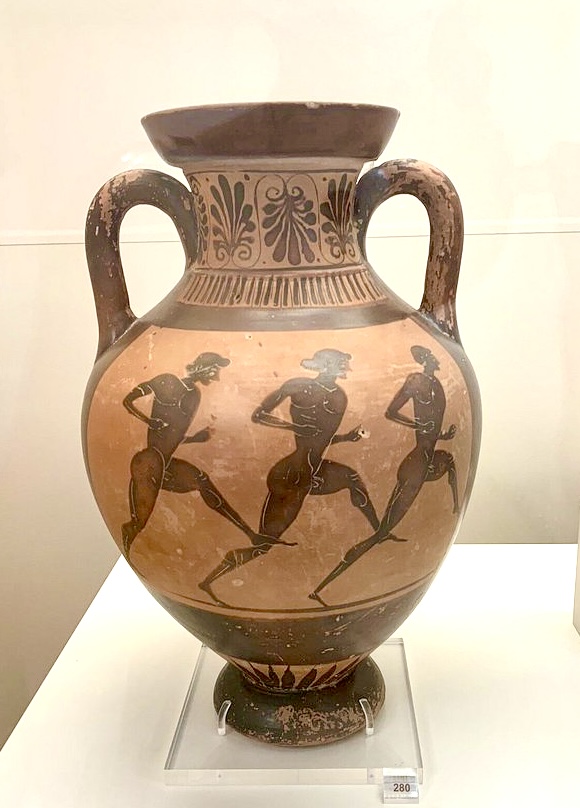
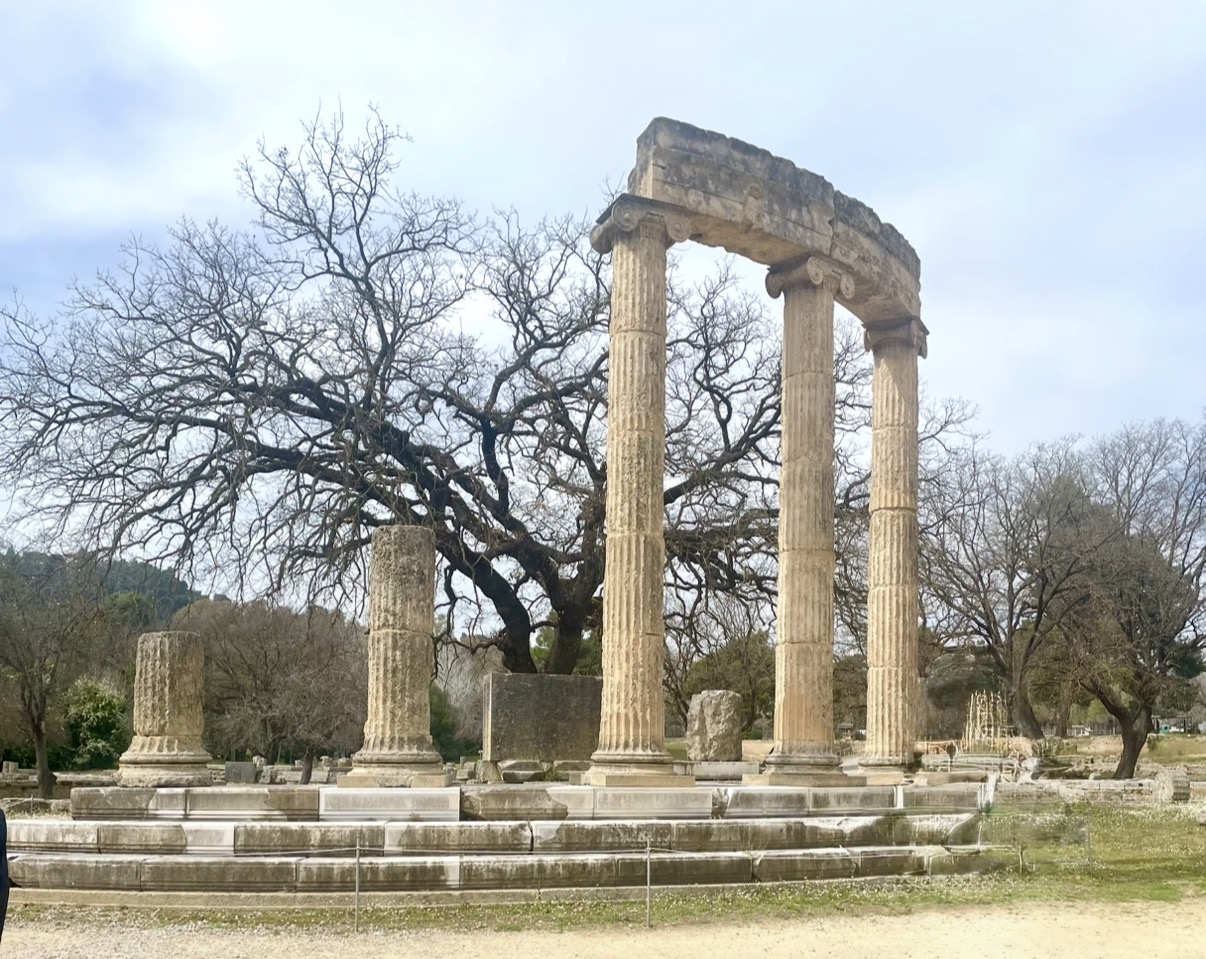
Learn more about the ruins of Olympia in my travel blog. (Click here →):Olympia, Greece – The Birthplace of the Olympics
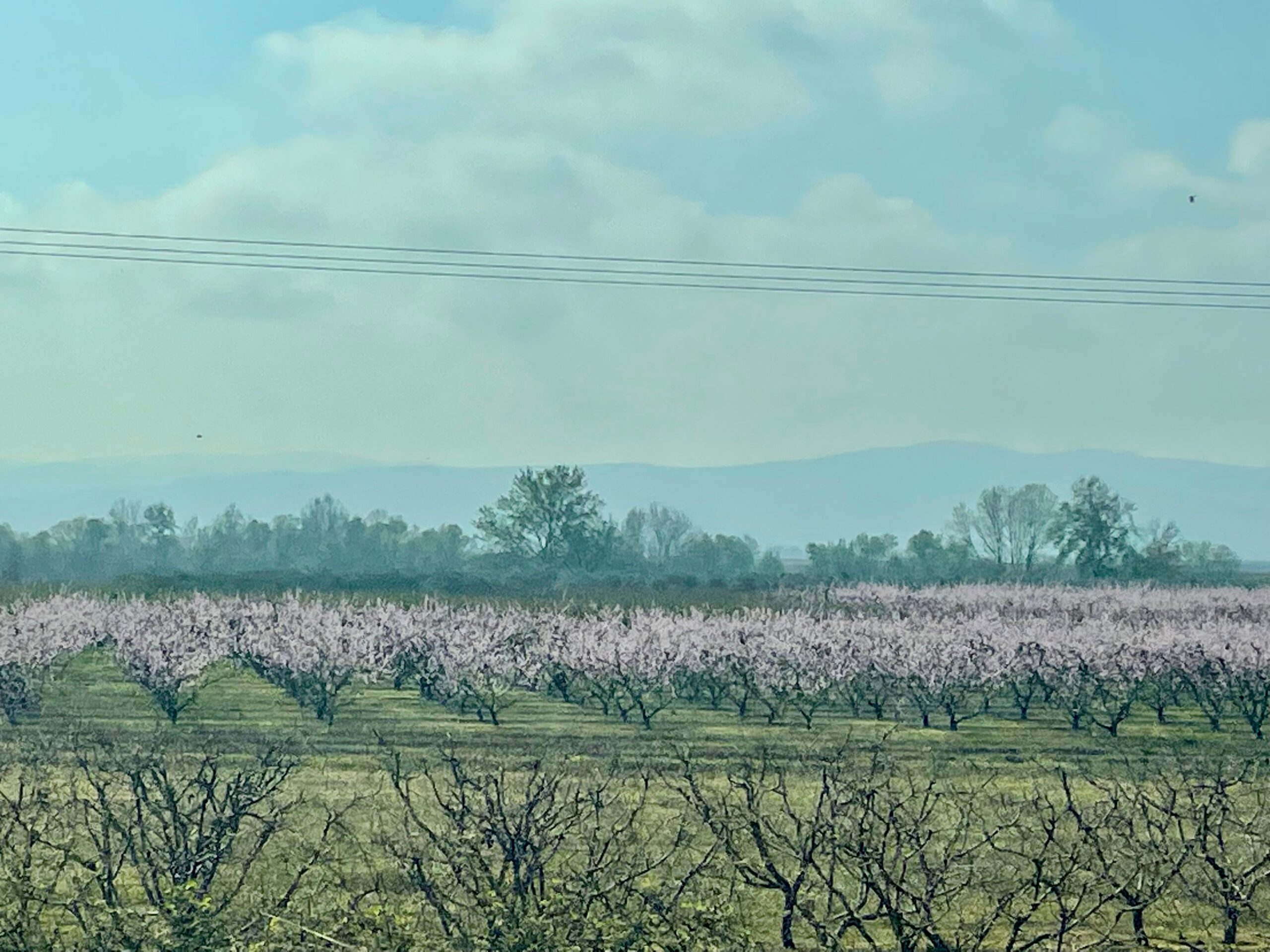
If you want to be where the crowds “are not,” escape to Greece’s scenic countryside.
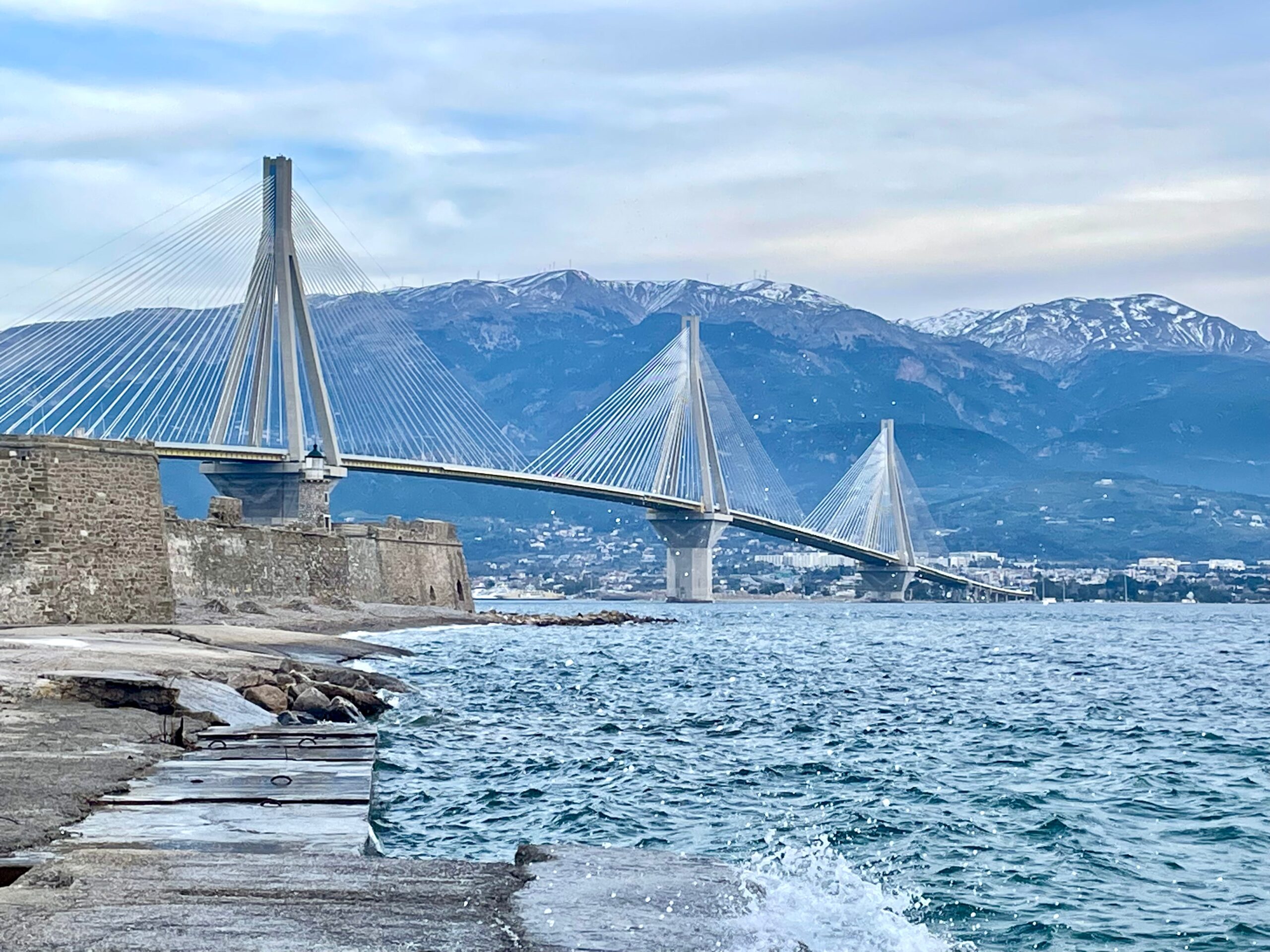
Rio-Antirrio Bridge
Greece’s new Rio Antirrio Bridge (inaugurated before the 2004 Athens Olympics) connects mainland Greece to the Peloponnese and crosses the Gulf of Corinth.
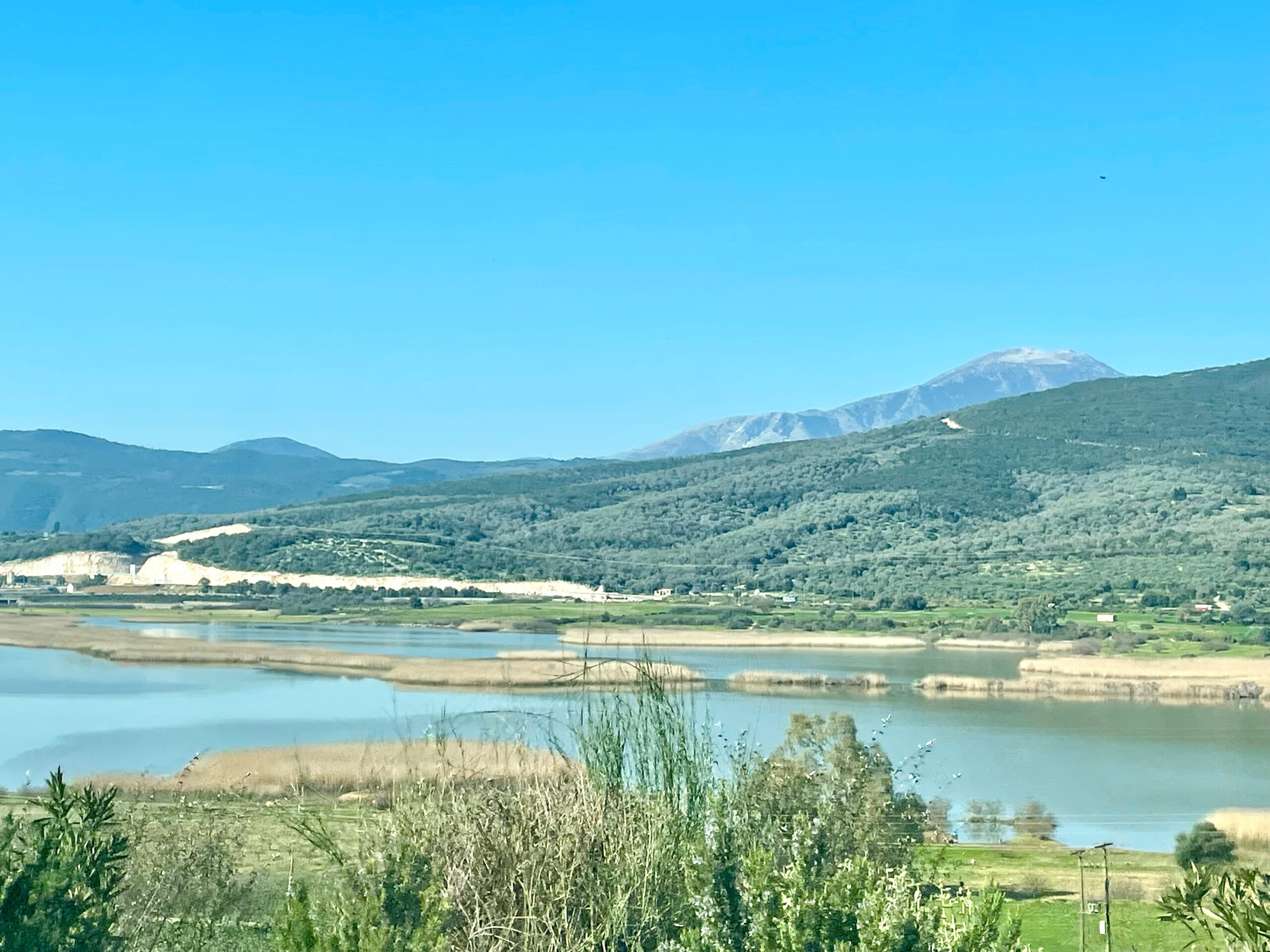
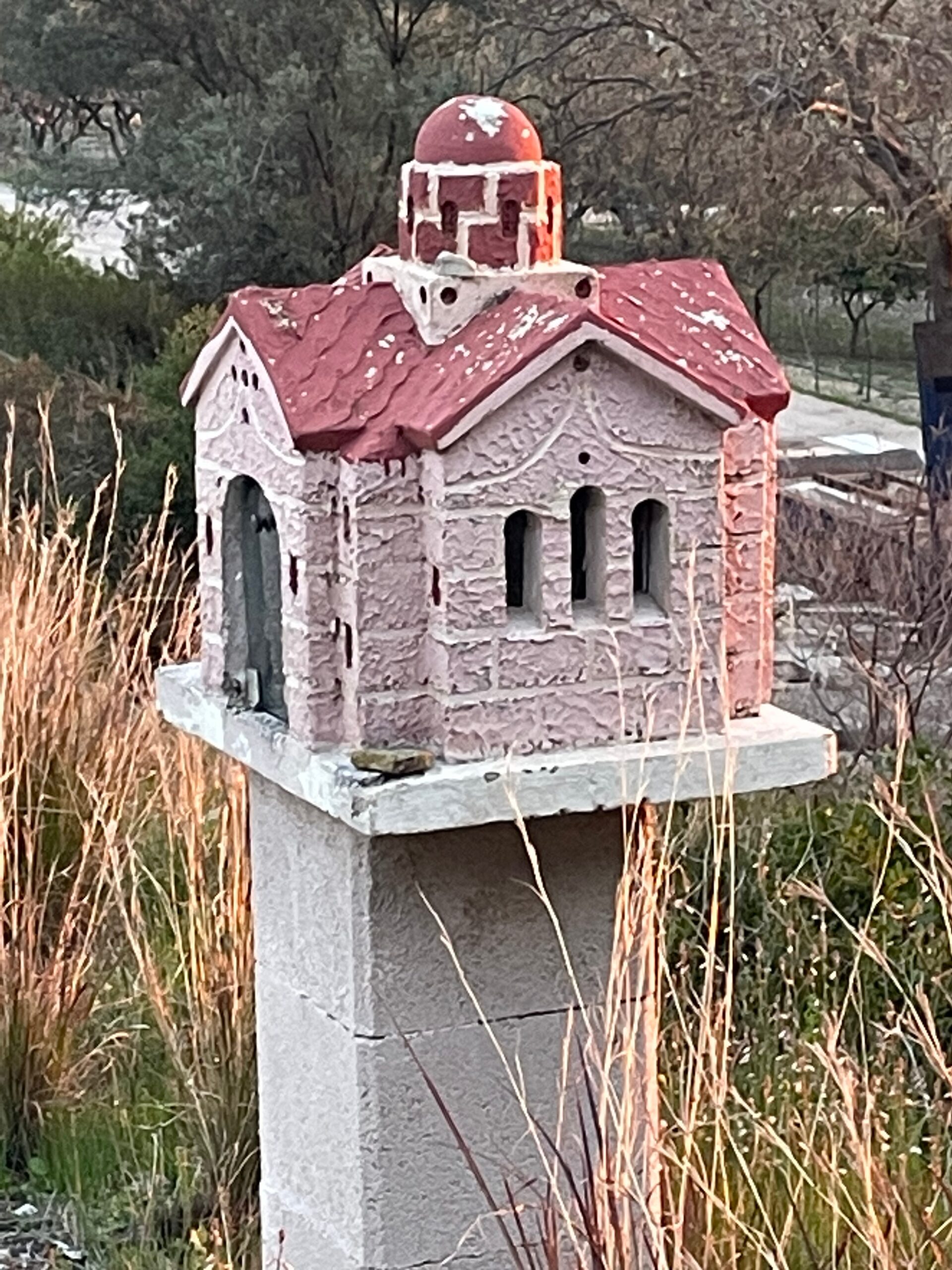
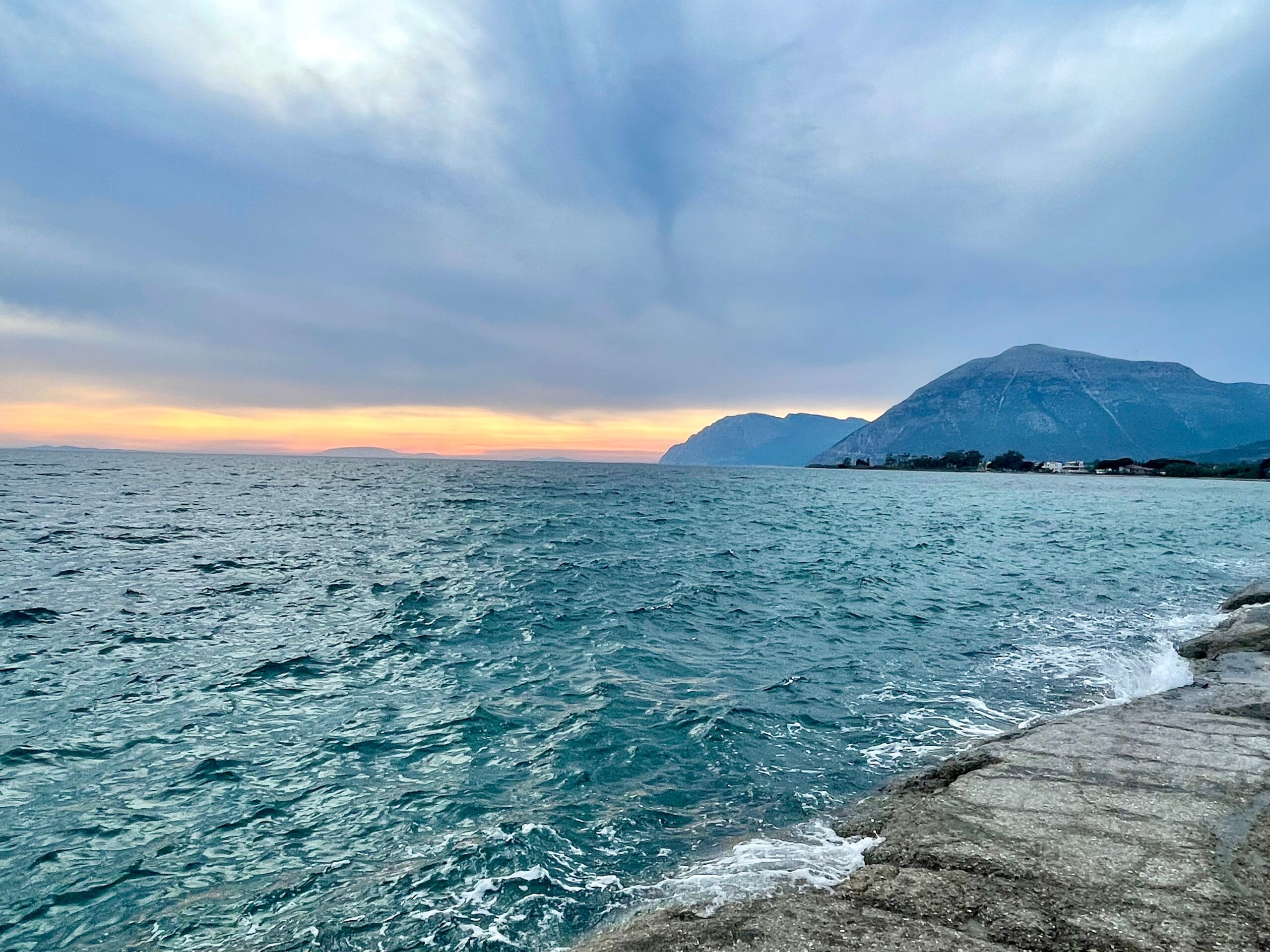
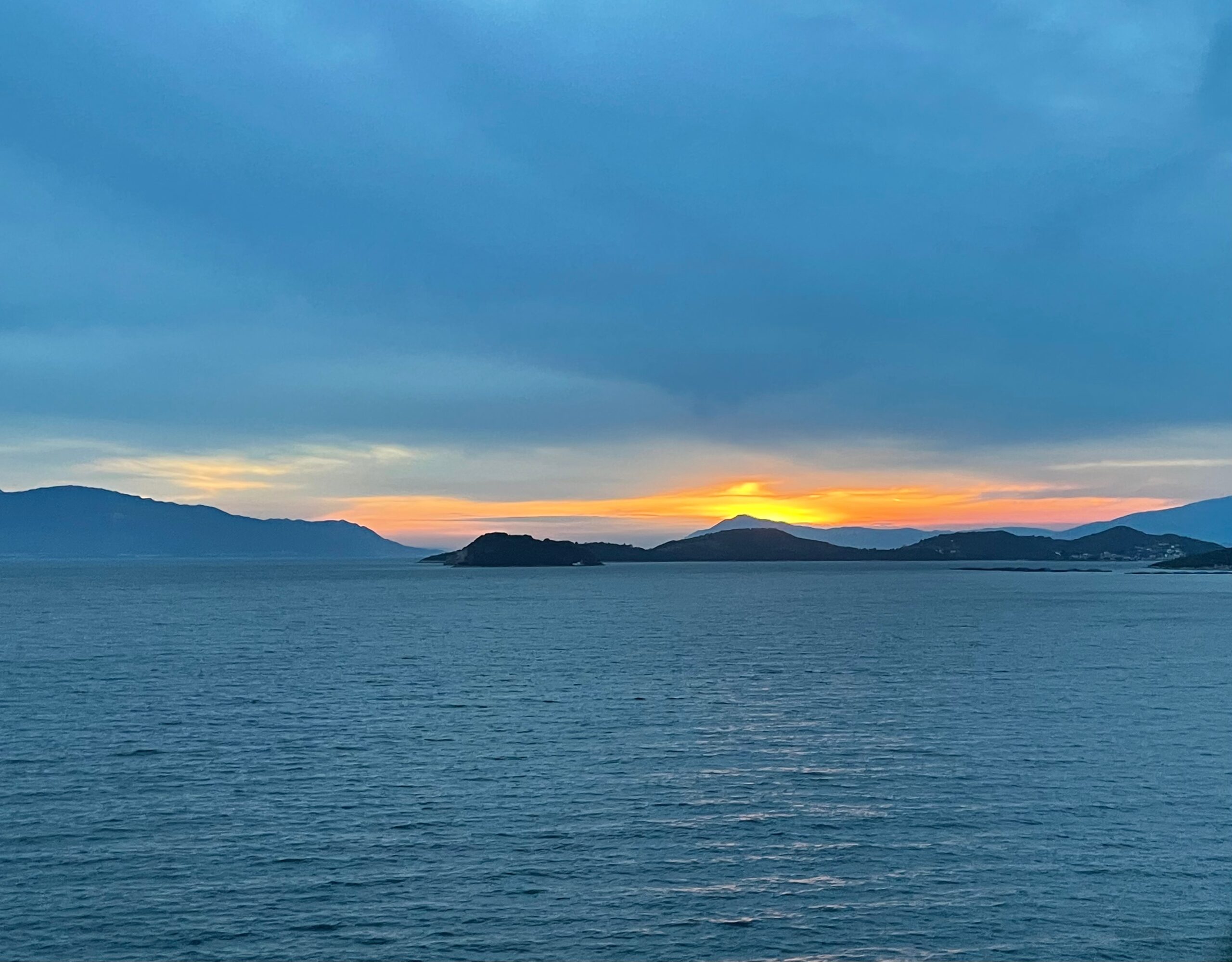
We saw little Greek church shrines along the backroads. Built as memorials for loss or as gratitude for accident survivors, they also offer a place for prayer, rest, or a warning to drivers to slow down on dangerous roads. Below: Sunset on our way to Delphi.
Ancient Delphi was an important Greek religious sanctuary where the Oracle prophetess, Pythia (a woman), entertained questions and predicted the future for the mythical god Apollo for 1200 years. It was also the home of the Pythian Games.
After a night in Delfi Village, we woke up to majestic views of Mt. Parnassus from our balcony.
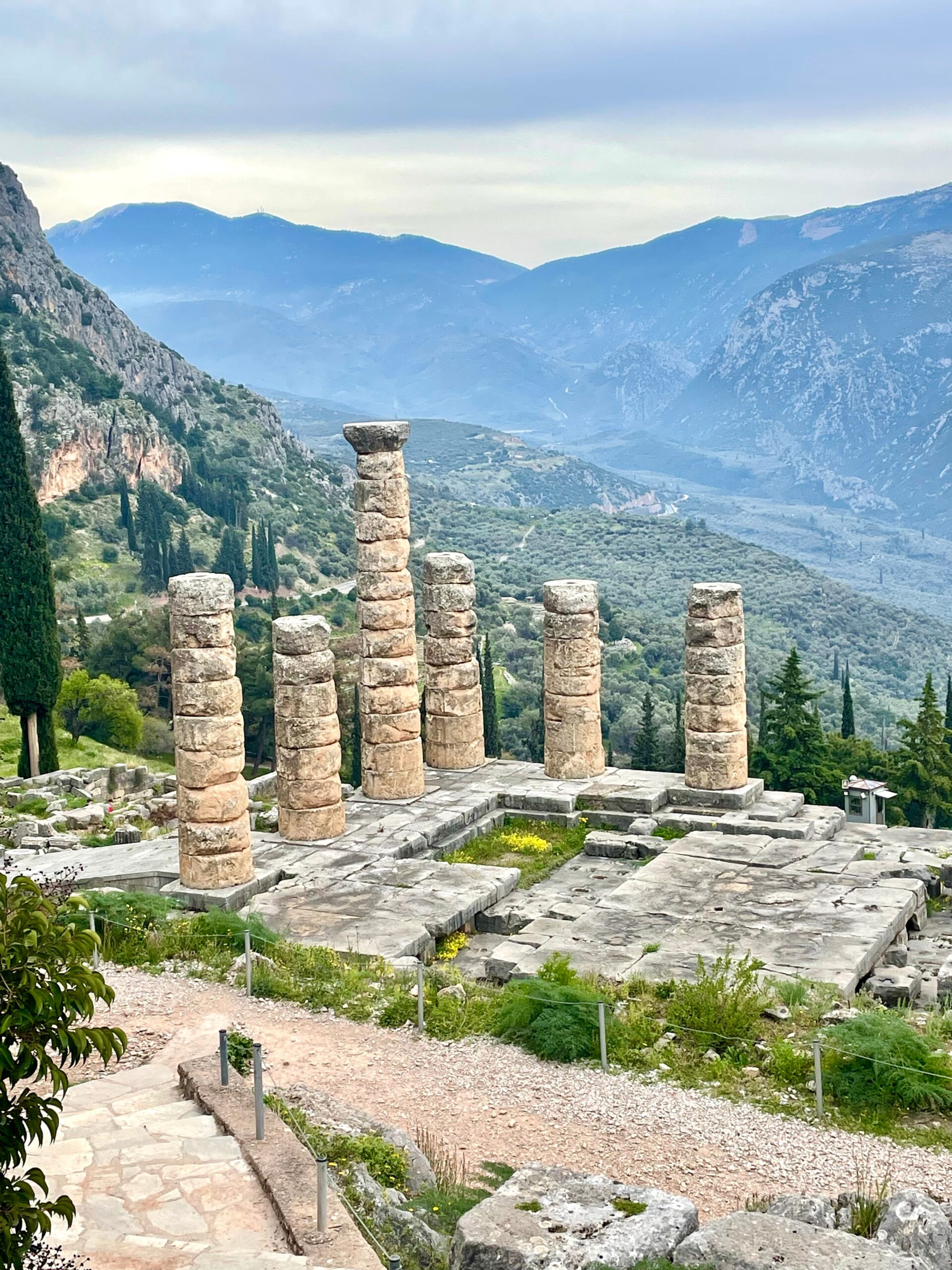
A portion of the Temple of Apollo
Our guide led us up the ancient Sacred Way through the agora, to treasuries and monuments, and to the Temple of Apollo.
Important decisions were made when kings, emperors, and pilgrims traveled from afar to ask for advice from the oracle.
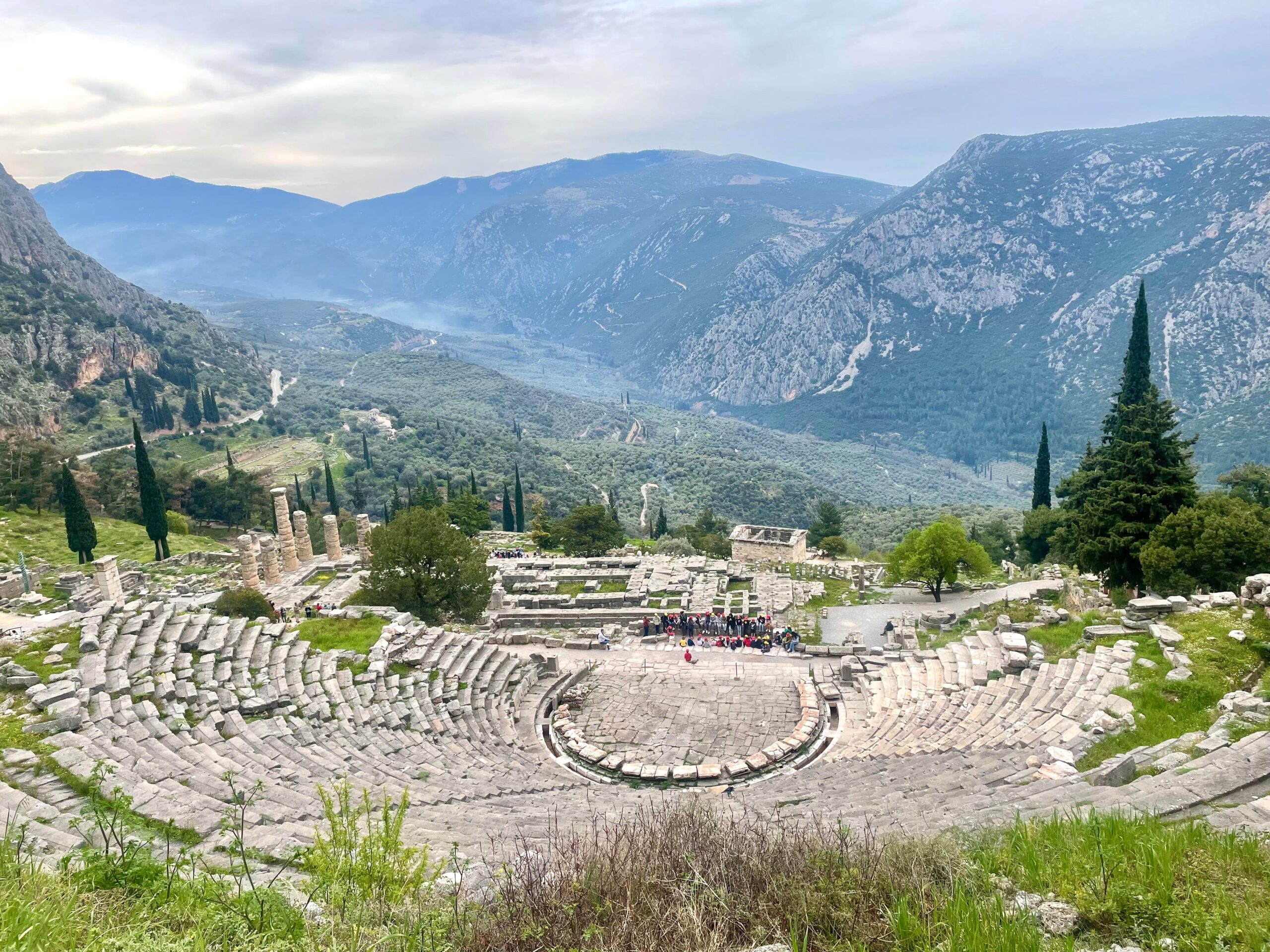
We climbed even higher up the mountain to the Theater and the Pythian Games Stadium.
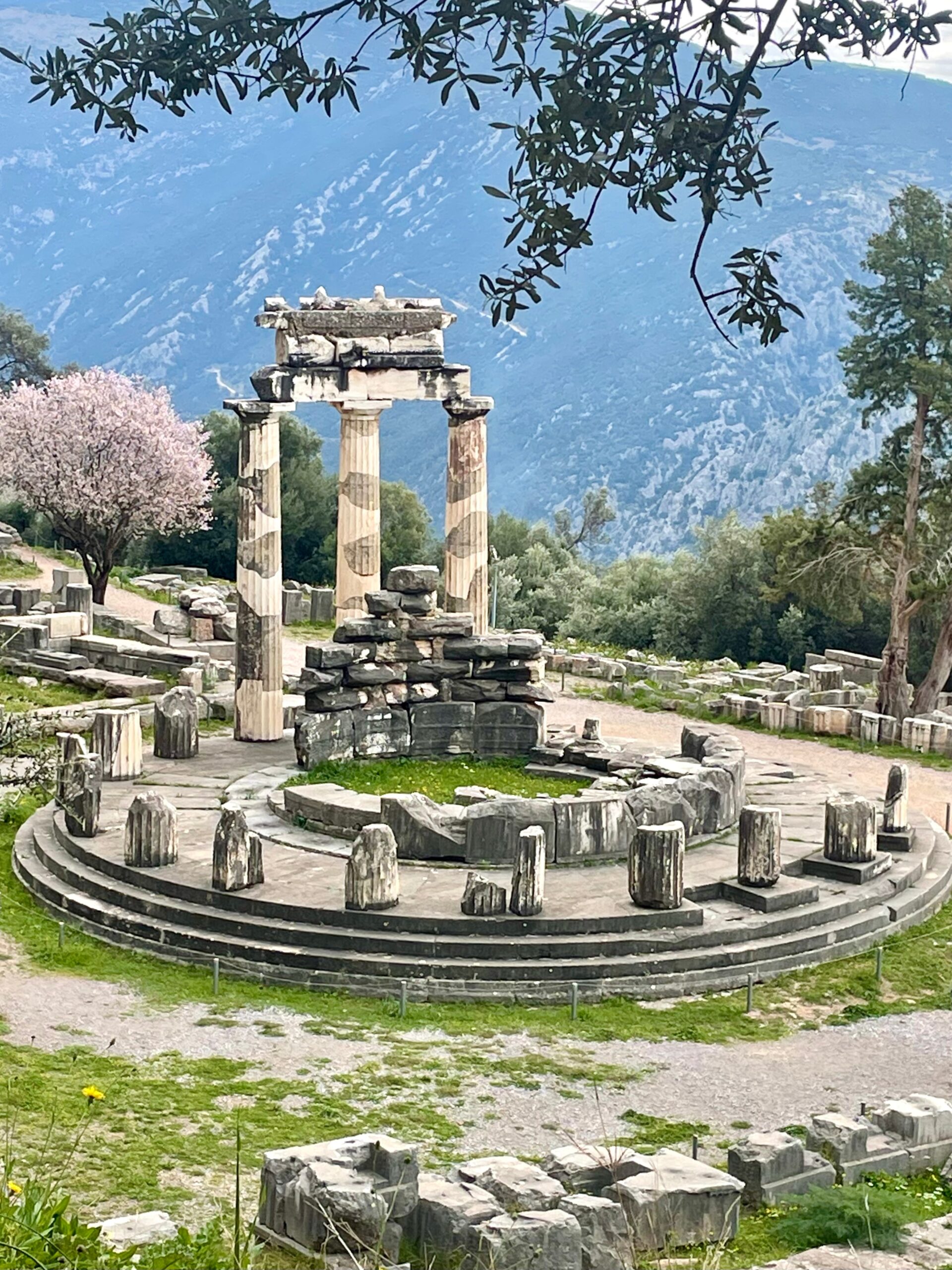
Below Delfi’s sanctuary, you’ll find the Sanctuary of Athena and the Tholos, plus the Pythian Games gymnasium and wrestling school.
For where to stay, eat, and all things Delphi, read my travel blog (Click here →) Delphi, Greece – It’s Still a Mystery.
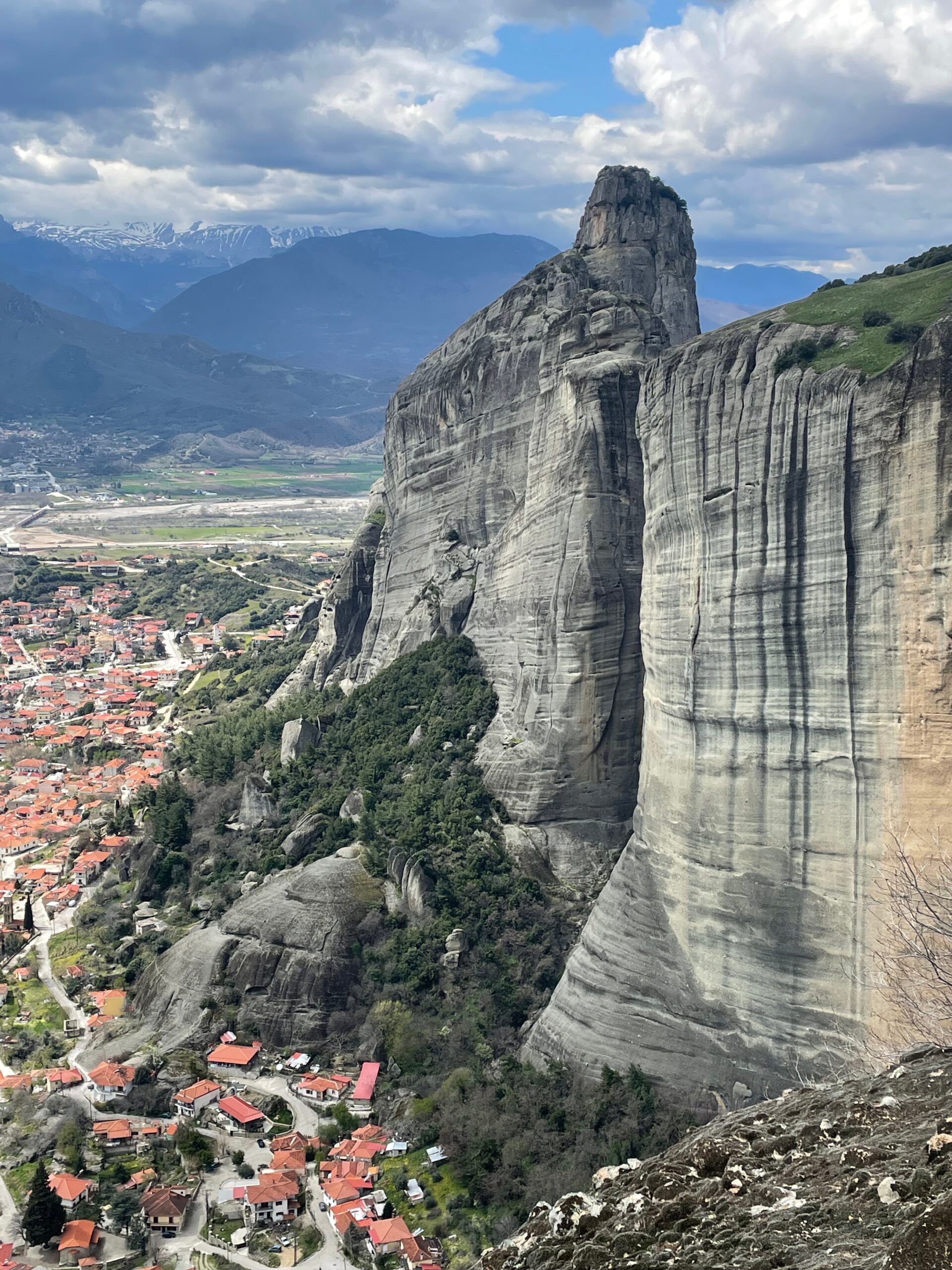
If you’re going to be in Greece, do everything possible to get to Meteora. It was one of the highlights of our trip!
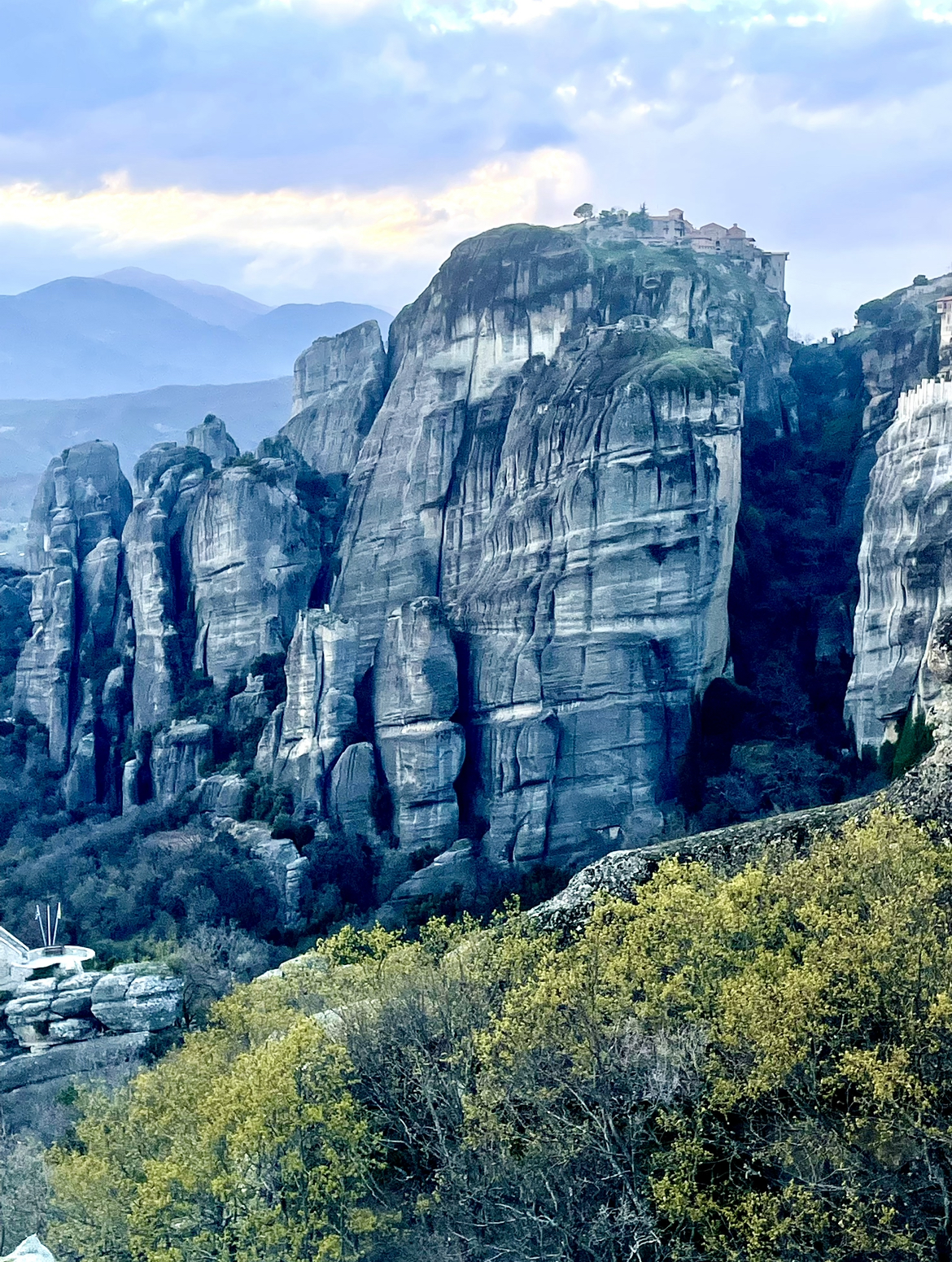
Look up! Massive monastery built on the mountaintop!
In the 11th century, a small group of ascetics and hermit monks, called Meteorites, made their way to this area seeking solitude and spiritual reflection.
Monks rock-climbed and settled in caves and steep rock pillar fissures as high as 2000 feet. Later, more monks sought safe haven in Meteora trying to escape persecution from the Ottoman Turks.
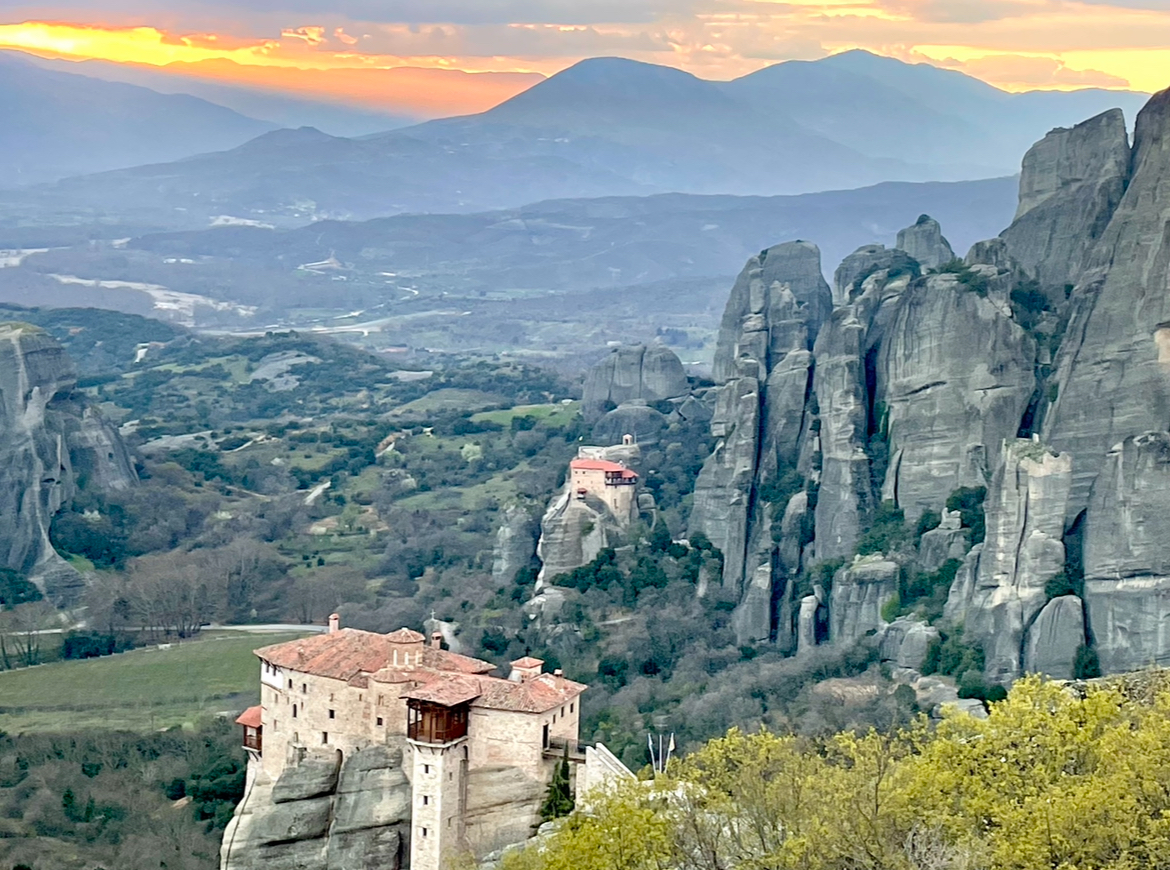
By the 15th century, 26 monasteries and 15 hermitages had been established. Building took hundreds of years as monks had to primitively hoist up materials using removable ladders, crude scaffolding and nets.
Six monasteries still exist, and you can visit each of them (five require some hiking and step-climbing). Our guide provided “skirts” for the strict dress code rules.
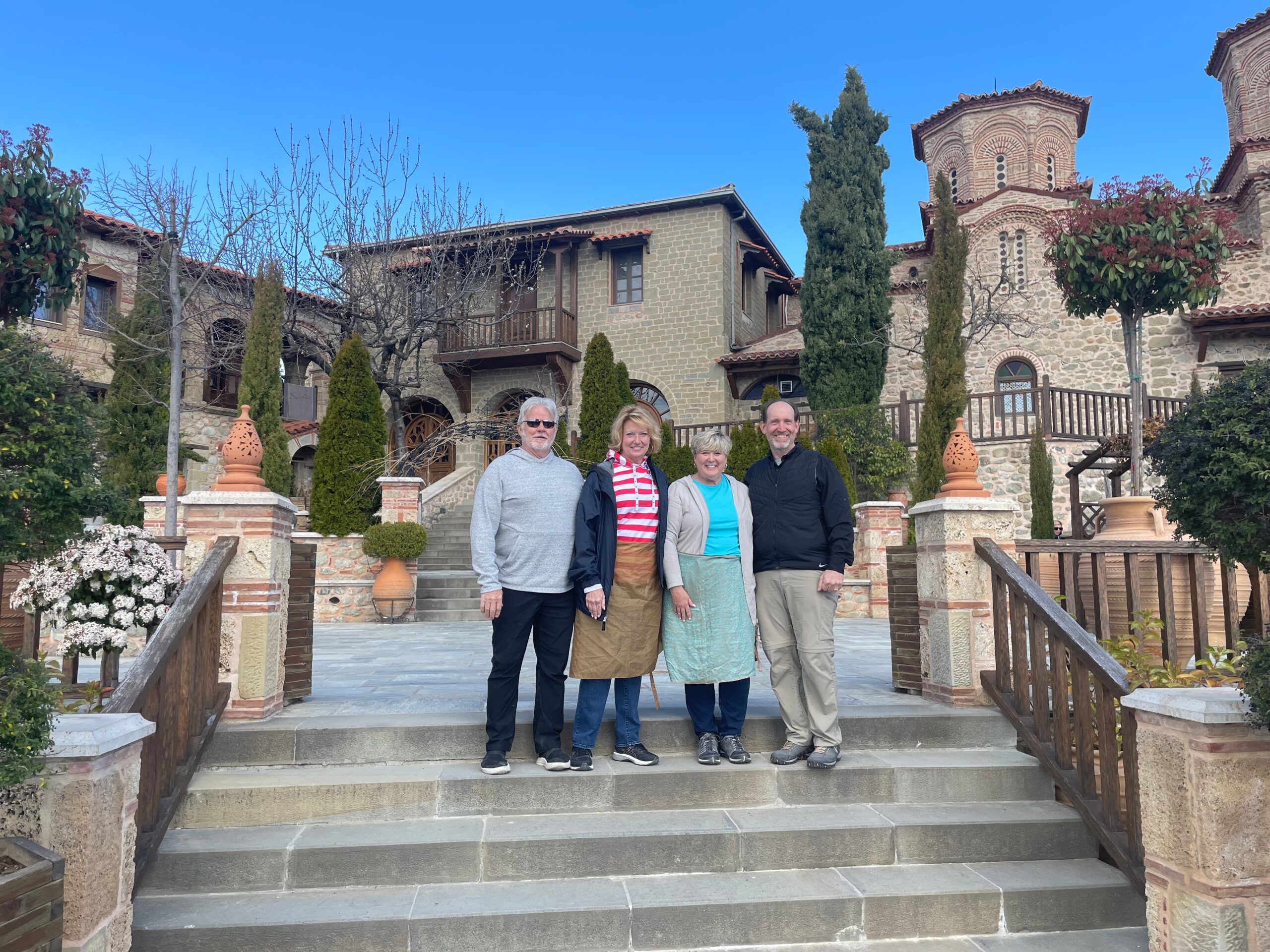
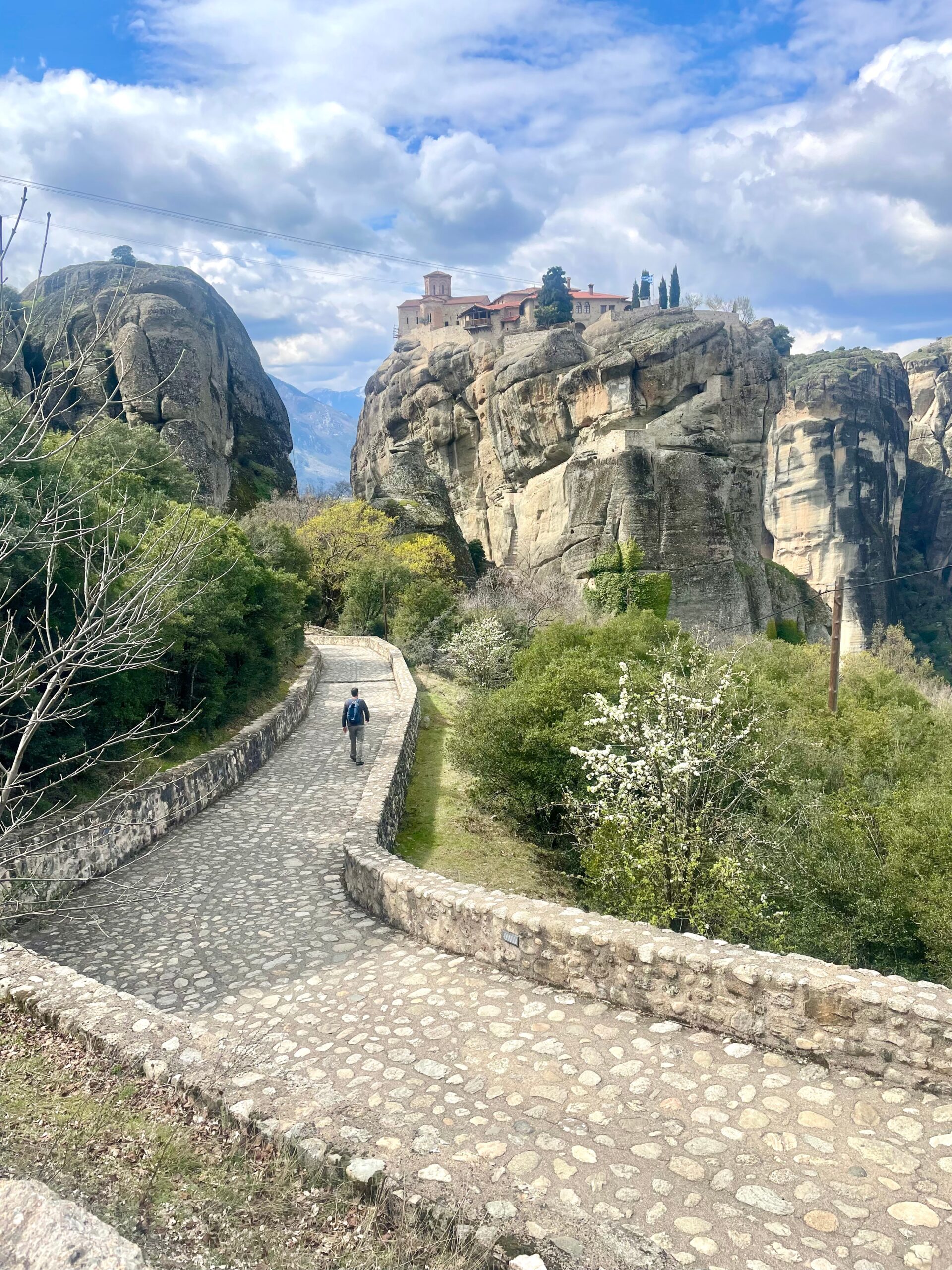
These castles in the clouds are famously featured in a James Bond movie and the Game of Thrones series.
We had two nights and one full day to explore. For where to stay, eat, dress code rules, tour guide information, and tips for visiting/climbing to each monastery, read my two Meteora blogs (Click here →): Magnificent Meteora – Castles in the Clouds and Meteora Monasteries – A Climb to the Top!
Philippi is a working archaeology site in northwestern Greece far off the beaten path from touristy Athens, the Peloponnese, and Greek Isles. There’s so much to see!
It’s known for three distinct historical periods (Hellenistic, Roman and Byzantine) spanning 2000 years. Constant earthquakes and invasions left the city in ruins by the 16th century.
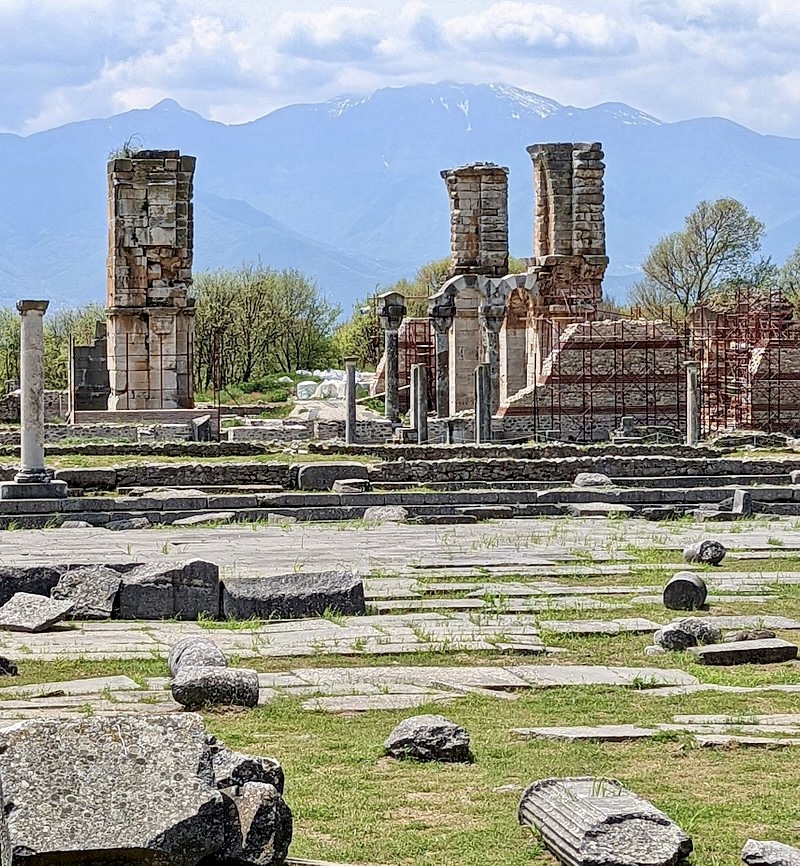
The Byzantine Direkler Basilica (above) was built around 500 AD. Below: King Philip II built the theatre in 357 BC.
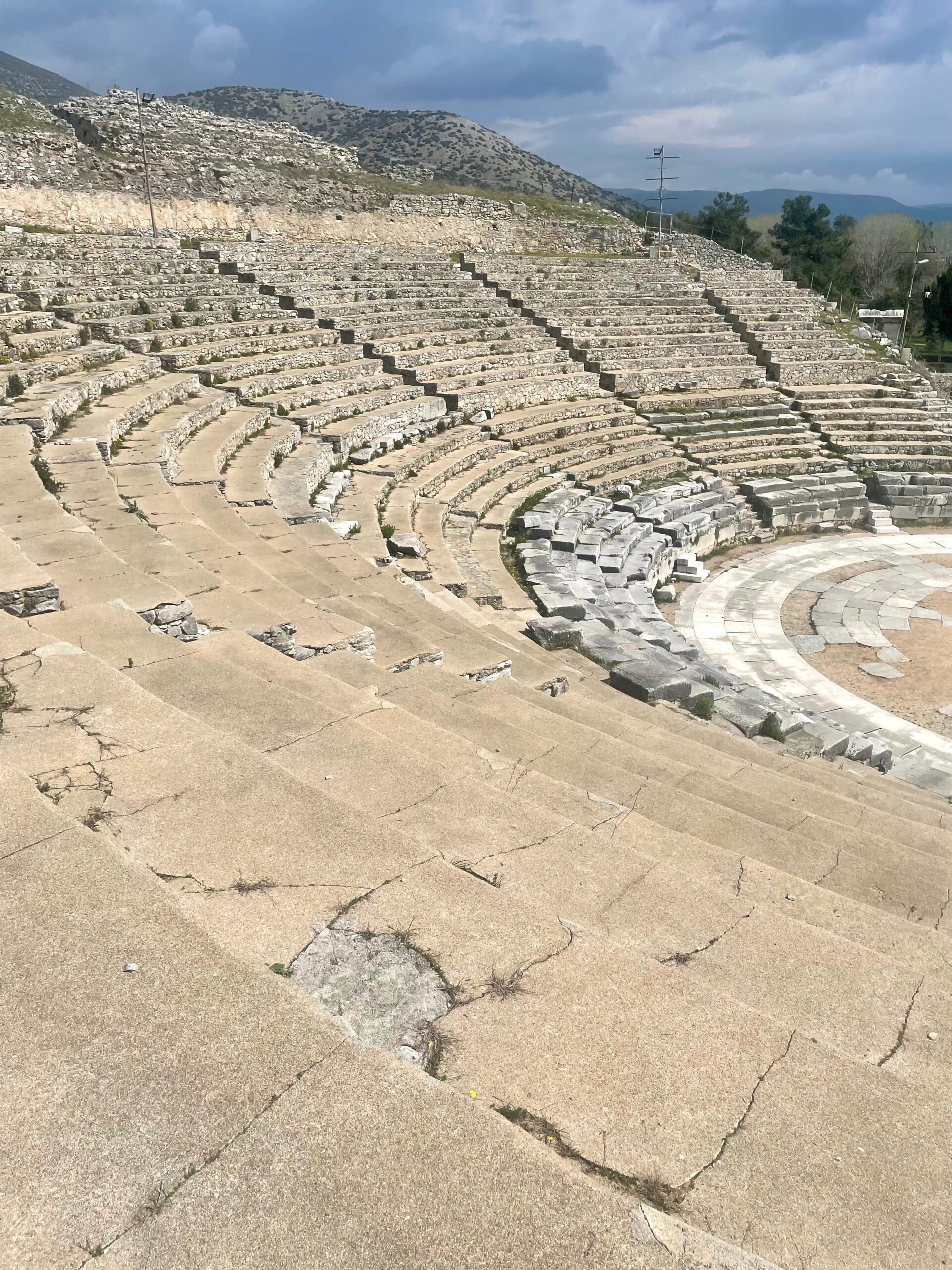
King Philip of Macedon (Alexander the Great’s father) conquered the city of Crenides and named it after himself in 356 BC. He used the riches from Philippi’s gold mines to fund his military and building campaigns.
Fast forward to 42 BC. Mark Antony and Octavian defeated the armies of Brutus and Cassius (who murdered Julius Caesar) just outside Philippi’s walls. Octavian became Emperor Augustus and founded a large Roman colony in Philippi with public buildings, a forum, bath houses, temples and more.
Almost 100 years later, a missionary named Paul visited Philippi and established the first Christian congregation on European soil. You can also see where he spent the night in jail!
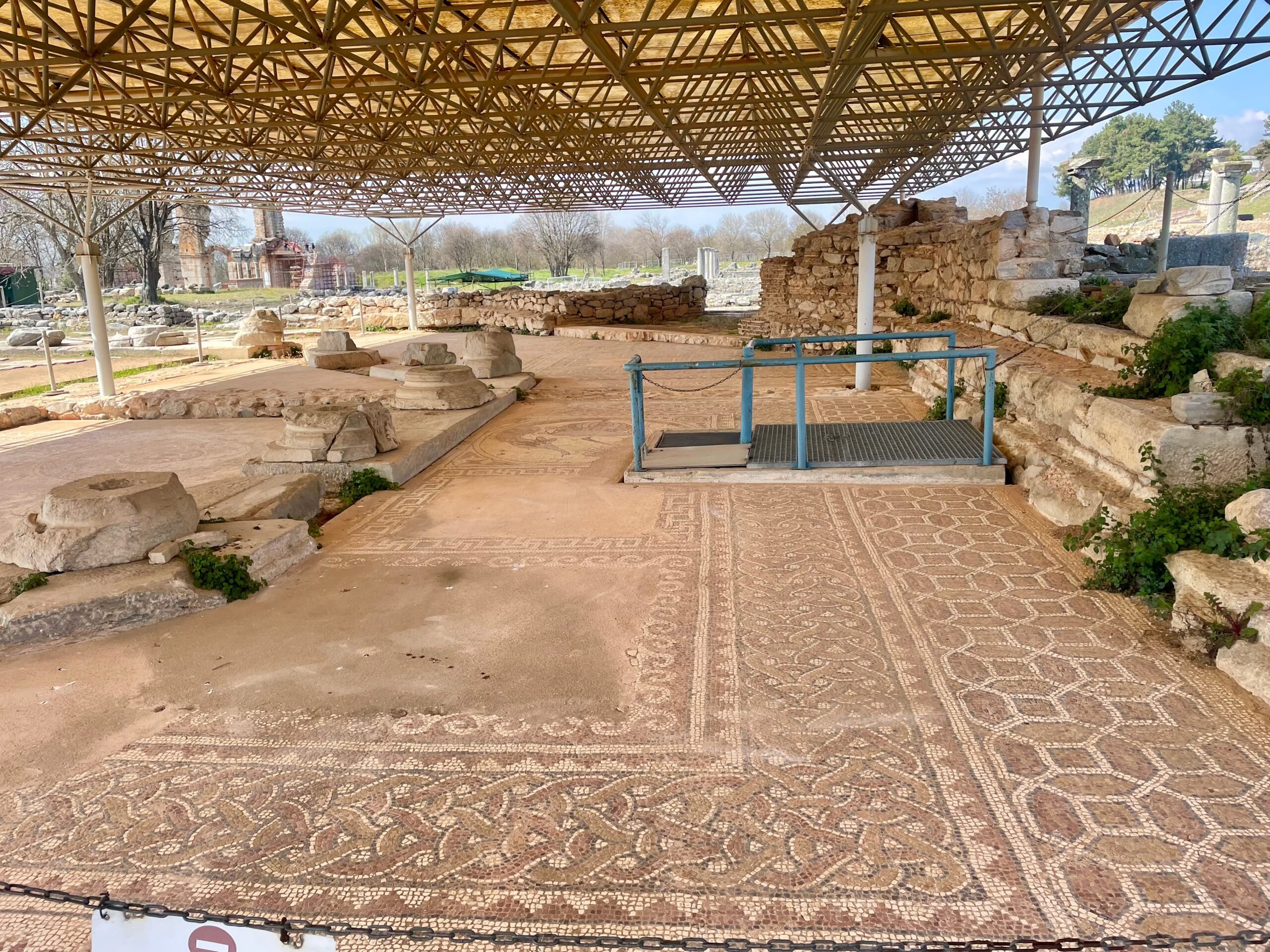
A Christian church dedicated to the Apostle Paul (4th century).
For information on visiting Philippi’s archaeology site and the nearby Baptistery of Lydia, check out my Philippi travel blog: (Click here →) A Day Trip to Ancient Philippi, Greece
While we were in northern Greece, we carved out a few hours to visit Thessaloniki (ancient Thessalonica).
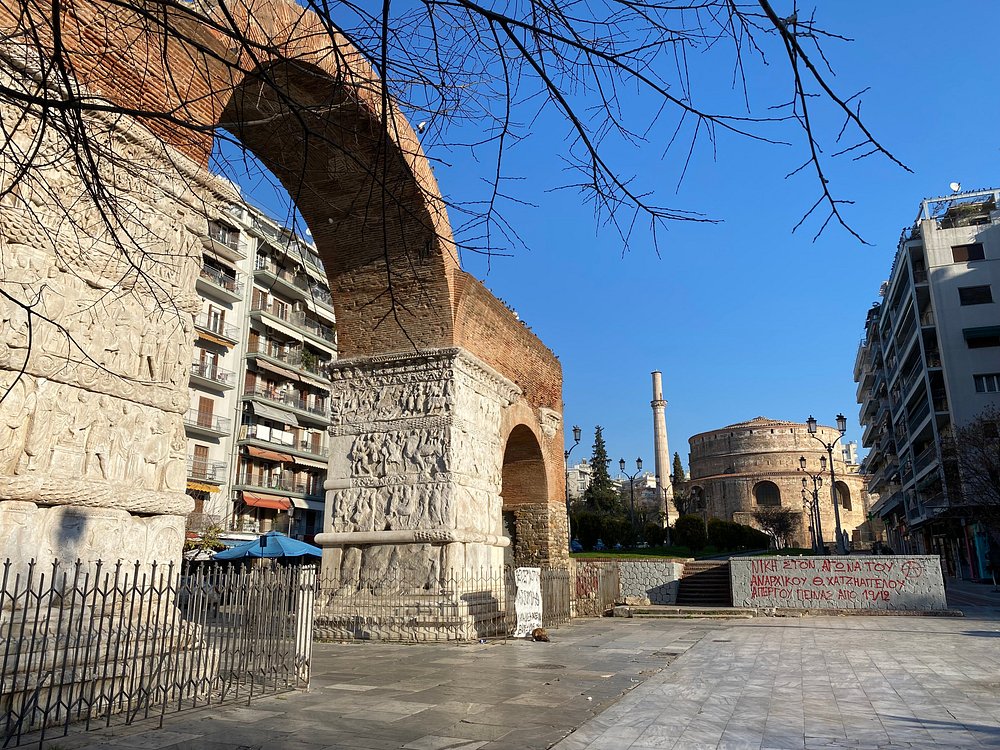
Remains of the Arch of Galerius and Rotunda (above). The White Tower (below) is the symbol of the city.
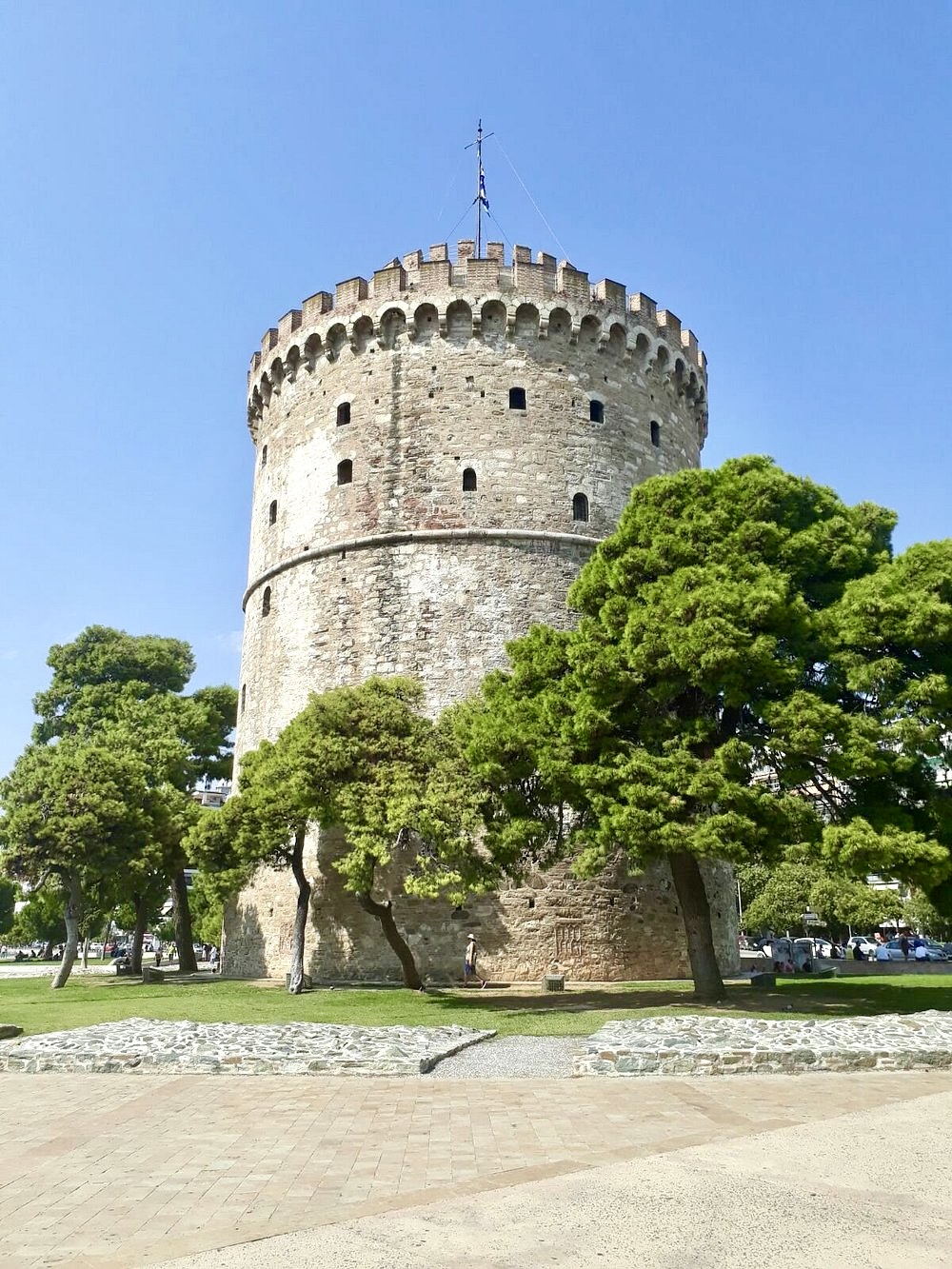
Thessaloniki is a melting pot of modern culture and ancient civilizations: Macedonian, Hellenic, Roman, Byzantine, Ottoman and Jewish. Thessaloniki’s lower city center offer visitors a treasure trove of Greek and Roman historical sites, restaurants, plazas, and a thriving sea port.
Drive up to the oldest part of the city (Ano Poli or Upper Town), and you will find ancient walls which once surrounded the city, monuments, fortresses, churches, colorful half-timbered houses and a labyrinth of very steep streets.
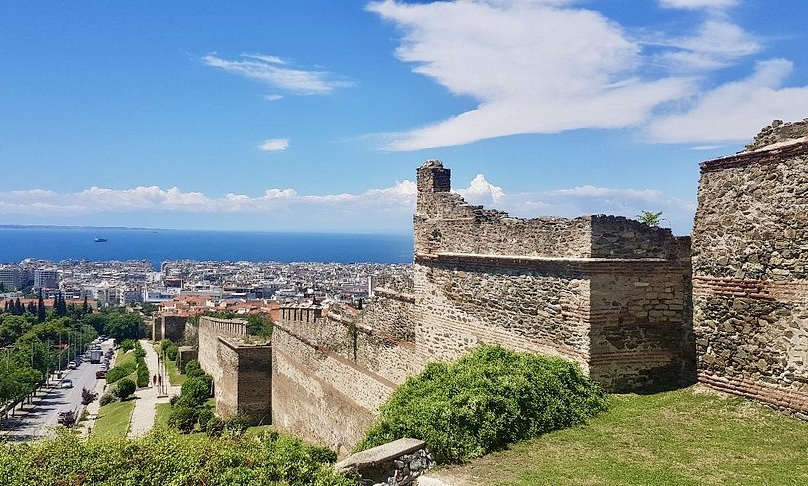
2nd Century ancient walls (above) and the Triangle Tower fortress (below).
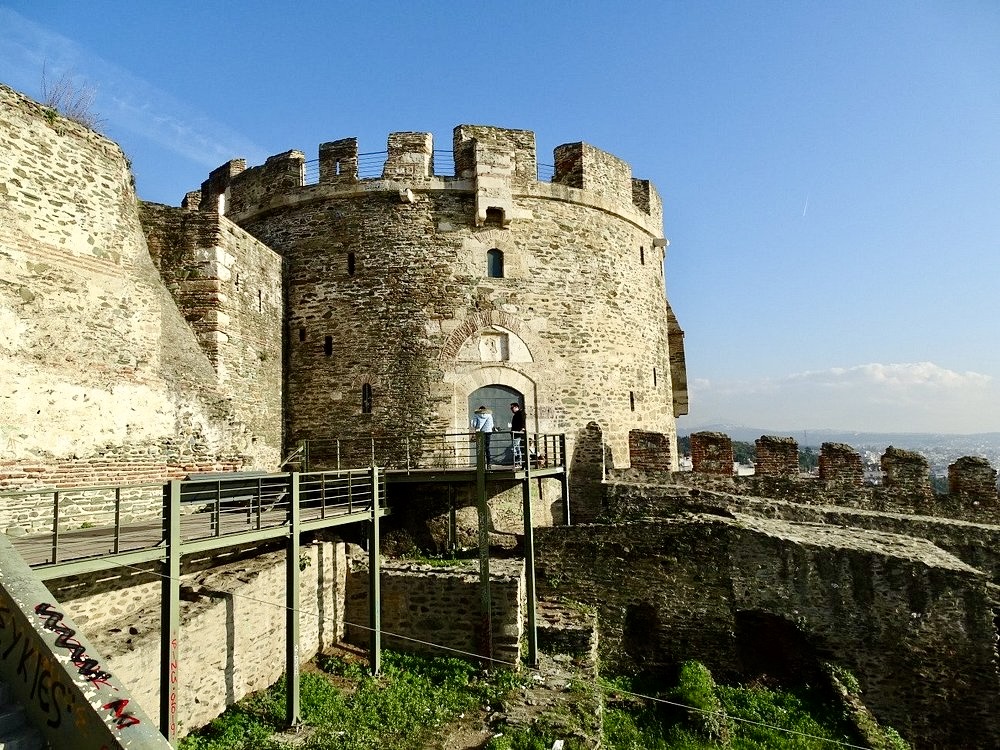
The Apostle Paul helped establish a Christian church and community in the 1st century AD which had a long-lasting influence on Thessalonica.
Read about what to see and do in Thessaloniki: (Click here →) Modern Thessaloniki – A Melting Pot of Ancient Civilizations.
When looking for a place to stop for the night between northern and southern Greece, I found Arta. It’s the cultural and historical hub of this region with thousands of years of history.
The next morning, we found the Bridge of Arta, built in the 1400s. It’s known for its four, semicircular arches.
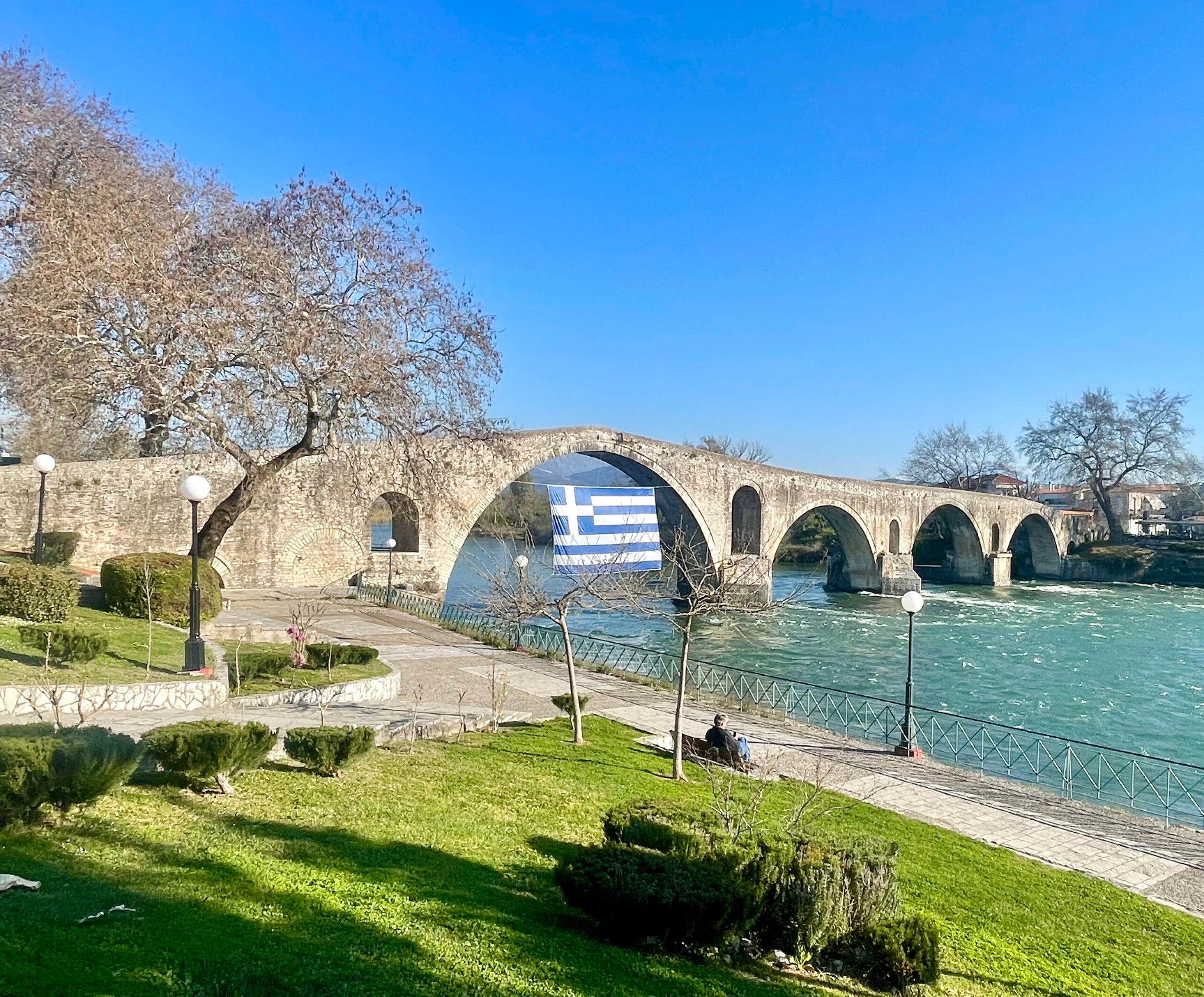
The Historical (and steep) Bridge of Arta
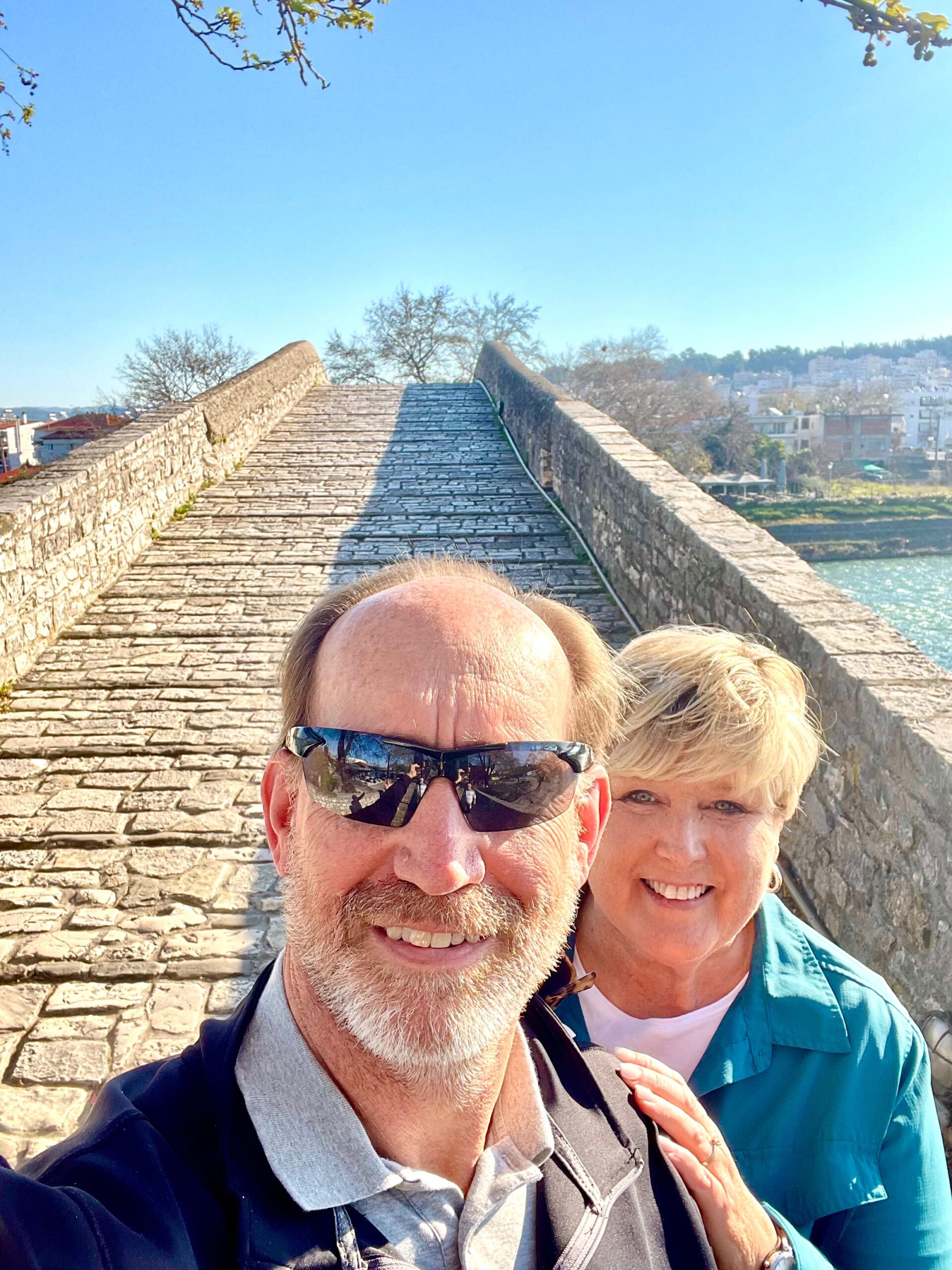
Arta has its own Archaeological Museum, an active monastery, and several important Byzantine churches. And the 13th century Castle of Arta looms above the city. For more about Arta: http://www.greekdestinations.gr
I like to drive fast! When YOU drive, if you lean toward “I’m not speeding, I’m qualifying,” then be aware of Greek speed limits and speeding ticket fees.
Greek speed limits do exist, though I’m fairly sure they’re treated as “inspirational quotes” by the locals. For tourists, hidden speeding cameras are all over Greece, especially on toll roads. Slow down and enjoy the scenic drive, or you might be like hundreds who receive expensive tickets once home.
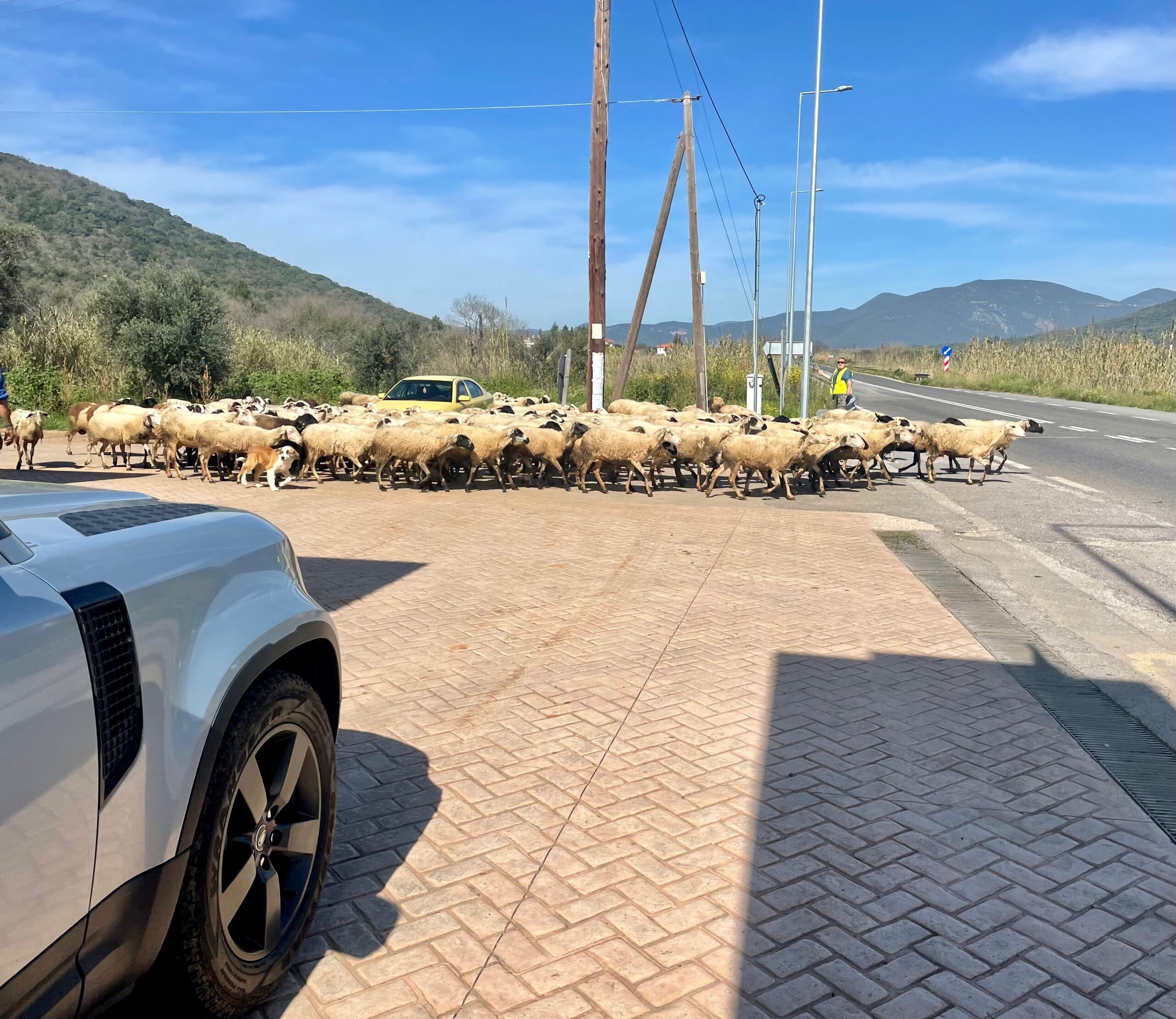
Watch out: you might have to suddenly stop for sheep shuffling slowly across the street.
TIP: If you rent a car anywhere in Greece, you’ll need to get an International Driver’s Permit (IDP) before you go. We secured our permits at AAA Travel, one of only two private entities in the US authorized by the U.S. Department of State (AATA is the other). Take automobile insurance proof with you on the trip! http://www.aaa.com
We drove south to ancient Corinth and explored the massive city’s archaeological ruins and rich history. Cornith was an economic superpower and one of the greatest cities of Classical and Roman Greece.
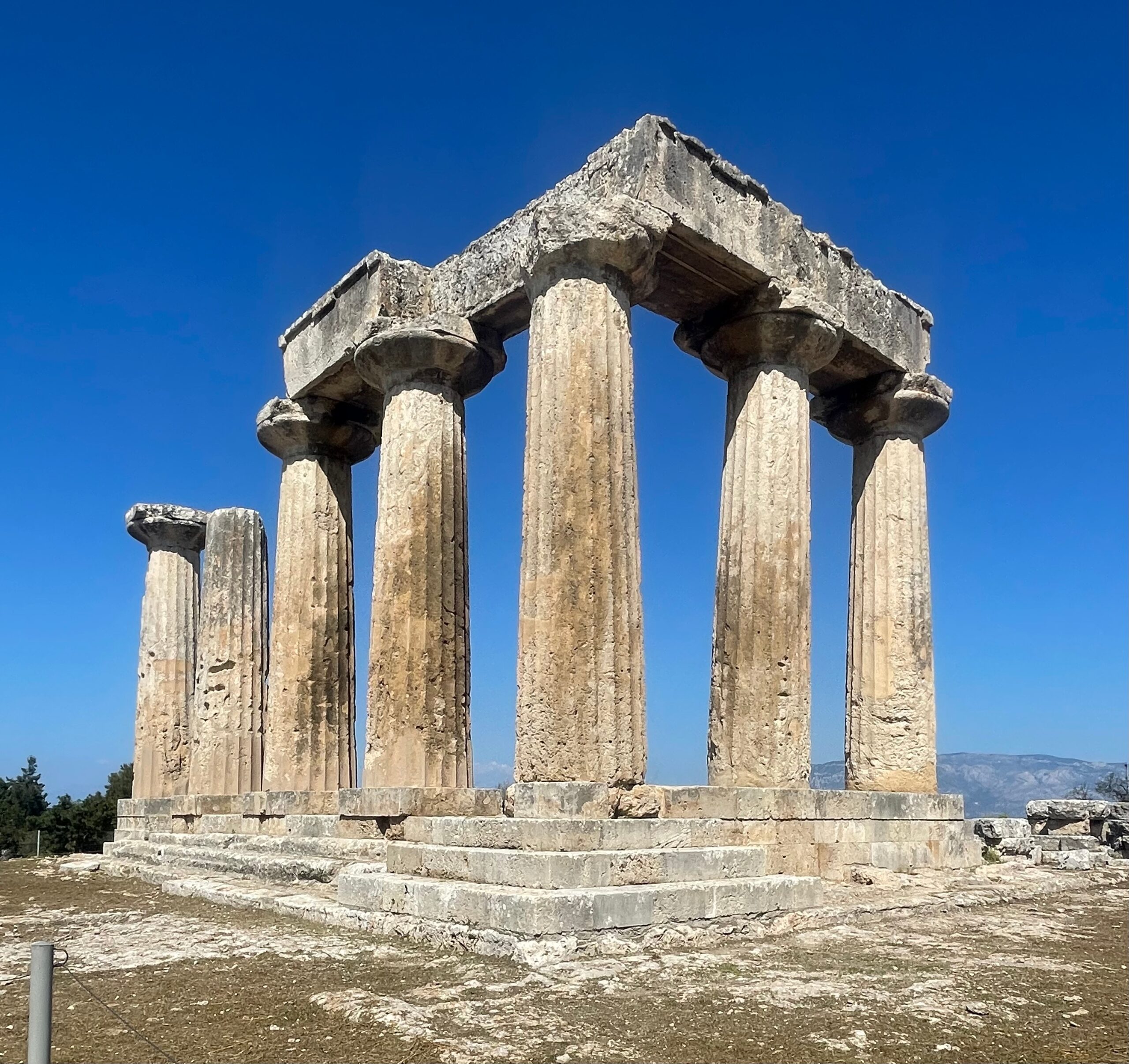
Temple of Apollo
All saturated in one area, you’ll find a mythical and legendary city, a famous canal, an impressive acropolis (Acrocorinth), the Temple of Apollo, a shrine center devoted to healing, and the Isthmian Games sanctuary. And since the Apostle Paul lived in Corinth for almost two years, I was eager to investigate.
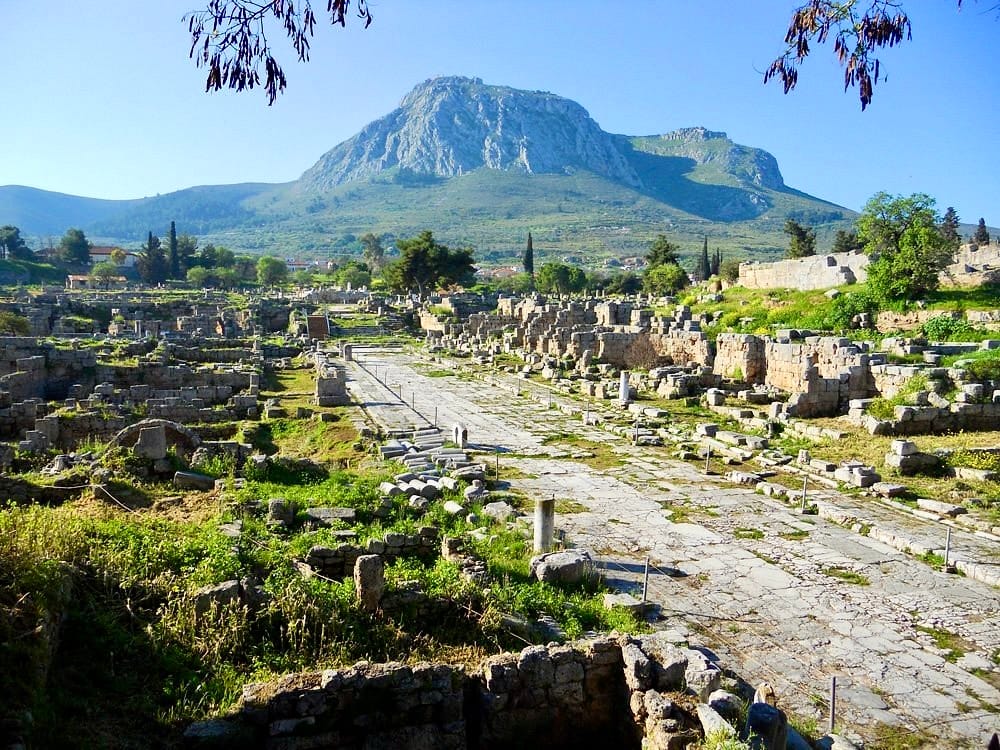
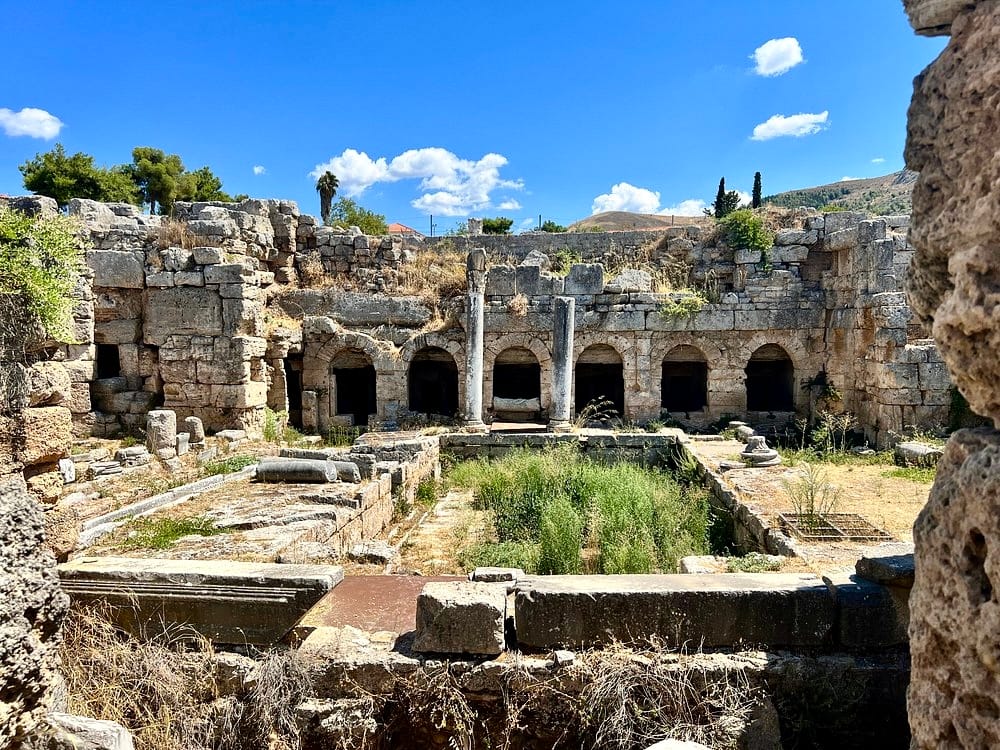
Corinth controlled the Peloponnese isthmus and two of the busiest seaports in the world. Not only did they prosper from their exports, their military ruled the Mediterranean. (Below): The Fountain of Peirene.
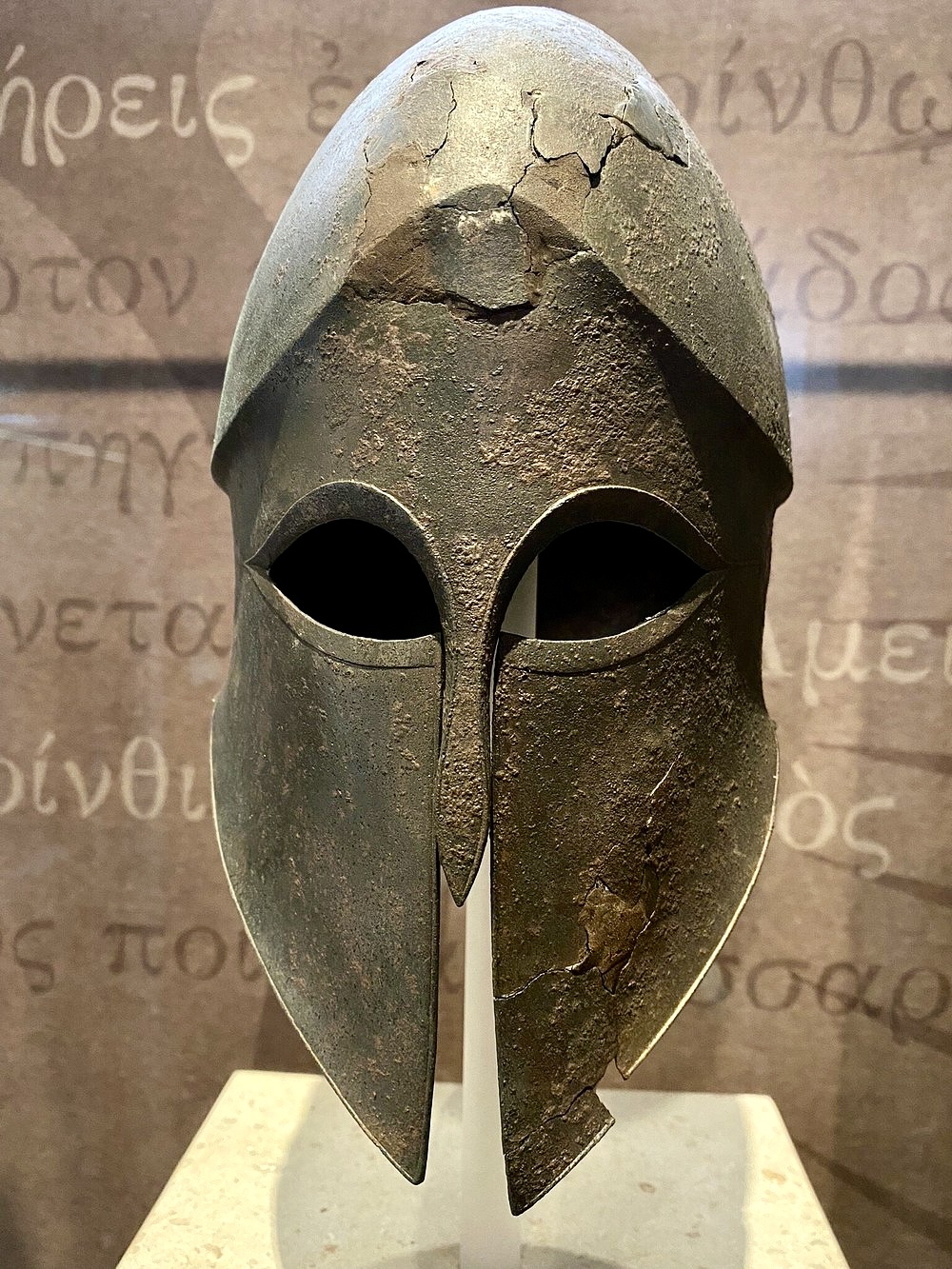
Corinthian Bronze military helmet
It was humbling to stand where the Apostle Paul once lived, worked, and preached for almost two years (50 AD). While supporting himself as a leatherworker, Paul’s message of Christ helped transform Corinth into one of the early centers of Christian faith.
For more information on this fascinating city, read my ancient Corinth blog: (Click here →) Echoes of Corinth, Greece – A Great Ancient Superpower
Our last stop before heading back to Athens to fly home was a visit to Nafplio: a charming seaside city in the Peloponnese.
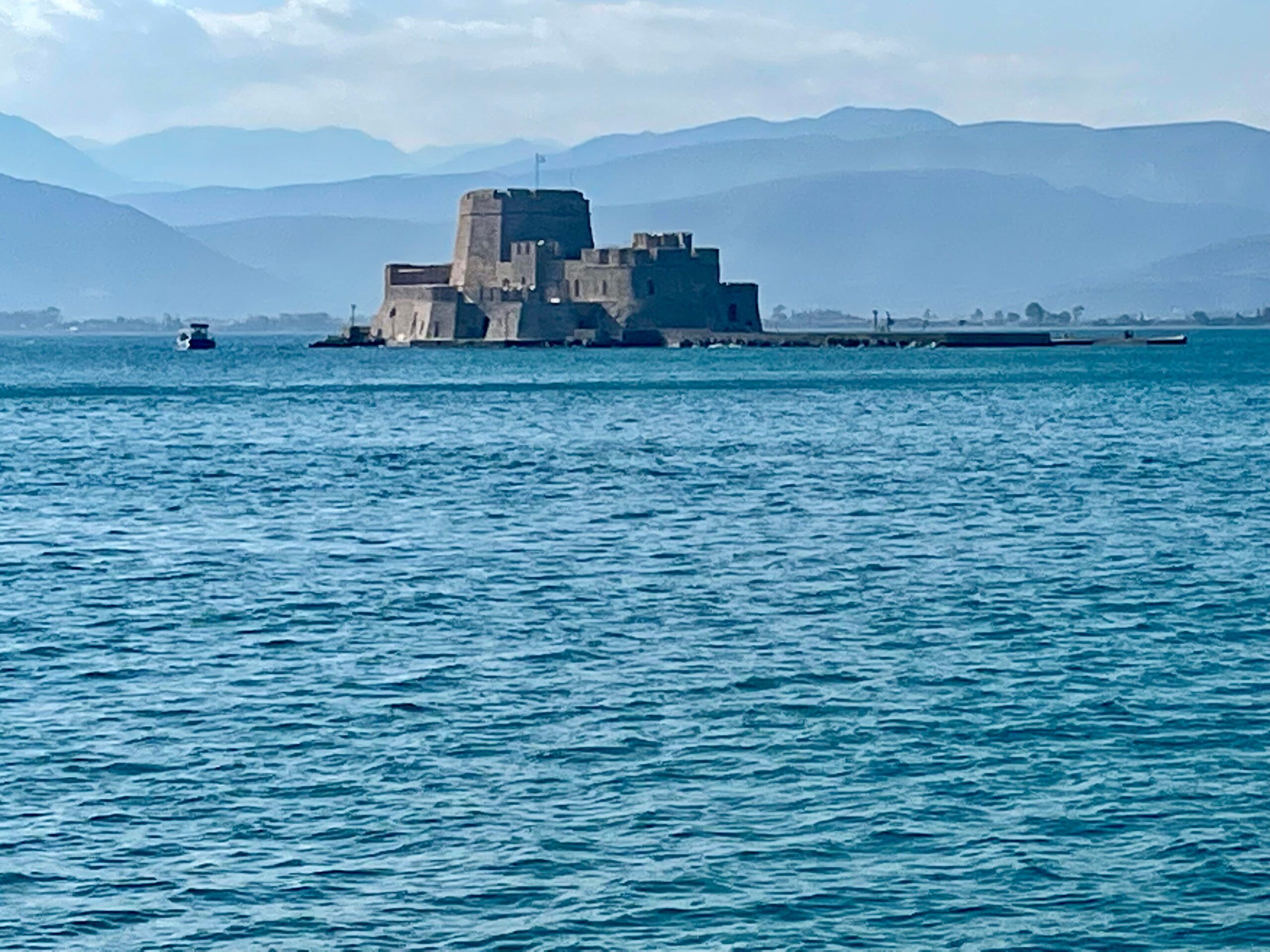
The Bourtzi Castle
Nafplio has a Greek island feel! Some go for the fresh seafood, romantic atmosphere, and a relaxing weekend on the beach. You can also climb around in three castle fortresses and get lost in cobbled alleyways filled with quaint shops and Neoclassical mansions.
The town’s history goes all the way back to the prehistoric era of the Argonaut expeditions and the Trojan War (1400-1300 BC). Greek cities sieged, invaded and occupied one another for centuries. Others vying for control of Nafpflio: Romans, Byzantines, Franks, Venetians, and Ottomans.
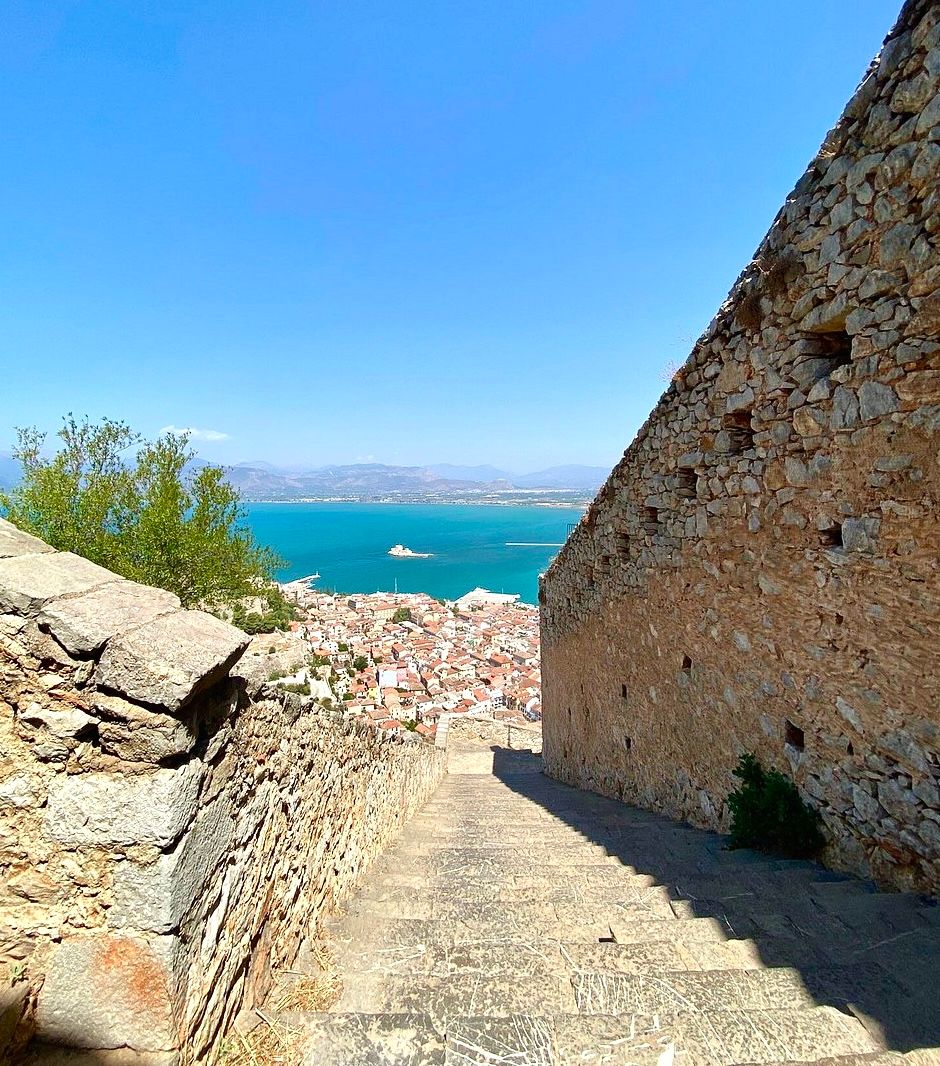
Nafplio’s Old Town has an abundance of museums, churches and historical sites. It’s known for its culinary delights and is just 30 minutes from Nemea — the largest wine-producing region in Southern Greece.
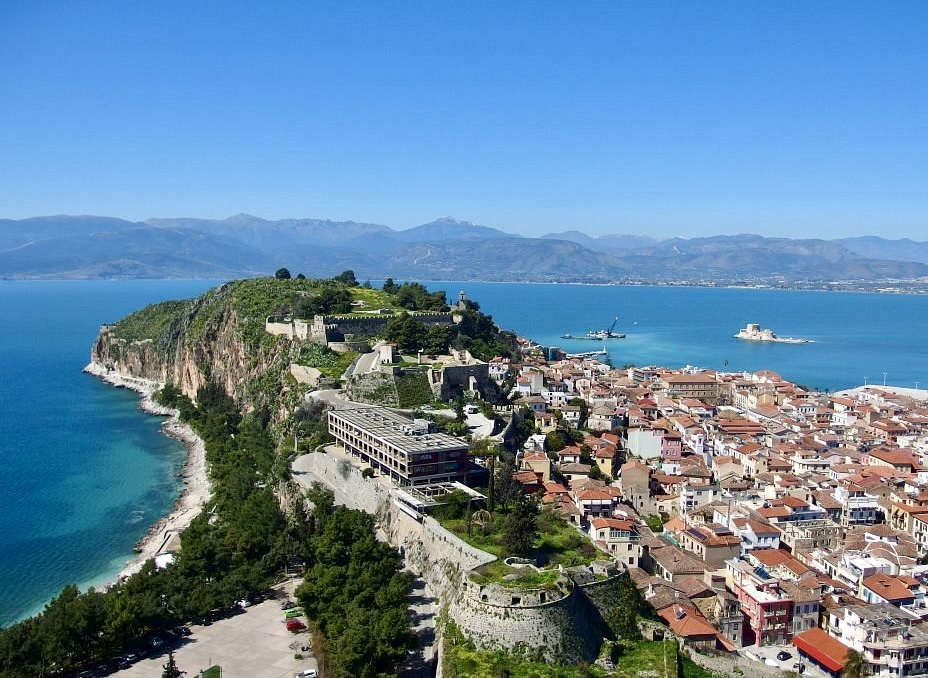
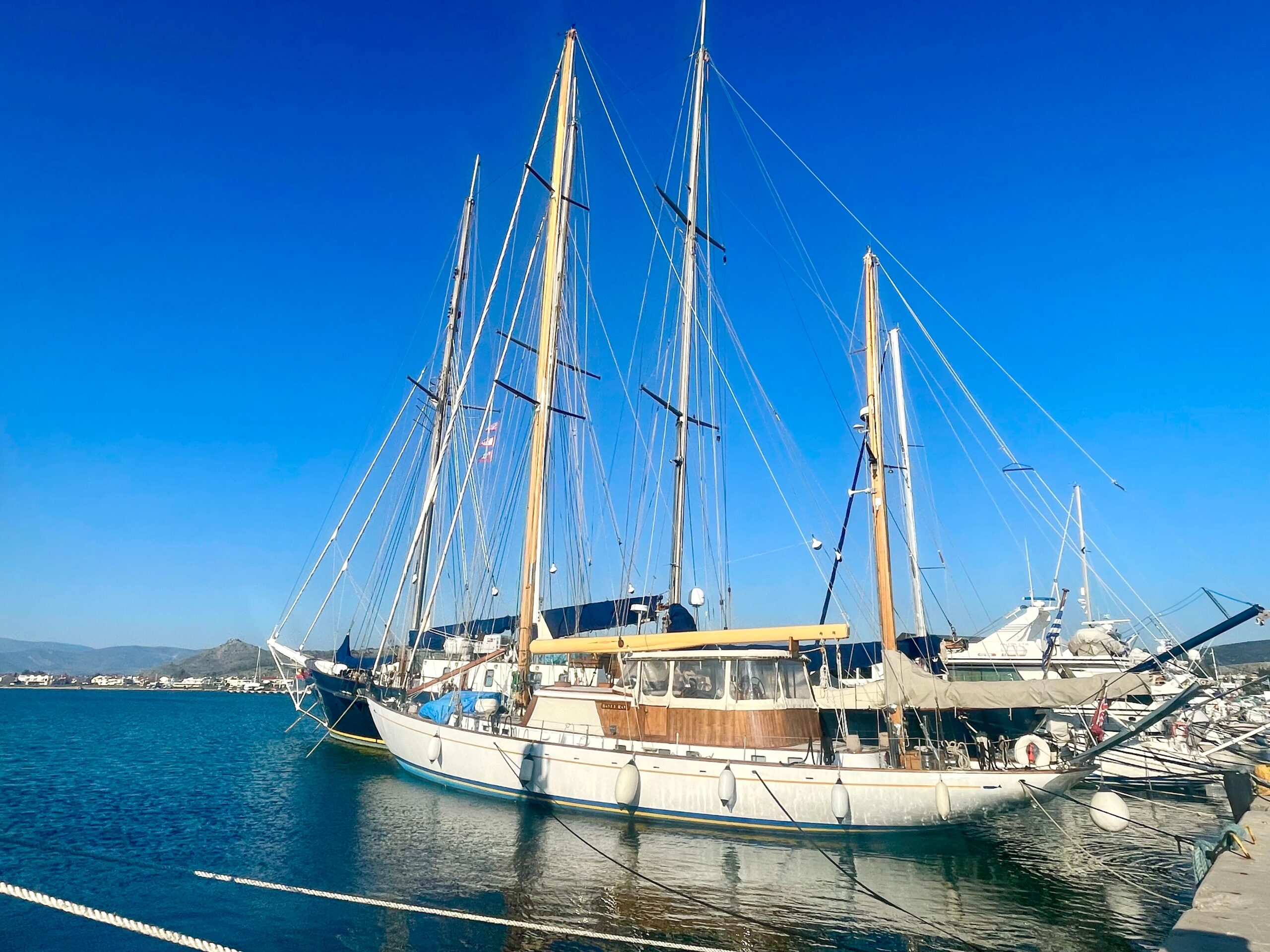
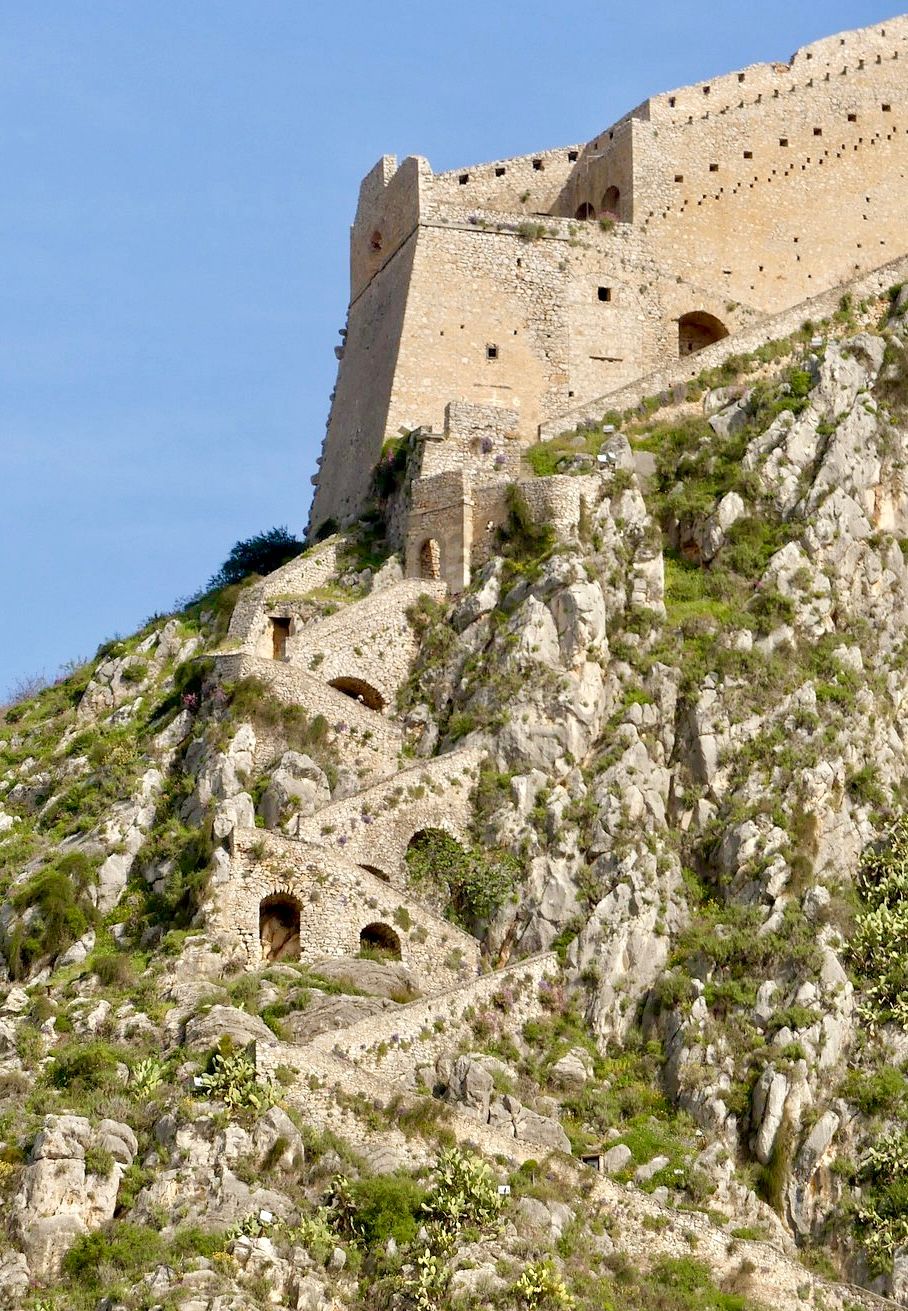
Palamidi Fortress – A climb with a view!
For more information on this jewel in the Peloponnese, see my Nafplio blog: (Click here →) Beautiful Nafplio By The Sea: Greece’s First Capital
I hope you make it to Greece! Each region, city, and island had its own personality, unique cuisine, and customs.
Did you get a taste of Greece from a Mediterranean cruise port visit? Go back and explore all this wonderful country has to offer!
Leaving Greece felt more like a promise to return and less like saying “goodbye.” We’re still reminiscing about our scenic roadtrip, the welcoming people we met, the sea and sunsets, ancient ruins, each meal we savored, and our special anniversary celebration.
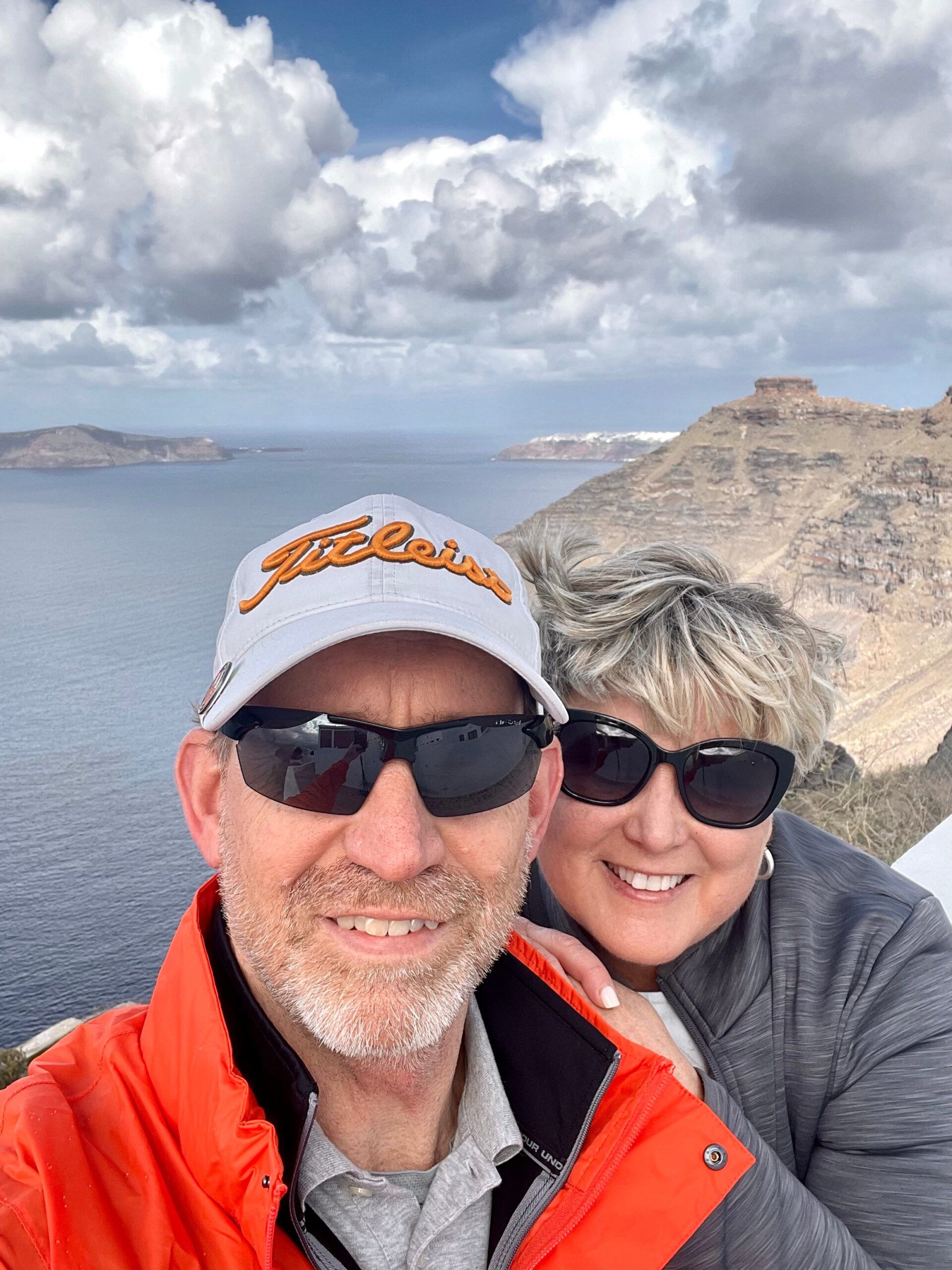
Until we meet again, efcharistó, Greece – thank you for everything!
If fairy tales had cruise itineraries, they’d sail the Rhine River.
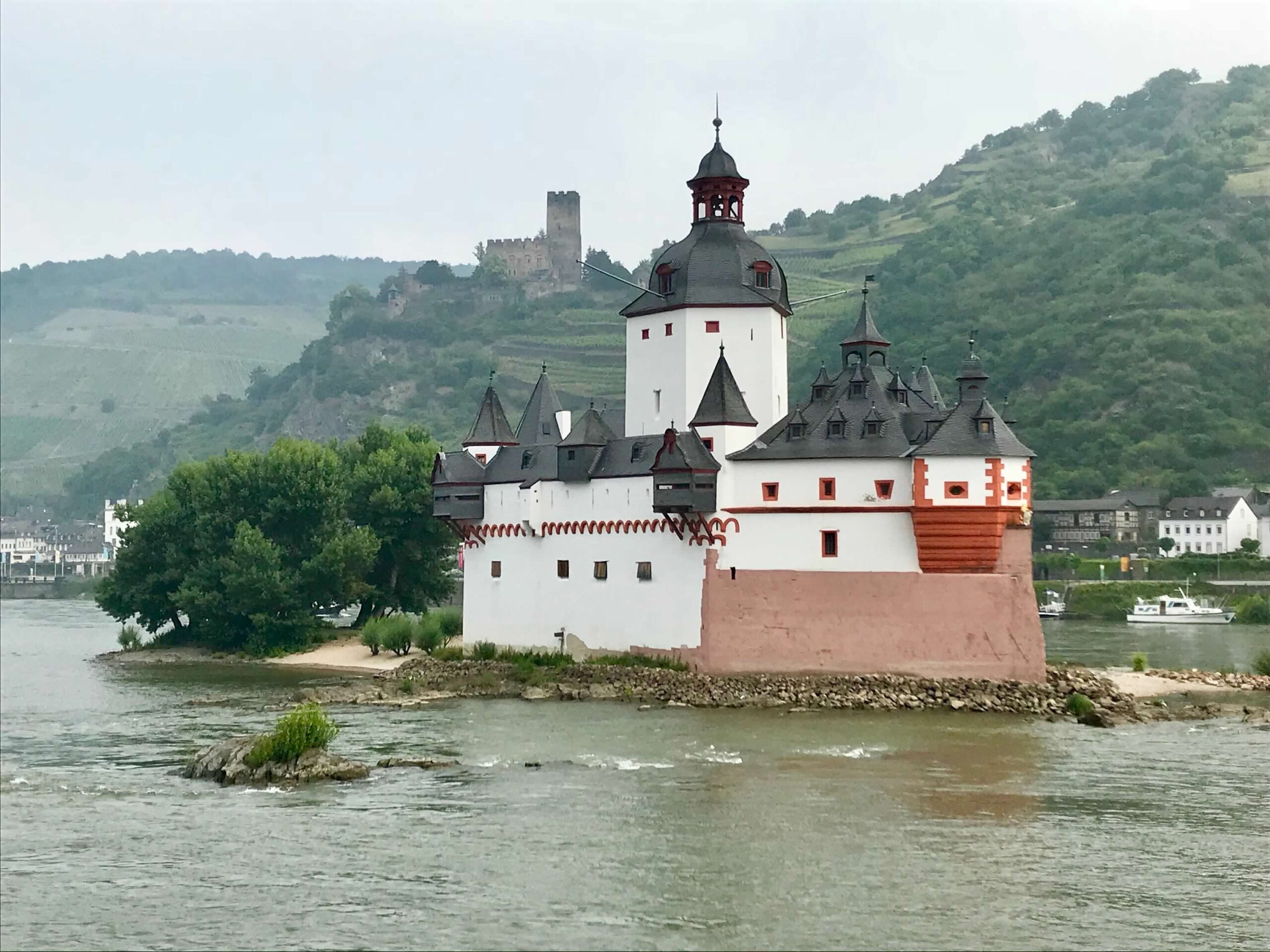
From Switzerland through Germany, France, and past windmills to the Netherlands, we enjoyed the unhurried pace of river cruising. The Rhine will charm you with castles, cobblestones, and a steady pour of Riesling. Stay tuned!
Until then, keep exploring!
For my Greece and Italy series and all other travel blogs, visit my blogsite: https://traveltipsbytami.com
Tami Kooch – [email protected]