Basel, Switzerland was the gateway for our unforgettable Rhine River Cruise, but this Swiss jewel proved to be far more than simply the starting point for our journey.
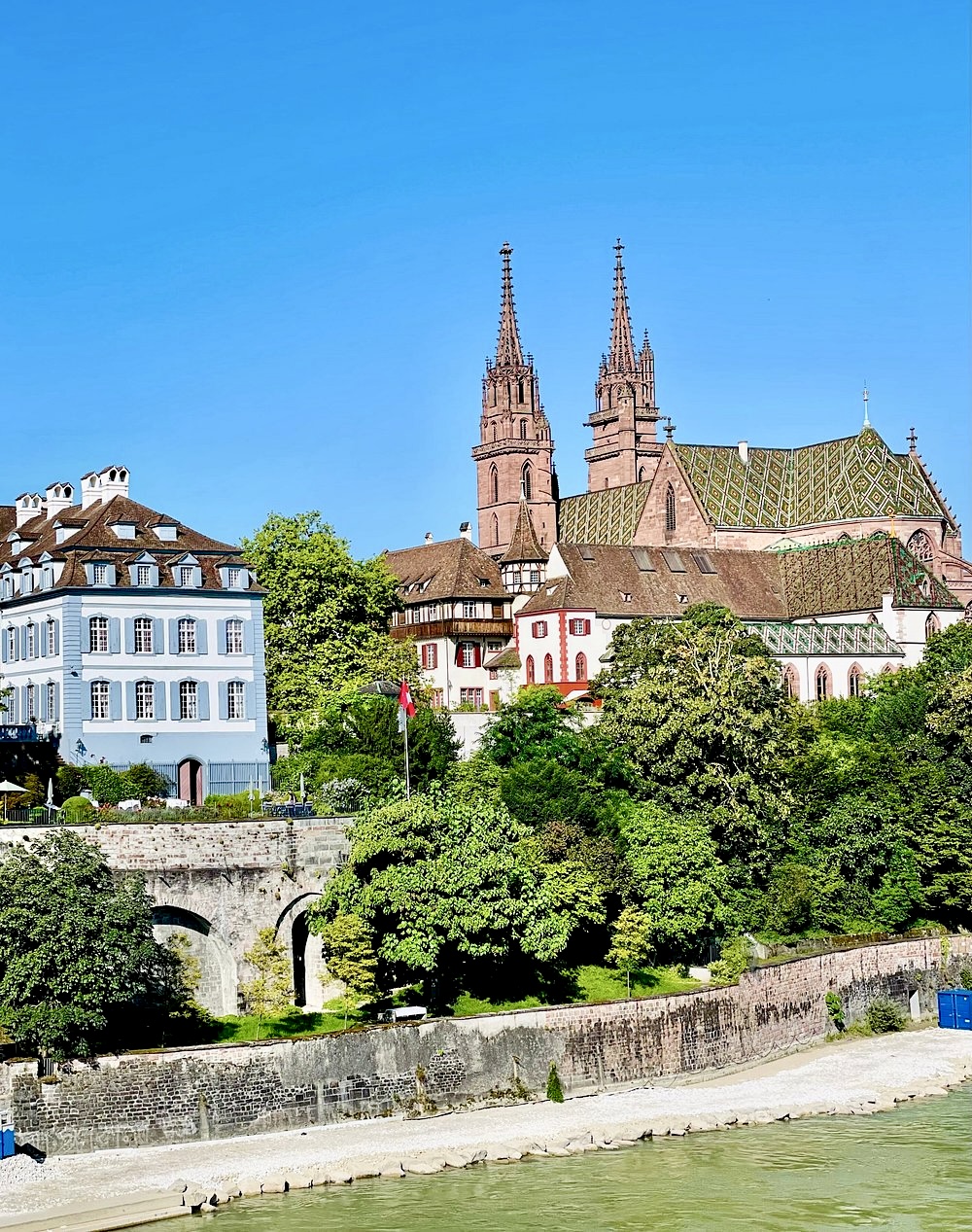
Basel (prounouned “BAH-zuhl) is Switzerland’s third largest city behind Zürich and Geneva, and it sits in the northwest corner bordering Germany and France. If I’m being honest, I had never heard of Basel until we booked this cruise.
Charming Basel is both medieval and historical, but it’s also known as the country’s cultural capital. Many visit for the world-class art, architecture, galleries, and museums (over 40). Art Basel, held every June, is one of the world’s premier contemporary art fairs. And if you’re a foodie, Basel is full of Michelin star restaurants influenced by Swiss, German and French cuisine.
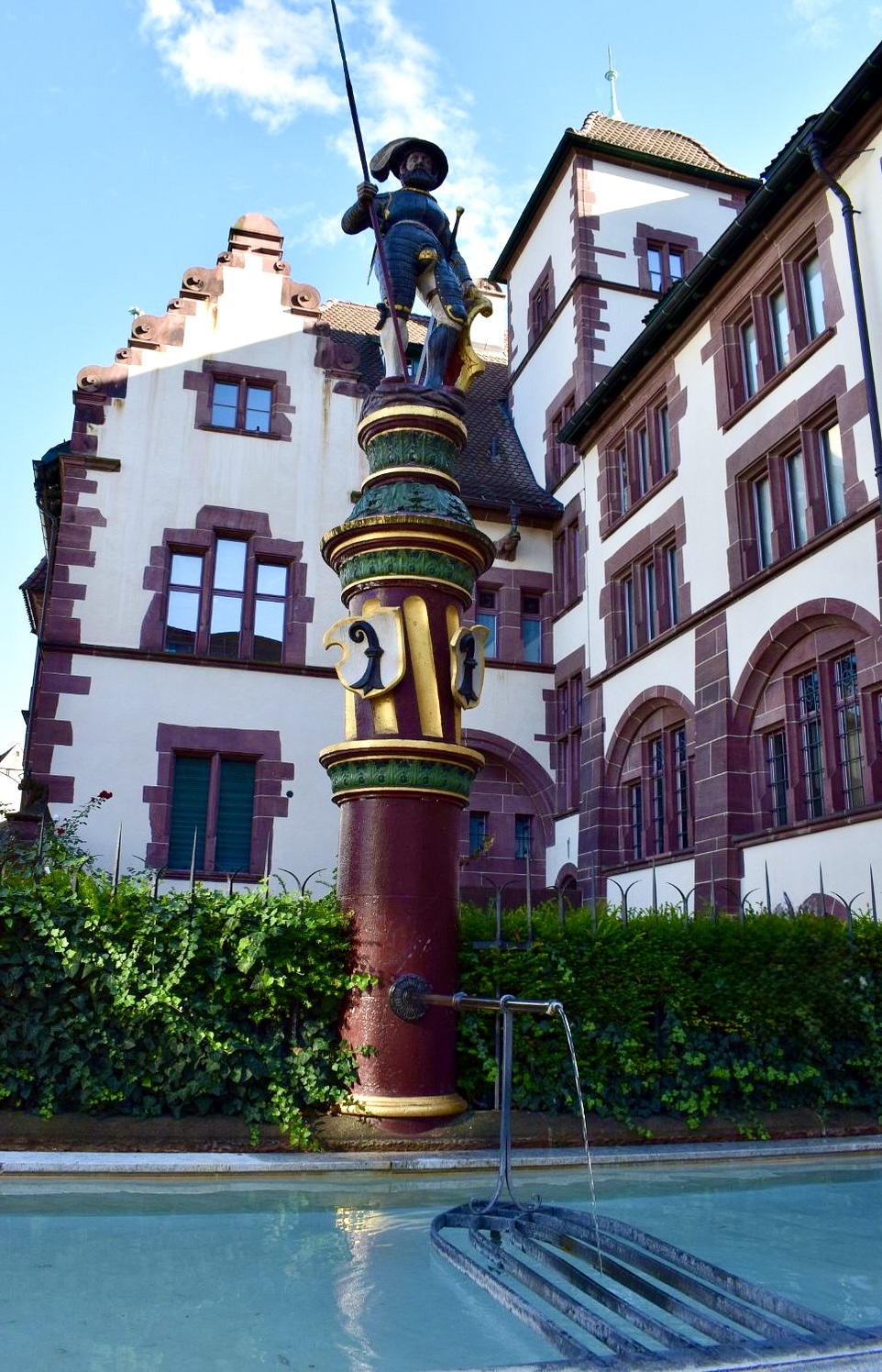
Basel was first occupied by the Celts. In 43 BC, the Romans founded a colony east of Basel, named Augusta Raurica. They soon built a fortress overlooking the Rhine, on the hill now occupied by Basel Minster, and named it Basilium.
For the next 1000 years, Medieval Basel changed hands from the Franks to the Kingdom of Burgundy, then to the Habsburgs. After a time of being run by powerful guilds (Zünfte), the city joined the Swiss Confederation in 1501.
Switzerland’s oldest college, the University of Basel, was founded in 1460. By the 1900s, Basel was already a bustling industry and finance hub with top notch global life, science, chemical, and pharmaceutical companies. Roche, Novartis, and Sandoz are headquartered in Basel.
Its airport (EuroAirport Basel Mulhouse Freiburg) is a tri-national hub jointly managed by two countries. TIP: Make sure you go through the correct airport Customs and exit on the “Swiss” side (Basel) and not the “French” side (Mulhouse).
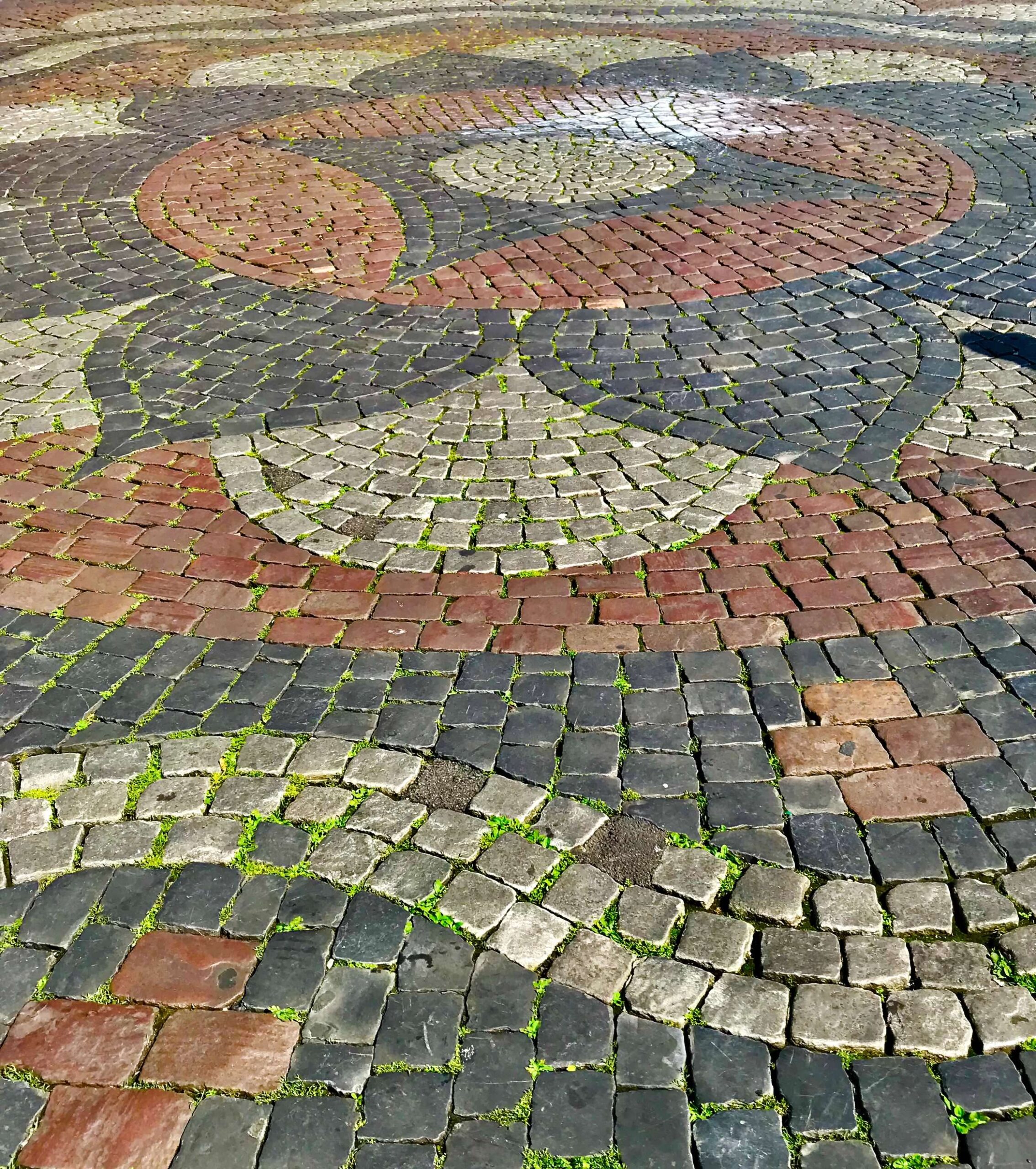
Medieval roads!
My Basel trip backstory: Our long-awaited river cruise began in Basel. But after a flight maintenance issue, our overnight Amsterdam departure was delayed while we waited on a new plane. We did get to Basel the next day (minus our checked luggage, which did not make the flight we ran to catch).
All the challenges left us with just a few hours to explore Basel. We made the best of it, but I did not get to see everything on my art and history wishlist!
If you’re in town for business, school, carnival, Art Basel, or to board a river cruise, here are 10 must-see sights in this interesting city!
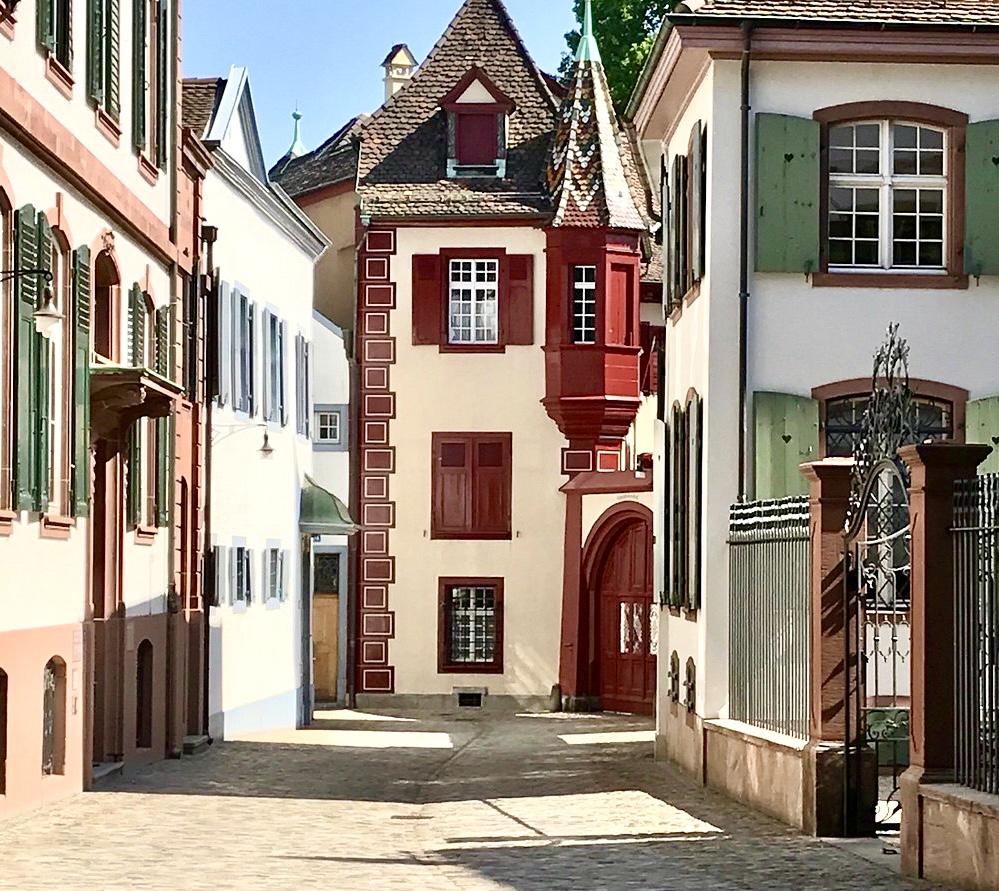
Basel’s Old Town (called Alstadt) is walkable and filled with iconic buildings, cobblestone streets, colorful houses, medieval churches, historical gates, and over 200 fountains. Spalenberg is one of the best streets to explore for local foods, boutiques, and chocolate shops, and it winds through the former artisan’s district.
Marktplatz Square is the heart of Basel where every morning (except Sunday), the busy square transforms into a marketplace with produce, flowers, and food for locals and tourists. http://www.basel.com
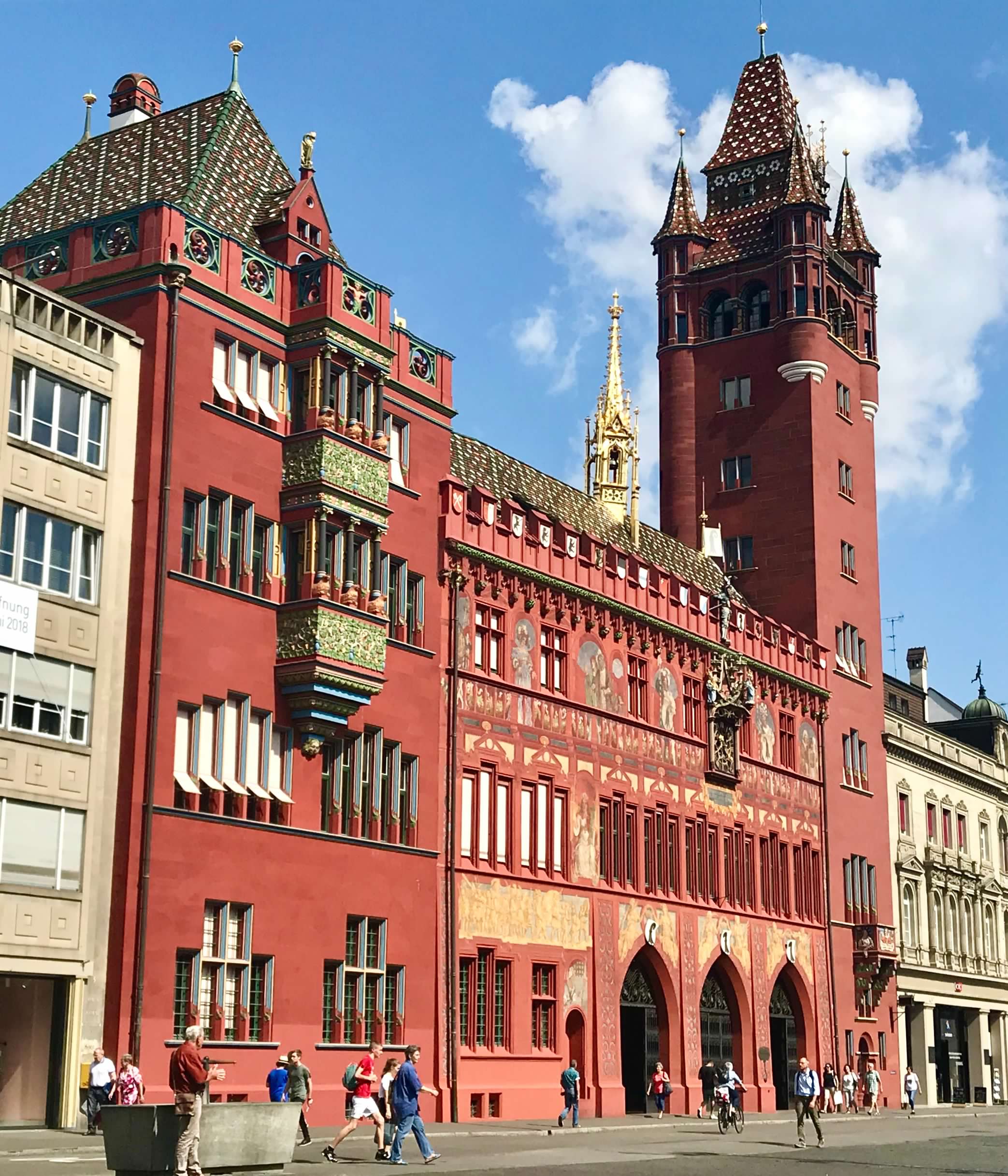
Don’t miss the bright red sandstone Rathaus Building (the Town Hall), and check out the distinctive roof tiles!
Basel’s Parliament still meets in the Rathaus, but you can walk through the arched doors and see its beautiful courtyard, historical frescoes, and statues.
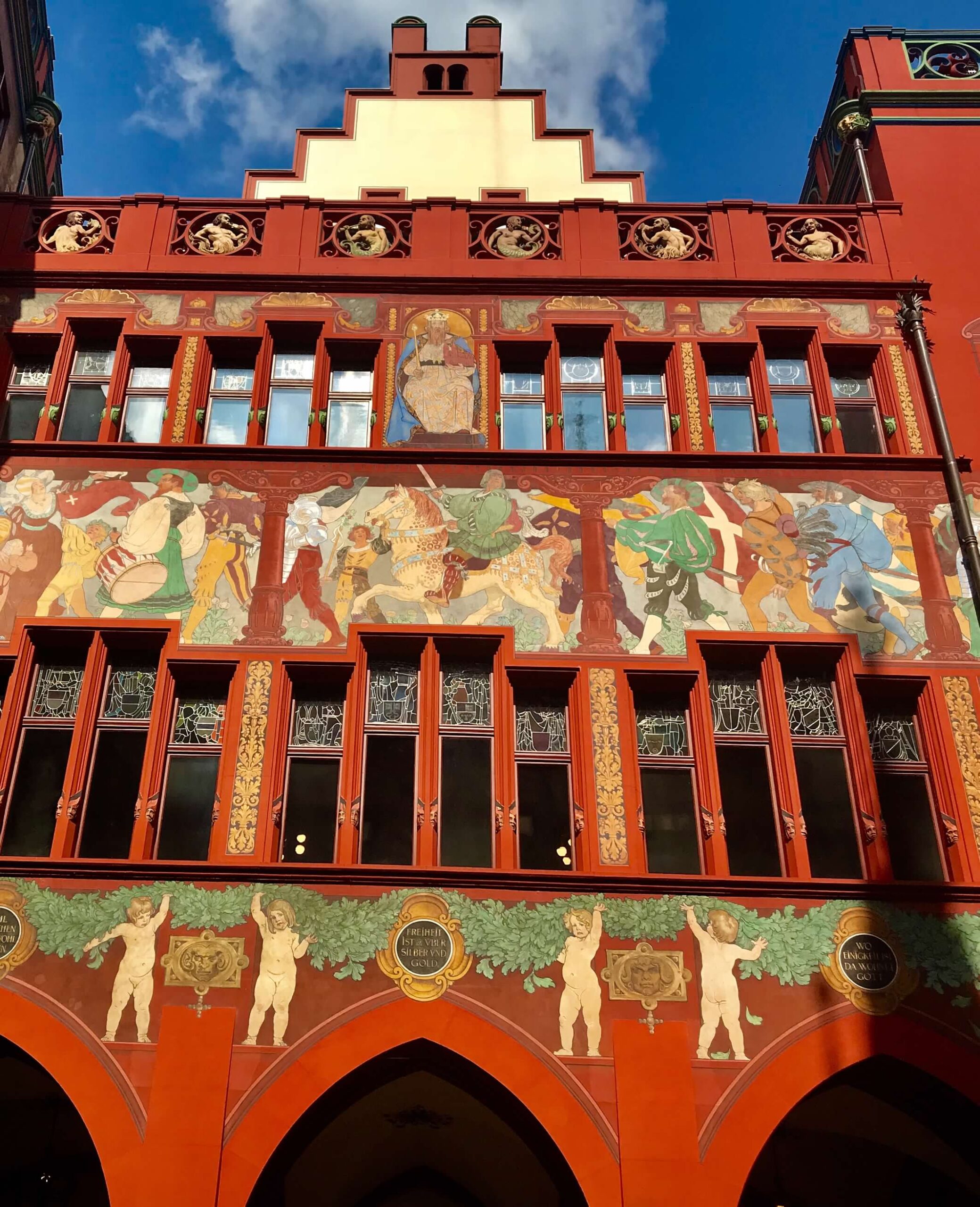
Now a landmark, the Rathaus was built when the town received “Imperial Freedom,” and it was updated in 1501 after Basel entered into the Swiss Confederation. An inscription on the balcony reads, “Here begins Swiss land.”
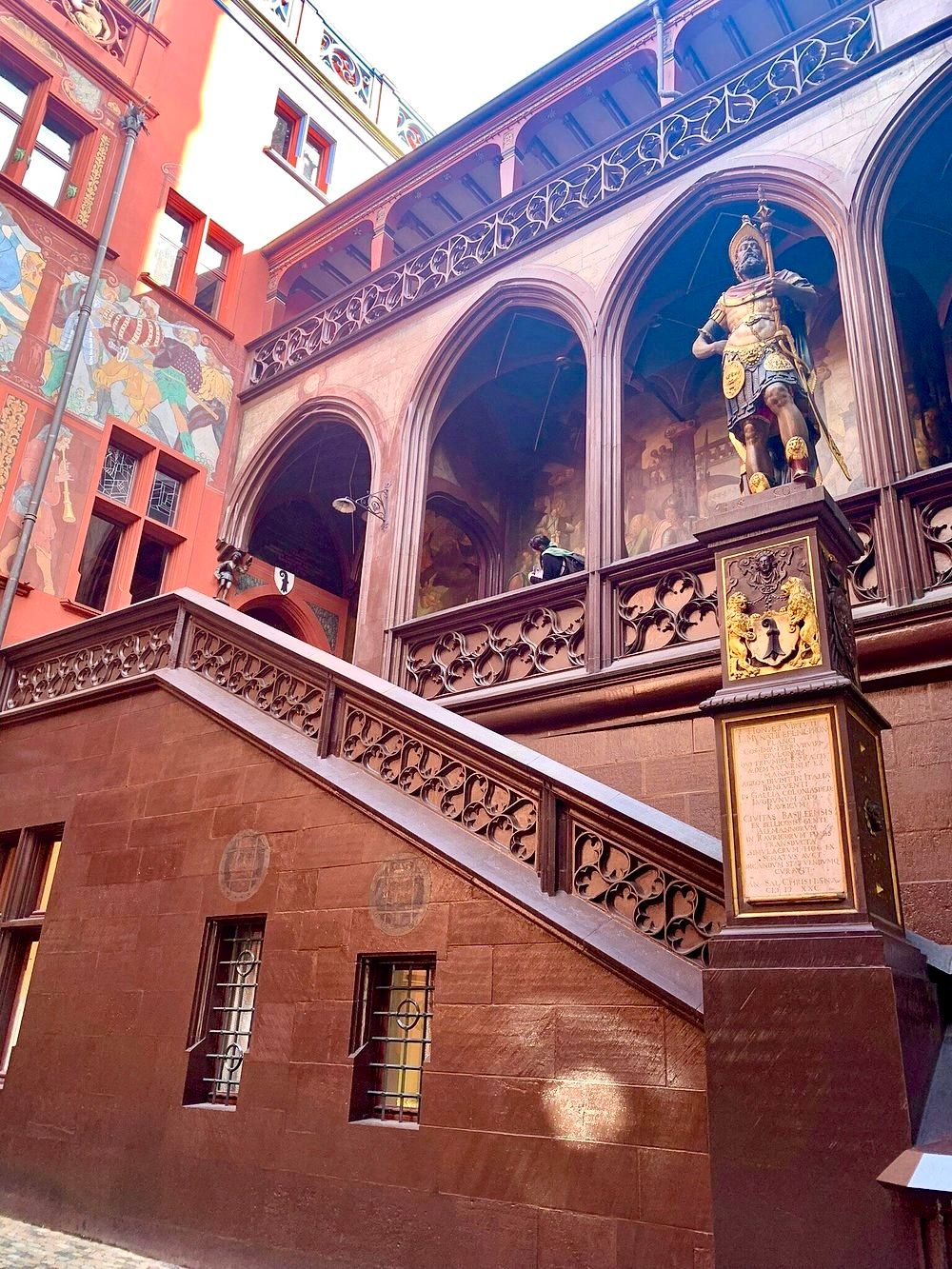
Lucius Munatius Plancus was the founder of Augusta Raurica, a Roman senator and officer of Julius Caesar.
Basel Minster (the Münster) is the symbol of the city. It was built on a Roman fortress site between the 9th and 13th centuries with red sandstone from the French Vosges mountains.
The Gothic cathedral is known for its colorful diamond-patterned roof tiles and twin spires (named St. George and St. Martin). Although it was built as a Roman Catholic cathedral, Basel Minster became a Protestant place of worship in 1529. http://www.baslermuenster.ch
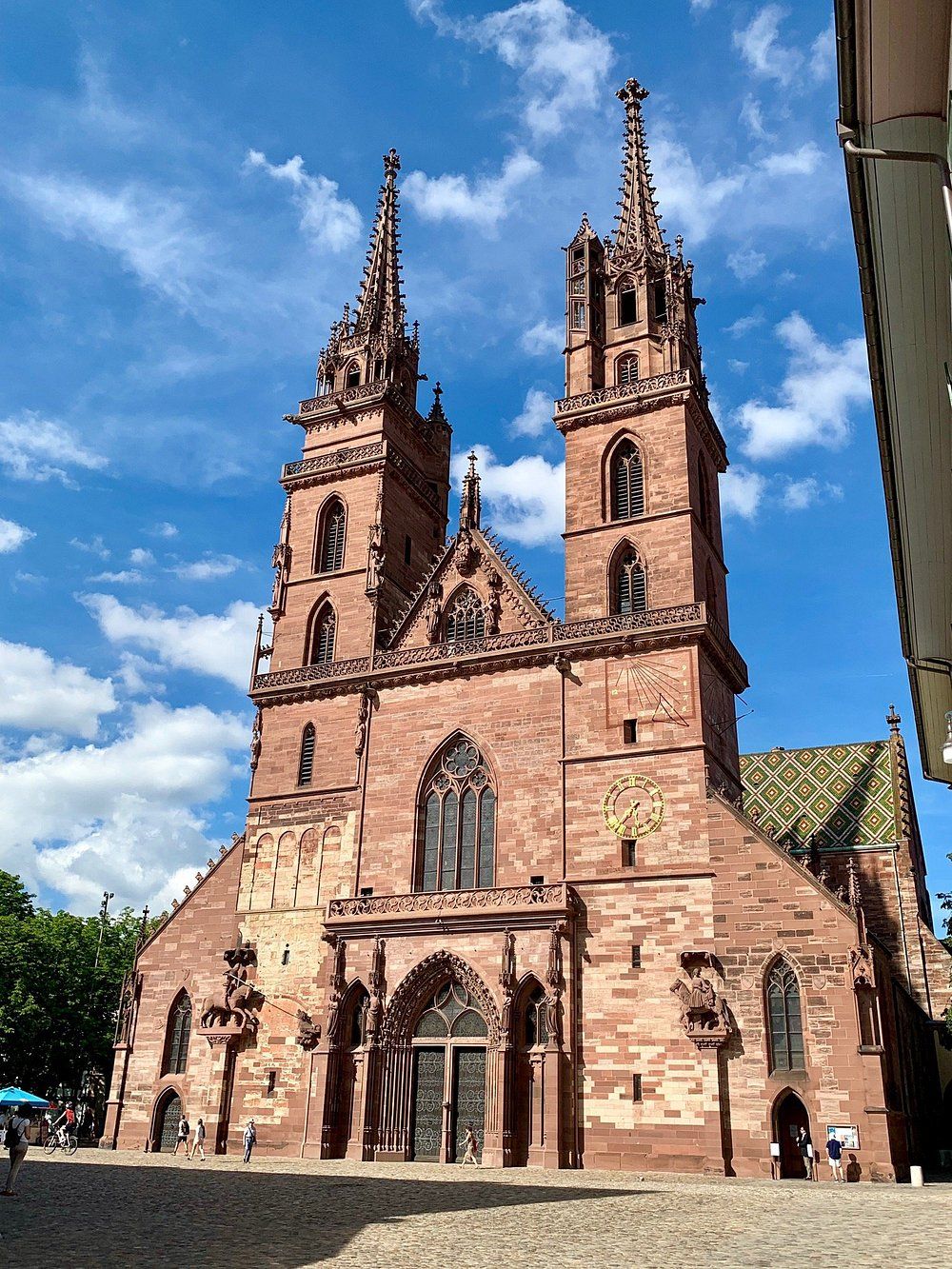
At the entrance, Basel Minster features St. George slaying a dragon and St. Martin cutting his cloak for a beggar.
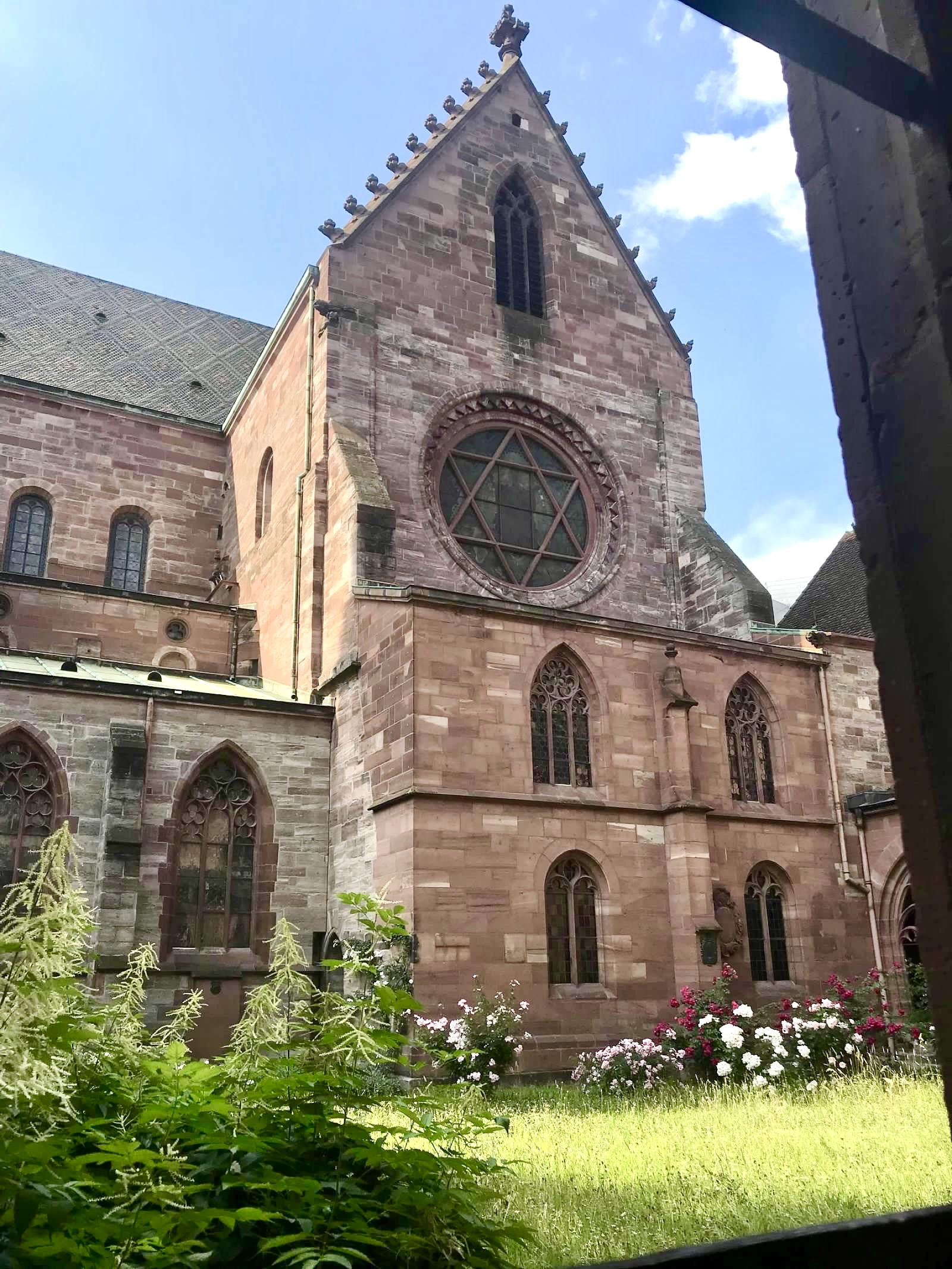
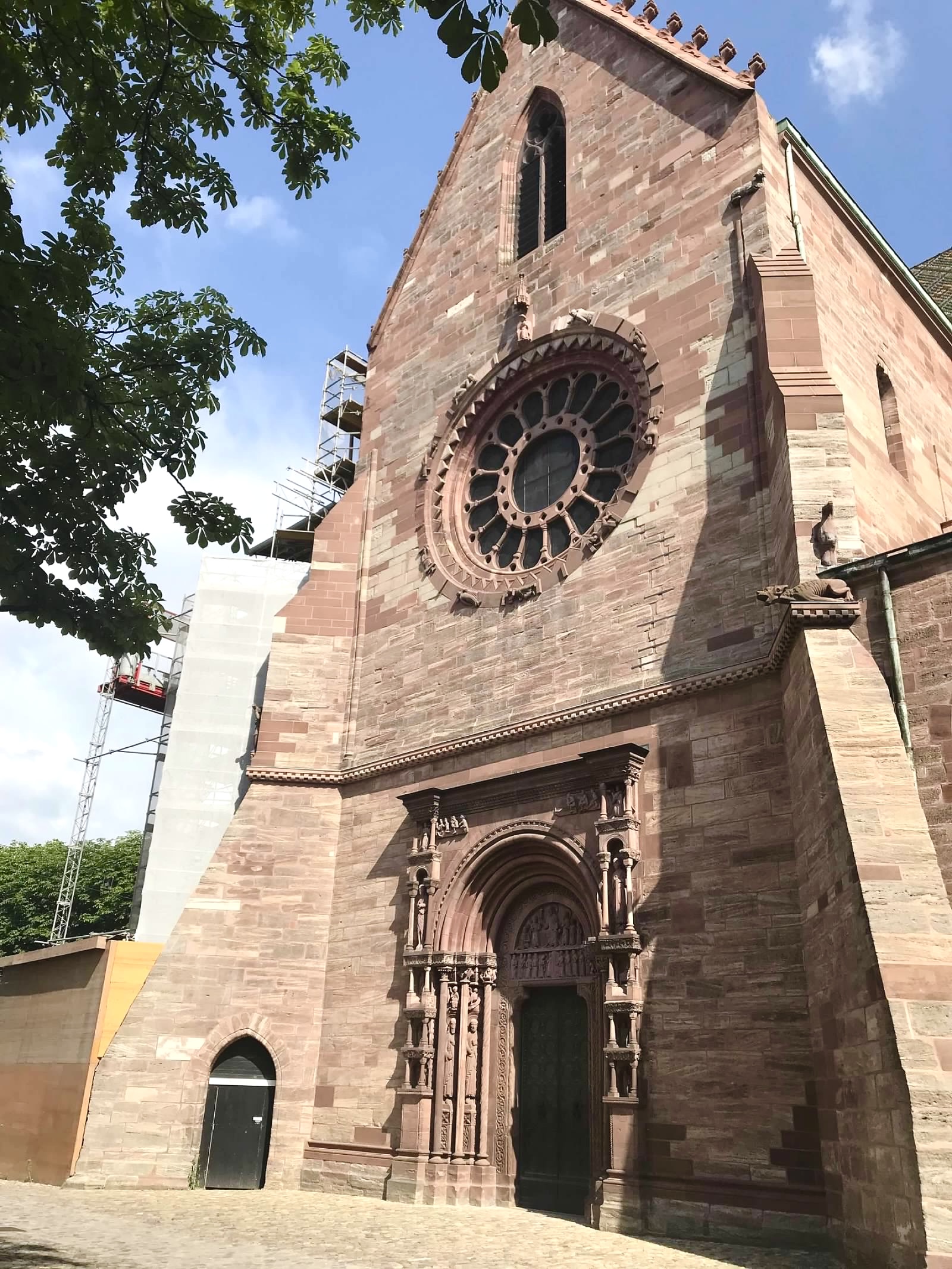
Outside, the south transept Star of David stained glass window depicts Jesus Christ in glory. The north rose stained glass window is known as the “wheel of fortune, or happiness.” Below the south-side rose window is one of the oldest figured doorways in German-speaking Europe: St. Gall’s Door (12th century). It highlights Christ as the Judge with the Book of Life.
TIP: For a fee, groups of two or more can climb the 250 steps to the top of the towers. Or, for free, simply walk to the elevated terrace behind the cathedral (called the Pfalz) for beautiful views of Basel.
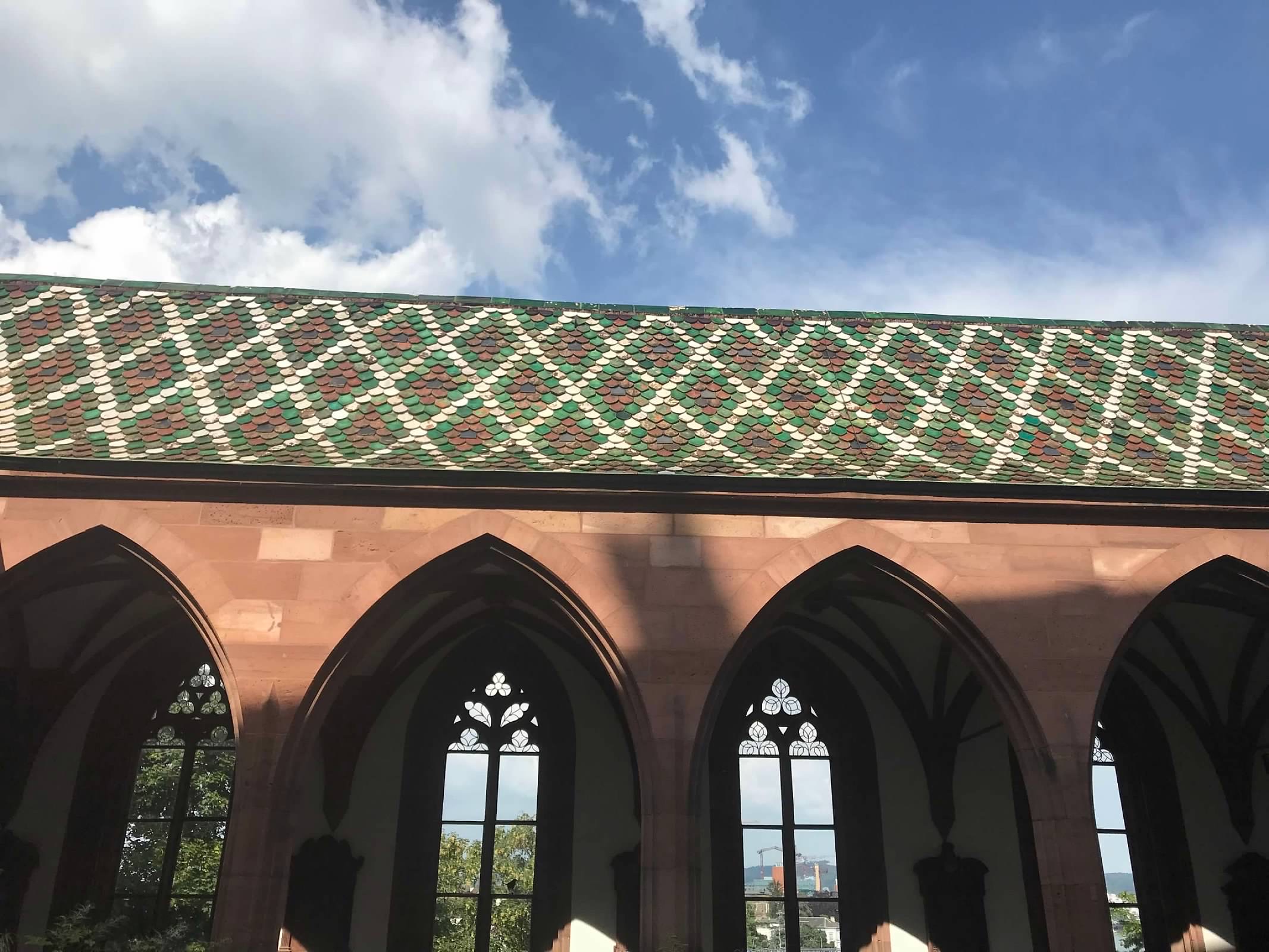
The serene cathedral cloisters also have colorful roof tiles!
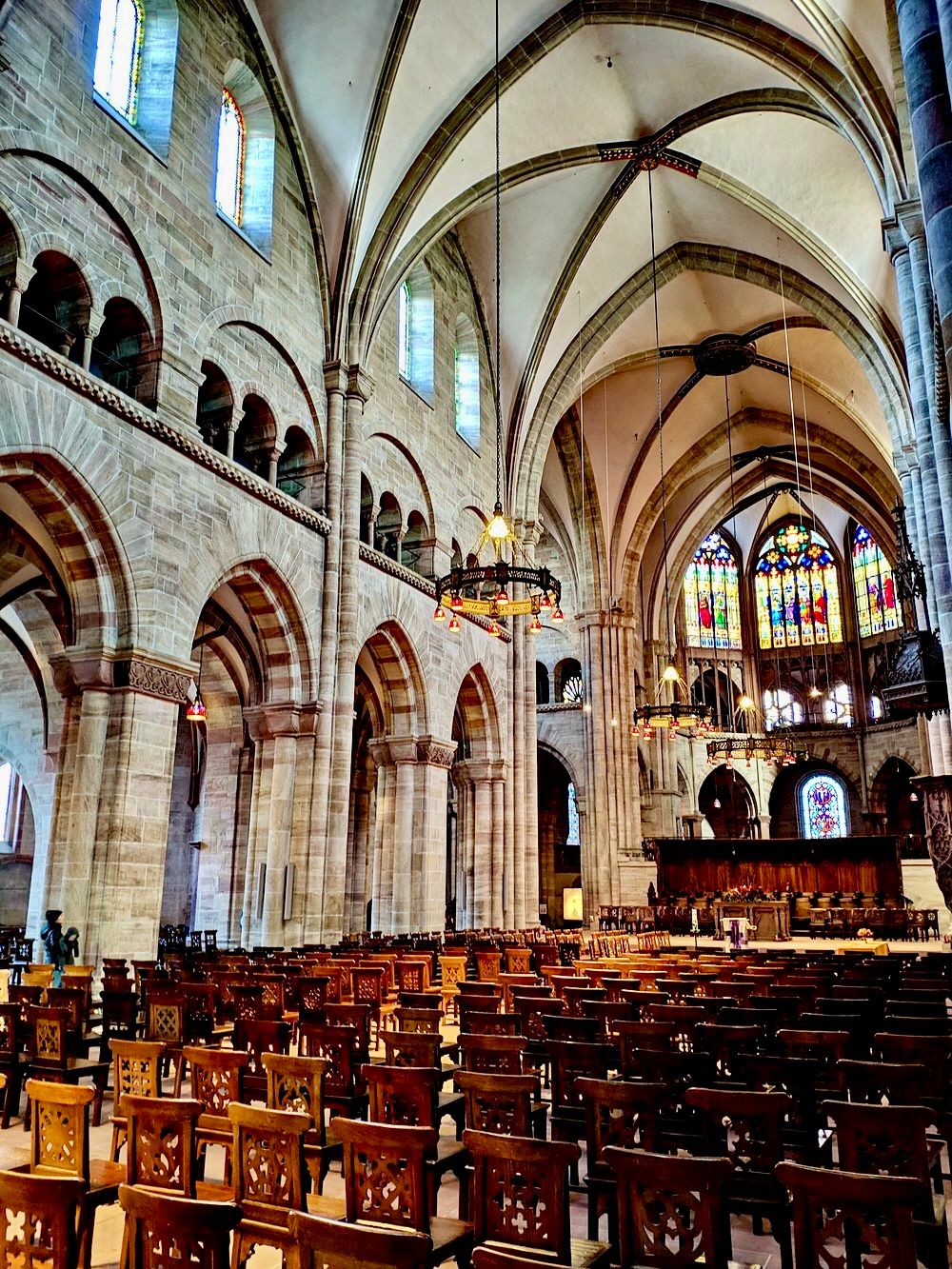
Inside, the church was rebuilt in elegant Romanesque and Gothic architecture after the earthquake in 1356. You can find the tombs of Erasmus of Rotterdam, Queen Anne of Habsburg and her son, Charles. (Below)
Kunstmuseum Basel has bragging rights as the oldest public art gallery in the world dating back to 1661. Switzerland’s largest art museum offers three interconnected buildings and a multi-layered world-class collection of more than 300,000 works from the early 15th century to present. TIP: The word “kunst” means “art” in German. http://www.kunstmuseumbasel.ch
It began when a group of Basel citizens partnered with the university. They purchased a private collection of works by Hans Holbein the Younger, plus personal items of the Dutch theologian and humanist – Erasmus of Rotterdam.
This group, known as the Amerbach Cabinet, evolved into the Kunstmuseum Basel Foundation–which continues to acquire well-known art today.
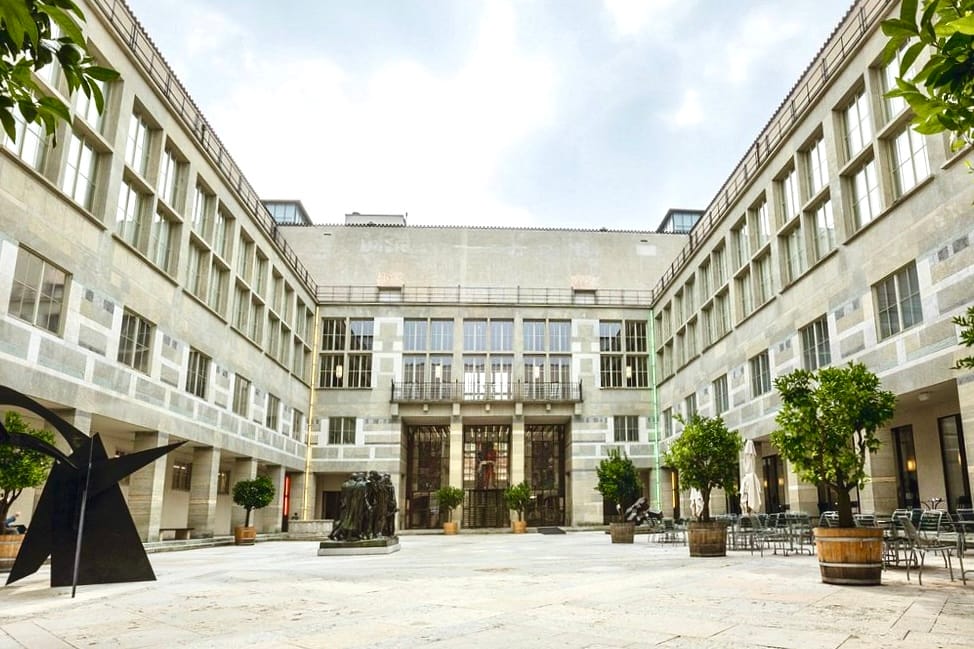
Kunstmusem Basel courtyard
Here’s your chance to see multiple masterpieces in one place! Besides the largest Hans Holbein collection, you’ll see Flemish and Dutch gems from Rembrandt, Rubens, and Brueghel the Elder. Impressionists are represented by Manet, Monet, Gauguin, Cézanne, van Gogh, and many others.
Picasso, Braque, Edvard Munch, Emil Nolde, Klee, Matisse, Modigliani, Dali, Marc Chagall, and Andy Warhol are just a few artists representing Expressionism, Cubism, Constructivism, Dadaism, Surrealism and contemporary art.
Outside you’ll find The Burghers of Calais sculpture by Auguste Rodin (1880s). These town merchants and leaders were prepared to die by hanging. But England’s Queen spared these men from Calais (a French port on the English Chanel) after they surrendered, under siege, during The Hundred Years’ War. Rodin’s original is in Calais, France.
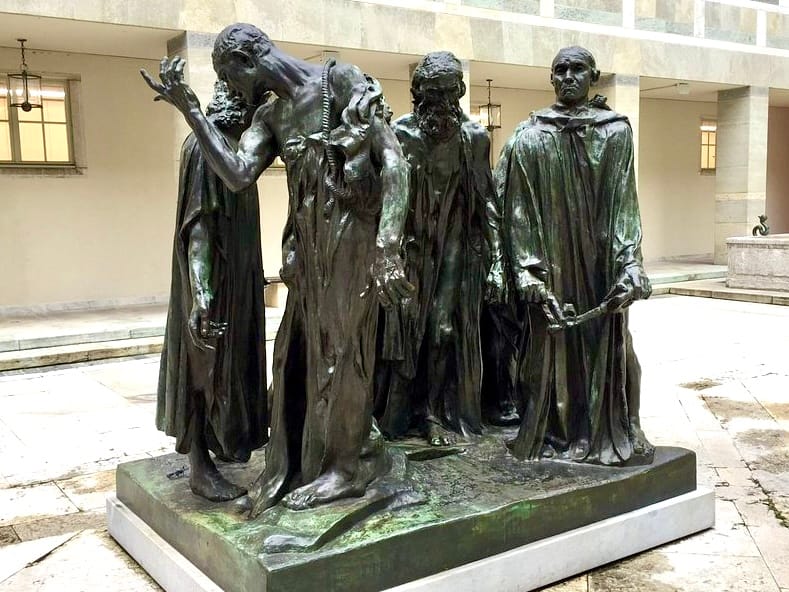
According to French law, only 12 casts can ever be made from original molds. If you never get to Basel, I’ve seen The Burghers of Calais at the Musee Rodin in Paris, the Rodin Museum in Philadelphia, the Metropolitan Museum of Art in New York, and the Houses of Parliament in London.
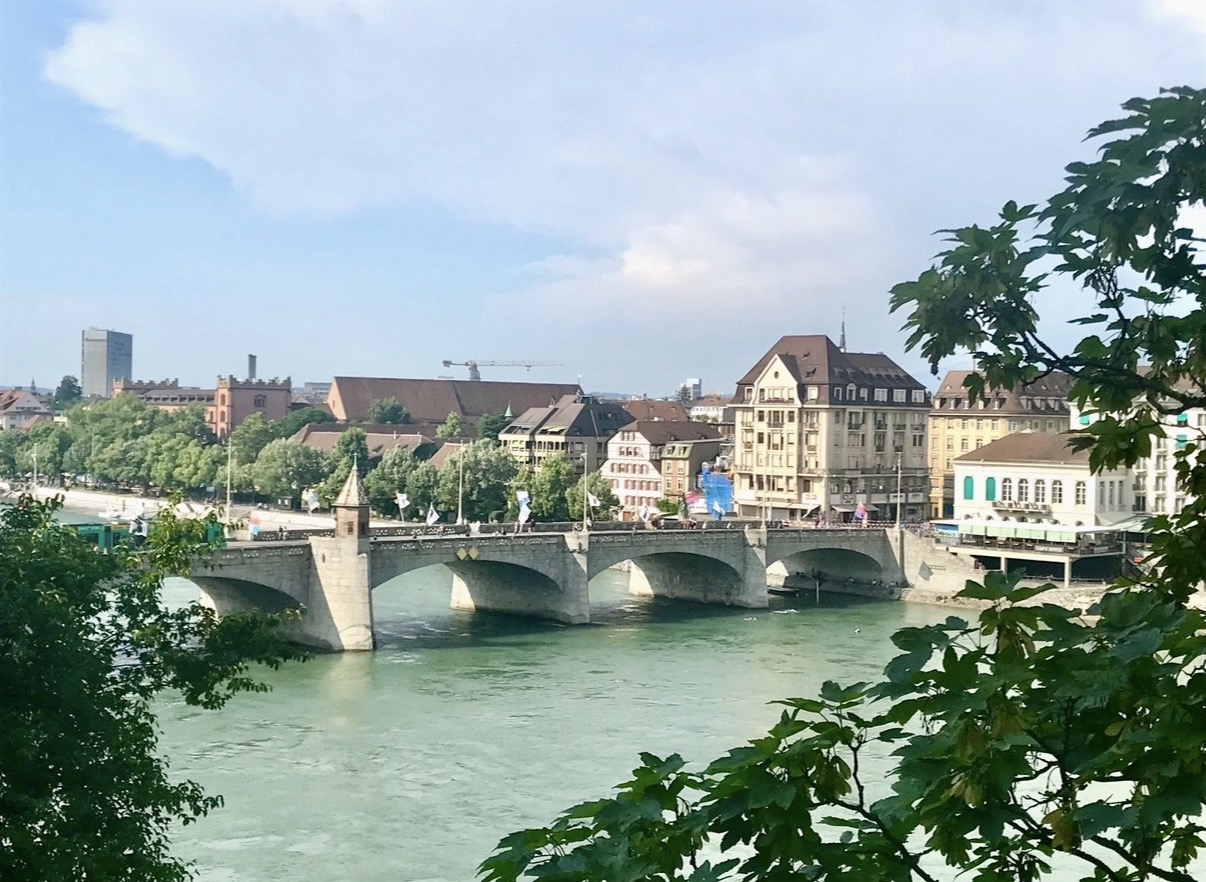
Since 1226, iconic Mittiere Brücke, or Middle Bridge, has spanned the Rhine River connecting Grossbasel (Greater Basel) with Lesser Basel (Kleinbasel).
Middle Bridge also marks the boundary between the High Rhine and Upper Rhine sections of the river.
Museum Tinguely houses the largest collection of works by Swiss artist Jean Tinguely featuring interactive, whimsical exhibits of his mechanical, kinetic sculptures. You can find the museum in Solitude Park on the right bank of the Rhine. http://www.tinguely.ch
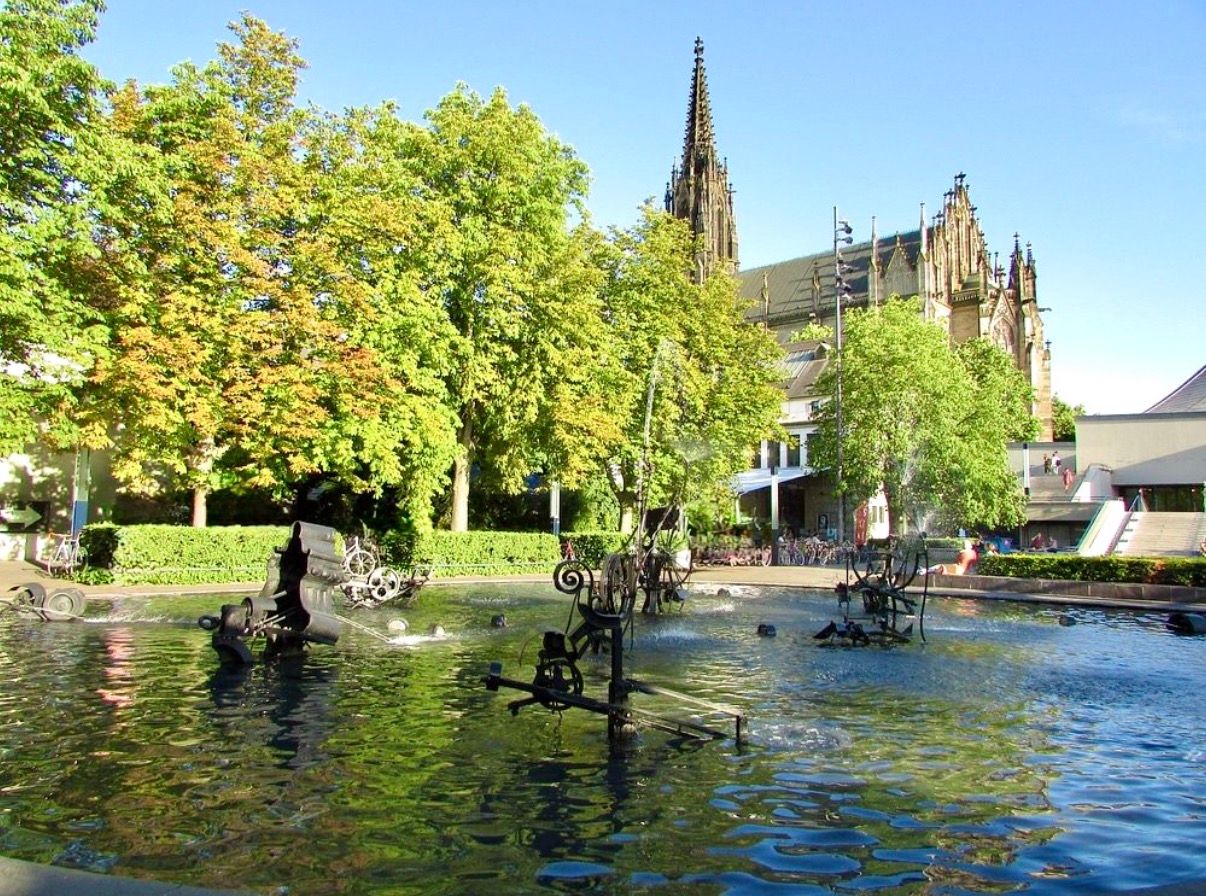
The Tinguely Fountain (above) has become a new landmark on the left bank of the Rhine. Ten iron kinetic creations, made from old theater parts, splash about in a fountain where the stage of the old city theatre once stood.
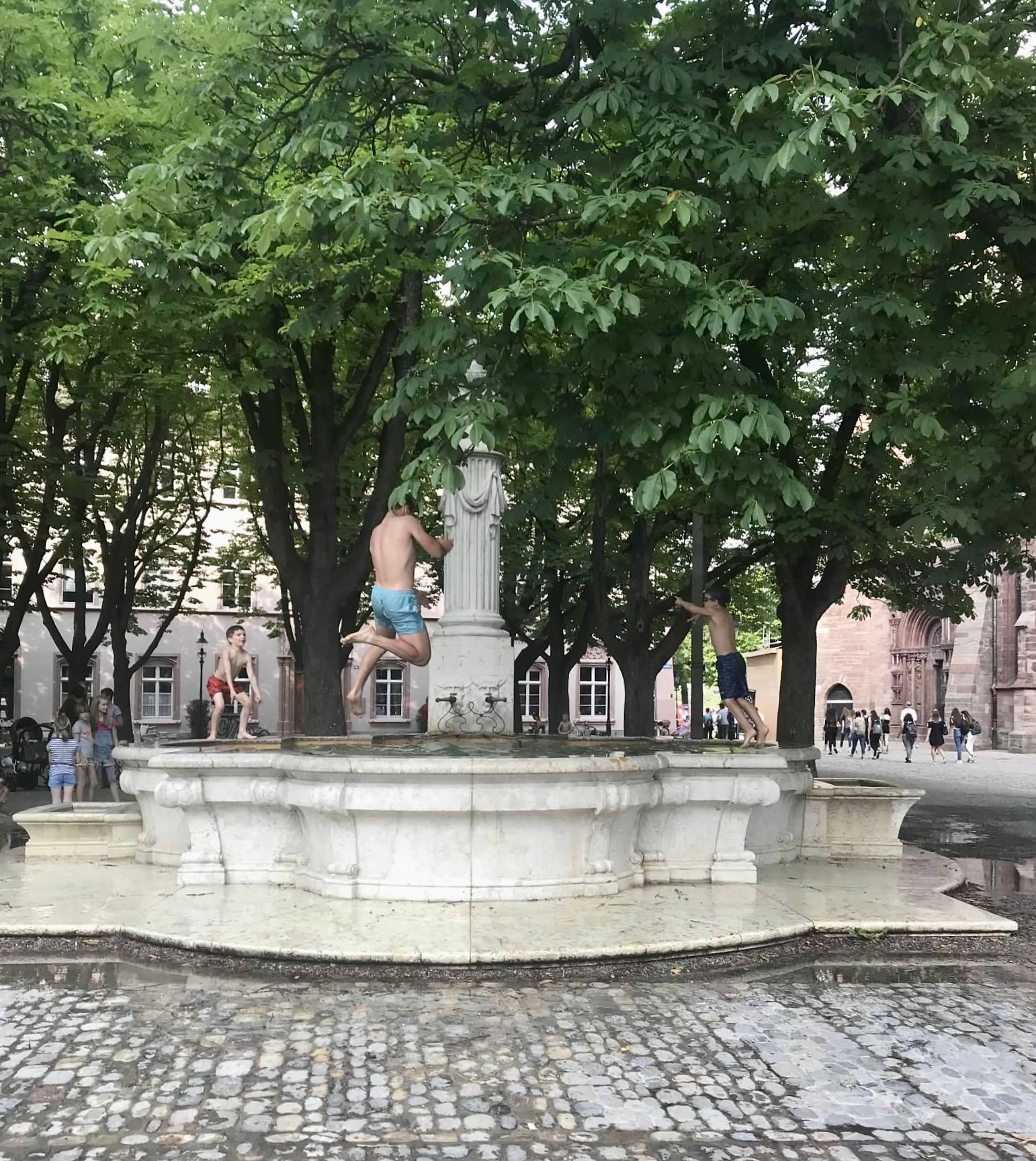
Basel seems to have a water theme! Everywhere we looked, people were in the water.
Not only were kids splashing around in fountains while many were enjoying the riverside bathing platforms–we learned “floating down the Rhine” has been a quintessential Basel summer activity for over 25 years. Some 50,000 swimmers take the plunge every year from May to September in the Rhine River.
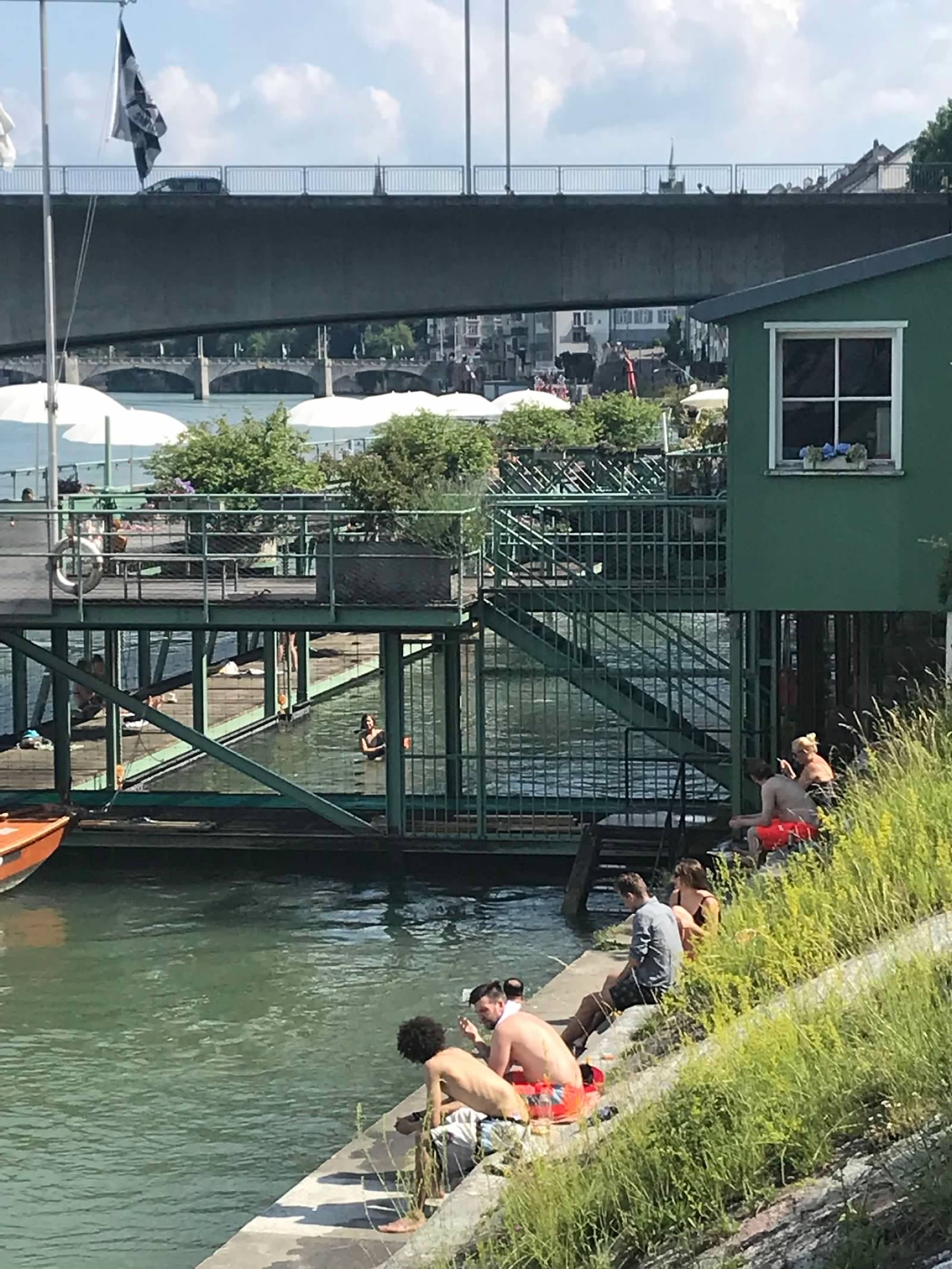
Our riverboat was docked near this bathing platform and place for swimmers to enter the river.
All over Basel, Wickelfisch waterproof fish-shaped swim bags can be purchased as storage and floatation devices. By folding the lip seven times, it creates a watertight seal so personal belongings stay dry. These would be popular for tubing or kayaking in the US! https://www.en.wickelfisch.ch
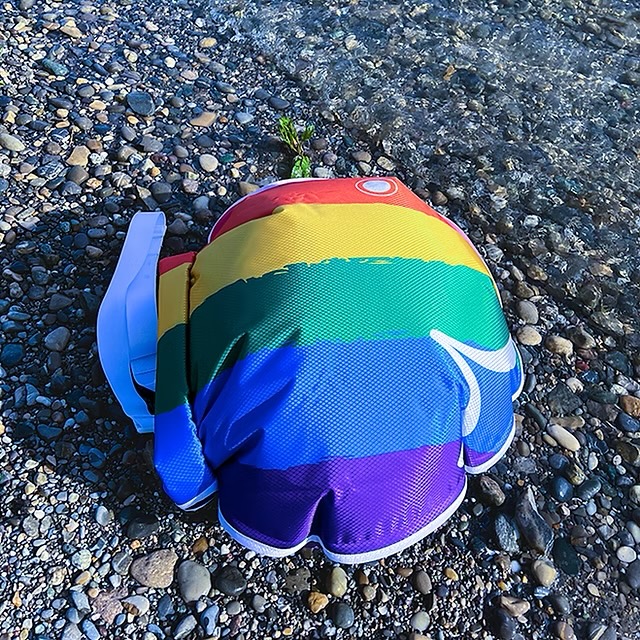
Colorful Wickelfisch swim bag
No time to get wet? Try a river cruise on the Rhine or cross the river on a Münsterfähre. These non-motorized traditional, cable-powered ferries cross the river in four locations.
Kids cooling off in an Old Town fountain (below)
Old Town sits between the river and the old 14th-century city gate, the Spalentor. Originally, Basel had two layers of city walls. The Spalentor City Gate is one of only three to survive the demolition of the walls in 1866. TIP: A guided tour is the only way to access the top.
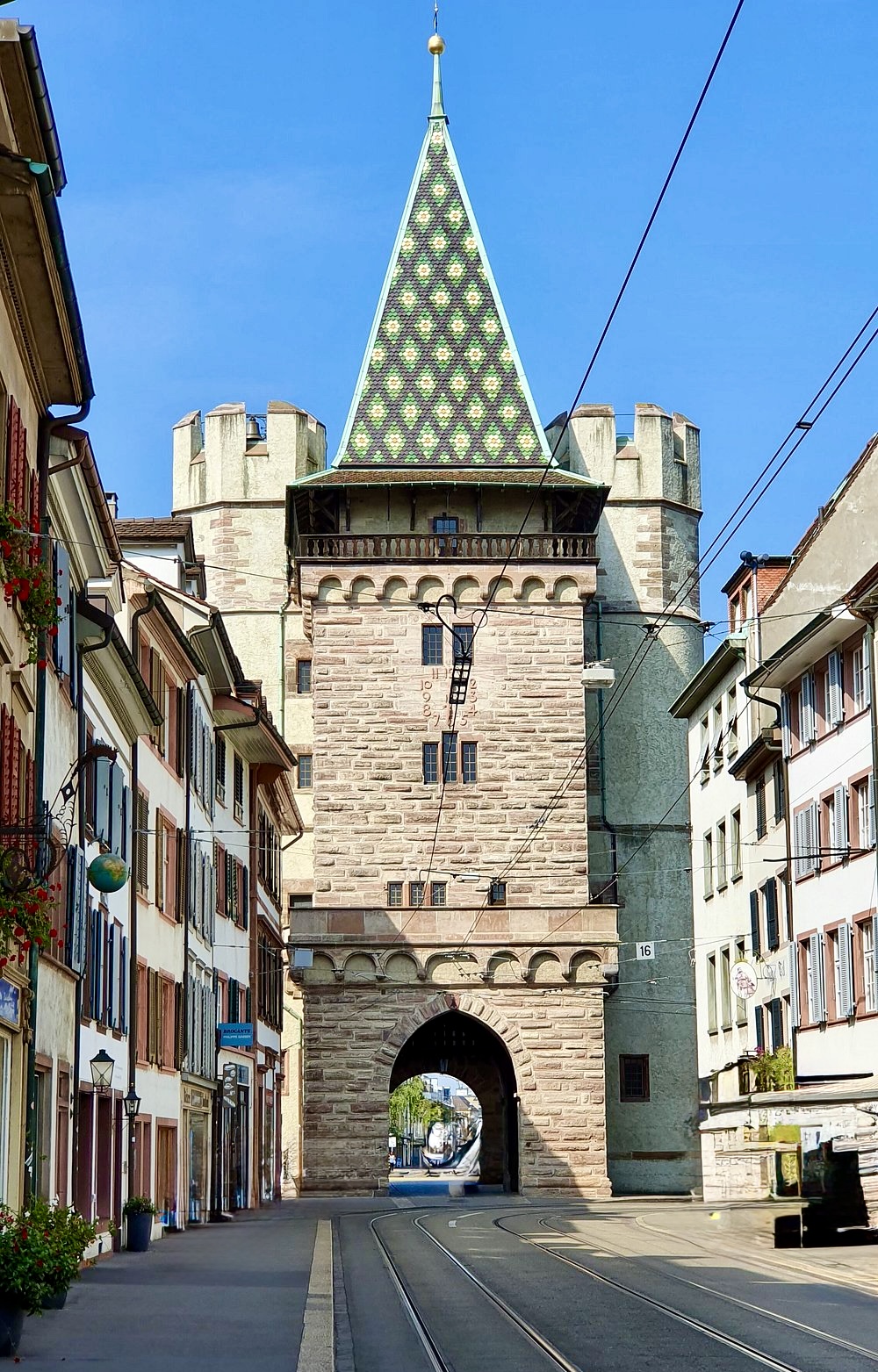
The Spalentor, with colorful roof tiles, marks the end of Old Town.
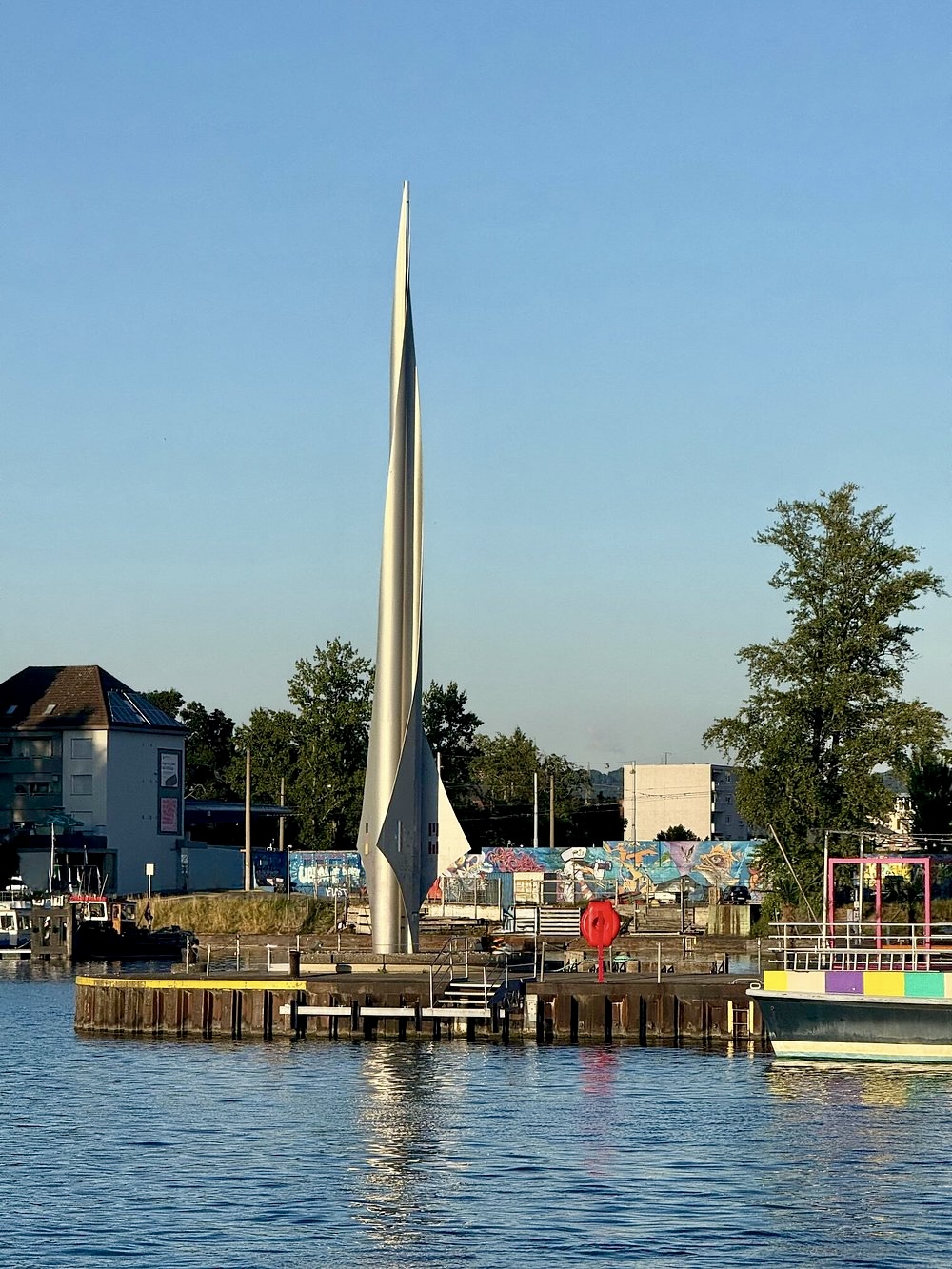
You can stand in three countries at one time at Three Country Point, or Dreiländereck. A tall monument that looks like a sail (or a sleek rocket?) marks the spot with flags of Switzerland, France, and Germany. It sits on the Swiss side in Basel, but the Three Countries Bridge allows access to and from France and Germany.
TIP: See it from a cruise on the Rhine or take the #8 tram to its terminal. Then there’s a short walk to the monument along the river.
We cruised on ocean ships for years, but this was our first ever river cruise. On the long-ship Viking Herja, we sailed the scenic Rhine River from Switzerland, through France and Germany, to the Netherlands.
In this new Rhine River travel series, I’m excited to share every destination, fun excursions, some travel tips, and my photos of our journey. I’ll also give you my honest opinions about river cruising–and sailing with Viking. https://www.viking.com
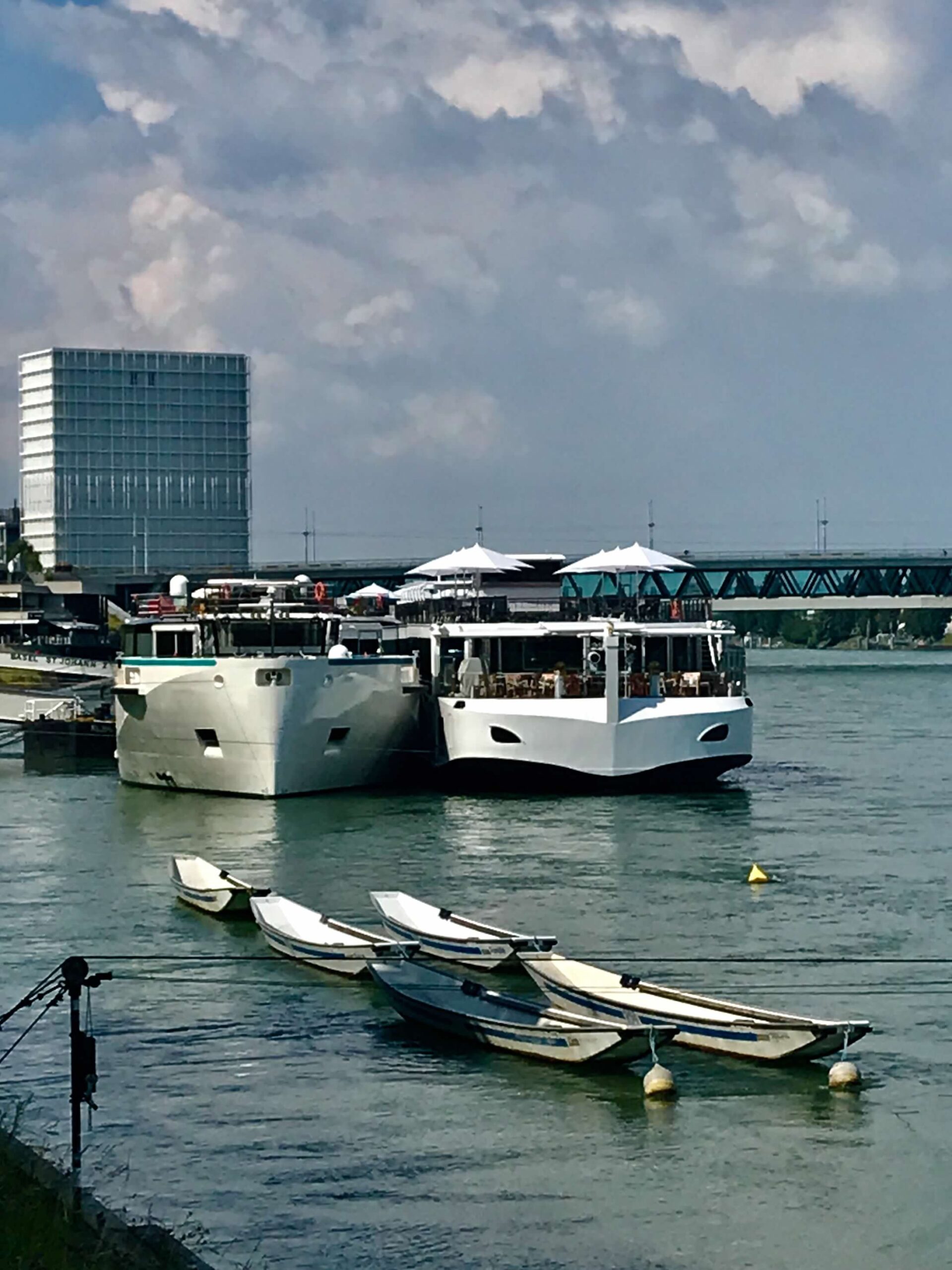
Viking Herja in Basel (on the right in white)
With Viking, you can look forward to a high level of service. From the start of your trip, Viking meets you at the airport and provides complimentary transfers to the ship/and back to the airport (when you use their flights, upgrade, or do a pre/post extension). If you book your own flights, you can add on transfers. They also load and unload your luggage.
Embarkation (checking in on Day One) is a breeze! It might have taken 10 minutes for our group of four. Once passports are verified and you have your keys, you’re free to head to your room or explore. And your luggage arrives almost immediately after–and not 8 hours later!
As I mentioned earlier, our checked luggage did not make it to Basel after a flight snafu. Luckily, most of us had backpacks and/or carry-on luggage with a change of clothes and necessities. However, Viking insisted on laundering our clothes, and we had them back the next morning–free of charge.
Our ship moved on, but Viking (and our AAA travel agent working behind the scenes) got our luggage to us in a new port, in a new country–the next day. From the beginning, Viking took care of us well.
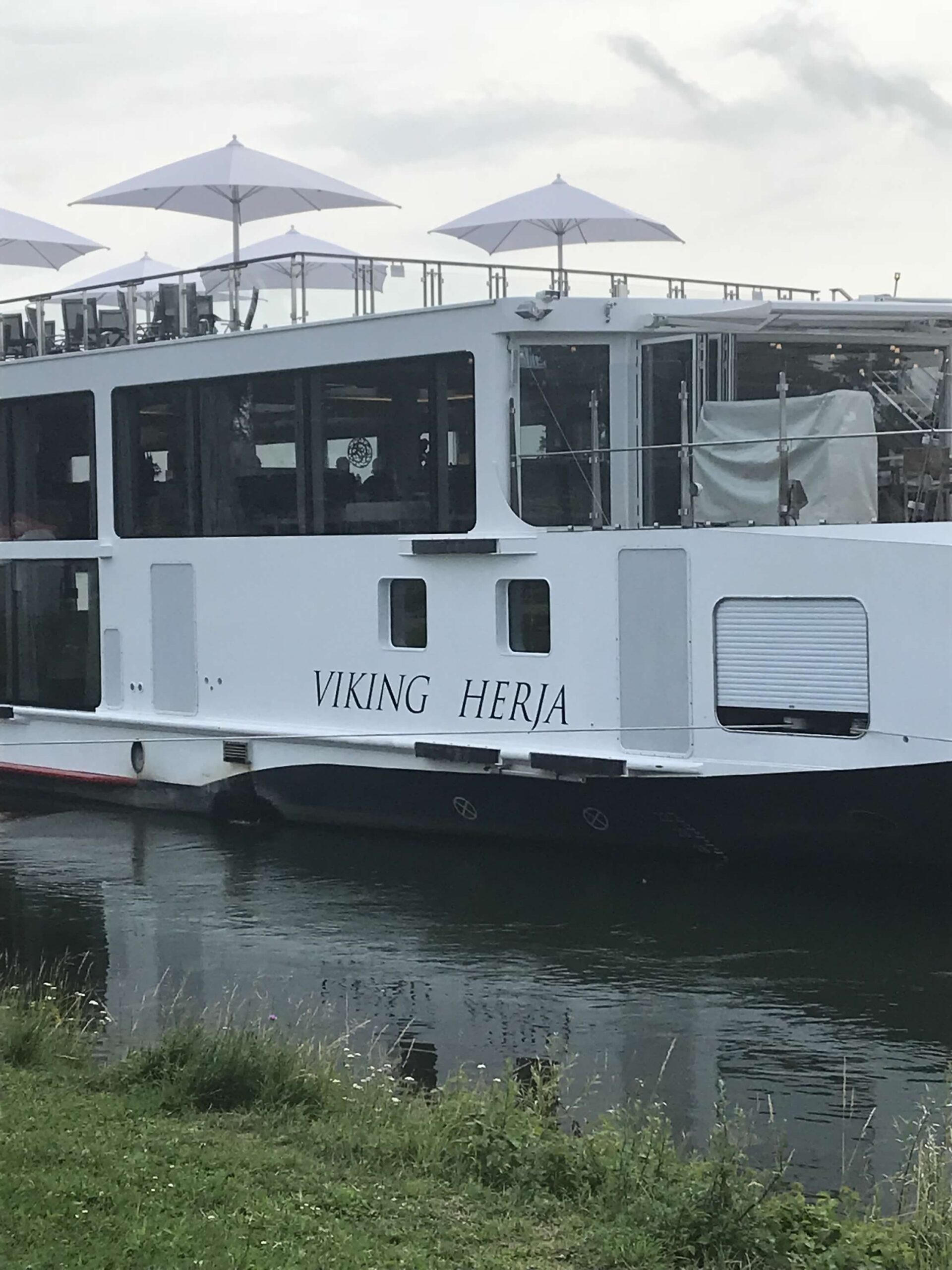
More Viking information next time!
Since this trip started out with a bang, I’ll drop some travel advice: TIP: If you are flying anywhere (even a 1-hour flight) and you check your luggage, make sure you have a change of clothing, perhaps even PJs, in a backpack or carry-on.
The trip “will go on” whether you have luggage or not! We learned this lesson the hard way on our second ocean voyage out of California in the ’90s.
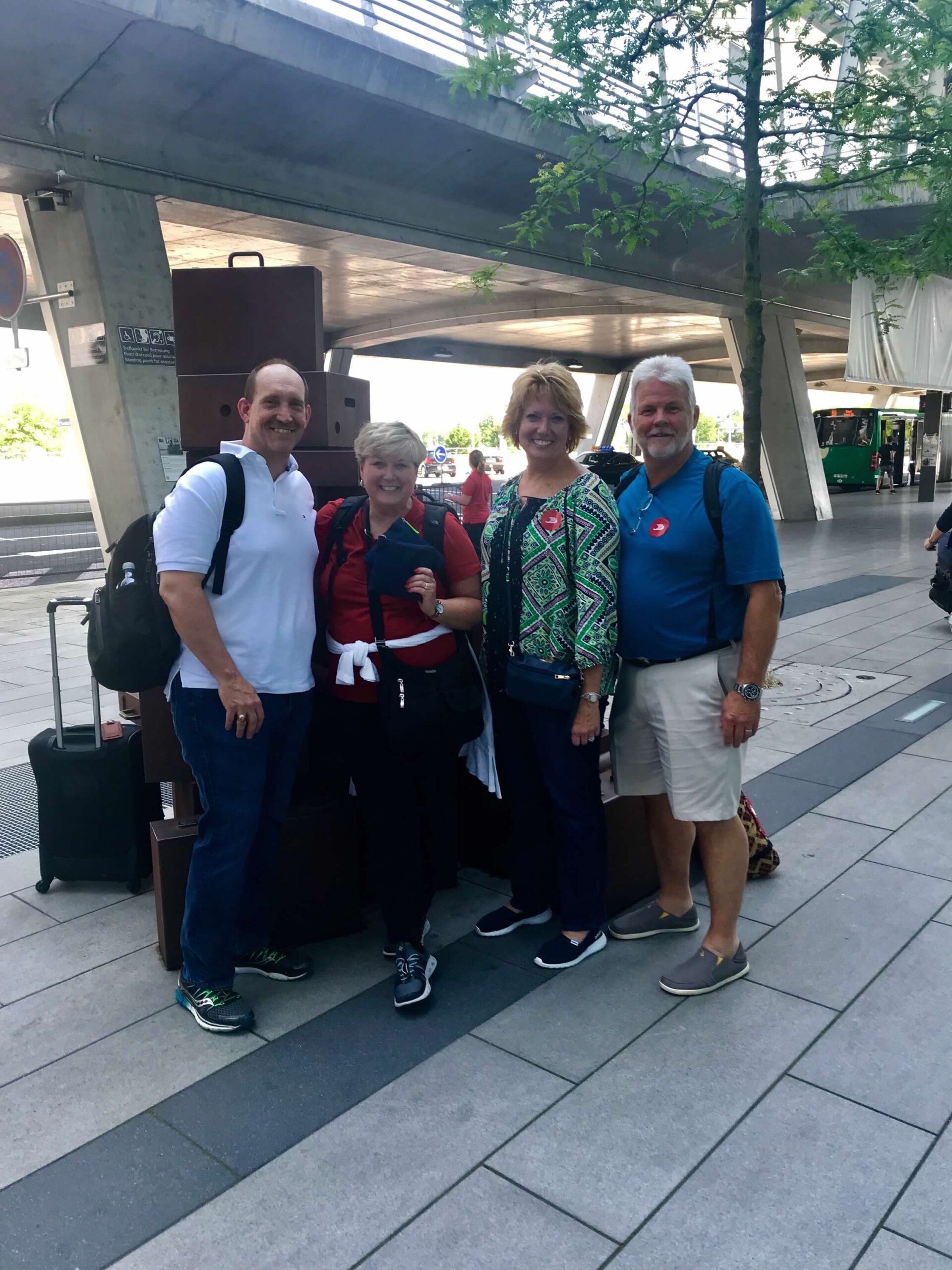
The riverboat did not leave Basel until after dinner, so we thought arriving that morning would suffice. . . which brings me to my second suggestion. TIP: If at all possible, arrive at your port of embarkation the day before setting sail (whether cruise ship or riverboat). From now on, we’ll skip the worries and pad our arrival day!
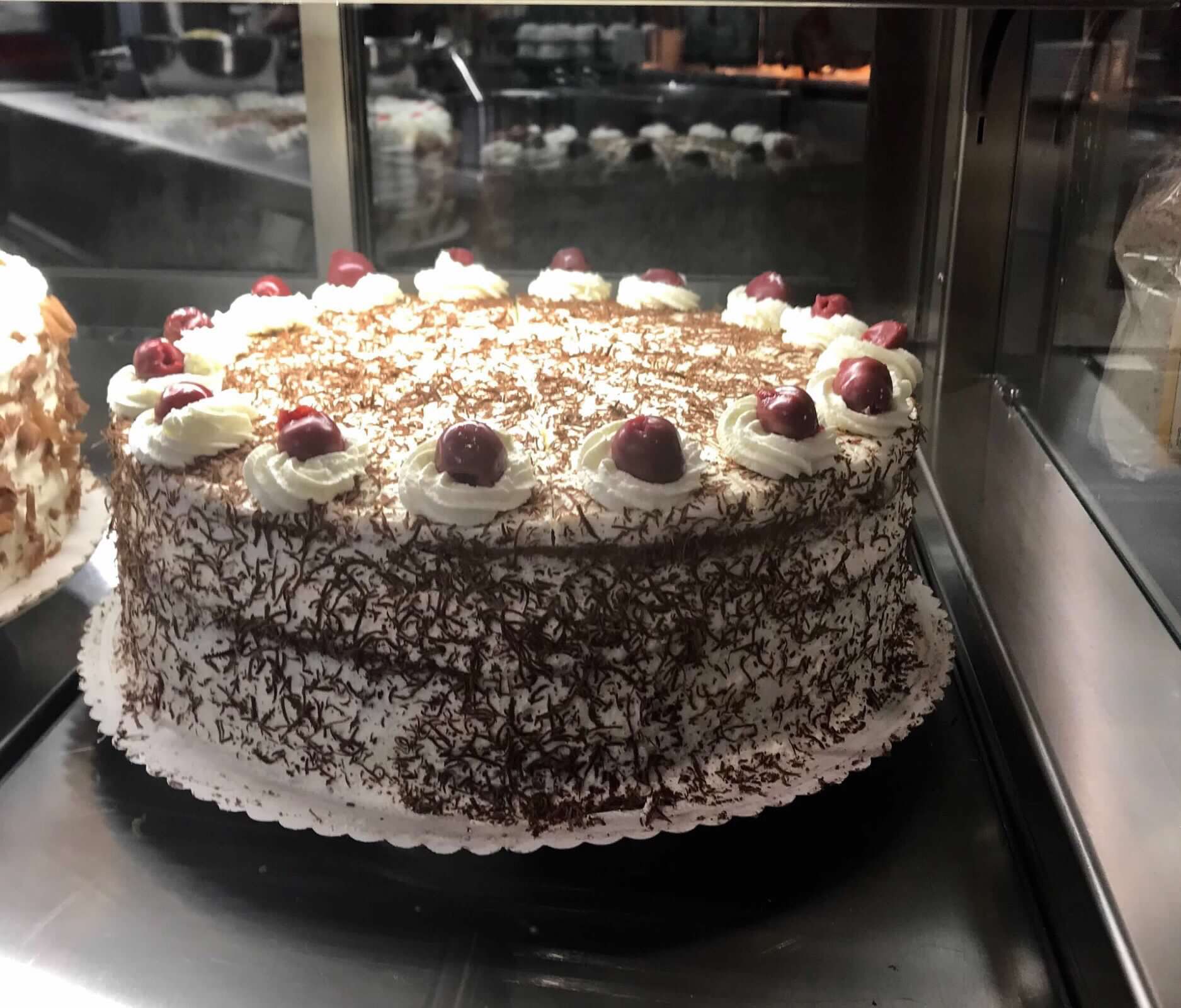
We’ll cruise to Germany’s Black Forest and the mythical land of cuckoo clocks, fairy tales, stork nests, vineyards and, of course, Black Forest Cake. We also began to enjoy the unhurried pace of river cruising!
Until then, keep exploring!
For my Greece and Italy series and all other travel blogs, visit my blogsite: https://traveltipsbytami.com
Tami Kooch – [email protected]
The old town buildings and church are just stunning! Now I want to go here even more.
Switzerland was so pretty! I’d love to go back and have more time to explore. . . and actually get in the door of some of these excellent museums.
Beautiful!
Thanks Chris!